
Six-spotted buprestid
Chrysobothris sexsignata
Description
How to identify
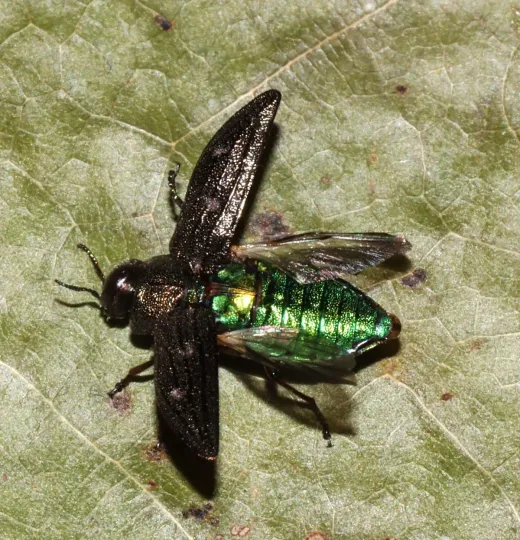
The six-spotted buprestid (Chrysobothris sexsignata) is a wood-boring beetle belonging to the Buprestidae family. These insects are known for their iridescent, metallic coloration and flattened body shape.
The adult beetle typically measures between 8 and 12 millimeters in length. Its color is generally a dark bronze or metallic brown, featuring six distinct, pale to golden-yellow spots on its wing covers (elytra).
The head is small and retracted, equipped with serrated antennae. The pronotum and elytra are densely punctuated, which helps the beetle blend into the textured bark of the trees it inhabits.
The larvae are classic flat-headed borers: white, legless, and featuring a significantly broadened, flattened thorax segment. This physical adaptation allows them to tunnel efficiently between the bark and wood.
They remain hidden within the tree's vascular tissue throughout their development, making it extremely difficult to identify their presence until significant structural damage has already occurred.
What it damages
The six-spotted buprestid primarily infests a wide range of deciduous trees, including oak, birch, and various ornamental or fruit-bearing species. It typically targets trees already under environmental stress.
Adult beetles feed on leaves and tender bark of new shoots, but this cause of damage is relatively minor and rarely impacts the overall health of a mature tree significantly.
The severe damage is caused by the larvae, which bore winding galleries under the bark. This activity severs the cambium layer, disrupting the tree's nutrient and water transport systems.
As larvae continue to tunnel, they can girdle the trunk or branches, cutting off the supply to parts of the tree, which subsequently causes foliage to wilt and branches to die back.
Persistent infestations weaken the tree's defense mechanisms, making it highly susceptible to secondary attacks by fungi, bacteria, and other opportunistic wood-boring pests.
When it appears
Adult six-spotted buprestids typically emerge in late spring and throughout the summer months. This is the period when they mate and seek out host trees for oviposition.
Females deposit their eggs in small clusters or singly, placing them into bark crevices, pruning scars, or other mechanical injuries on the trunk or large limbs of the tree.
Upon hatching, larvae immediately bore into the bark. They spend the entire summer and autumn feeding aggressively under the bark, expanding their gallery network as they grow.
Winter is typically spent in the larval stage within the wood. In the following spring, they prepare a pupal chamber near the surface, where they undergo metamorphosis into the adult form.
The lifecycle can take one to two years to complete, depending on the tree's nutritional status and local climate conditions, with warmer regions facilitating faster maturation.
Signs of infestation
Identifying an infestation often requires close inspection of the tree's bark for specific symptoms associated with the buprestid's life cycle.
The most visible sign is the presence of D-shaped or oval exit holes on the surface of the bark, which indicate that an adult beetle has successfully completed its development.
Bark may exhibit localized drying, cracking, or sloughing off. Peeling back a portion of damaged bark often reveals serpentine tunnels filled with compacted frass (boring dust).
Yellowing leaves or premature browning on specific branches during the growing season suggest that the vascular transport within those areas has been compromised by larval feeding.
In stone fruit trees, sap or gum exudation at the site of larval entry is a common reaction of the tree trying to push out the invader and heal the wound.
Control measures
Effective management focuses on preventive measures and maintaining tree vitality to reduce the likelihood of infestation by these wood-boring beetles.
- Regular sanitary pruning to remove dead, dying, or heavily infested branches, which serves to reduce the local population of the pest.
- Prompt disposal of infested wood, ideally through burning or chipping, to ensure that larvae do not complete their cycle and emerge to infect nearby trees.
- Cultural practices that promote tree health, such as adequate irrigation during drought periods, fertilization, and protecting trunks from sunscald with white latex paint.
- Strategic application of systemic insecticides on the trunk during the peak flight season to target adults before they can successfully lay their eggs.
- Encouraging natural predators, such as parasitoid wasps and woodpeckers, which can significantly control larval numbers in larger forest or parkland settings.
Taxonomy
- Latin name
- Chrysobothris sexsignata
- Order
- Coleoptera (beetles)
- Family
- Buprestidae
- EPPO code
- CHRBSX
Discussion
No discussions yet — be the first.