
Chrysobothris nixa
Chrysobothris nixa
Description
How to identify
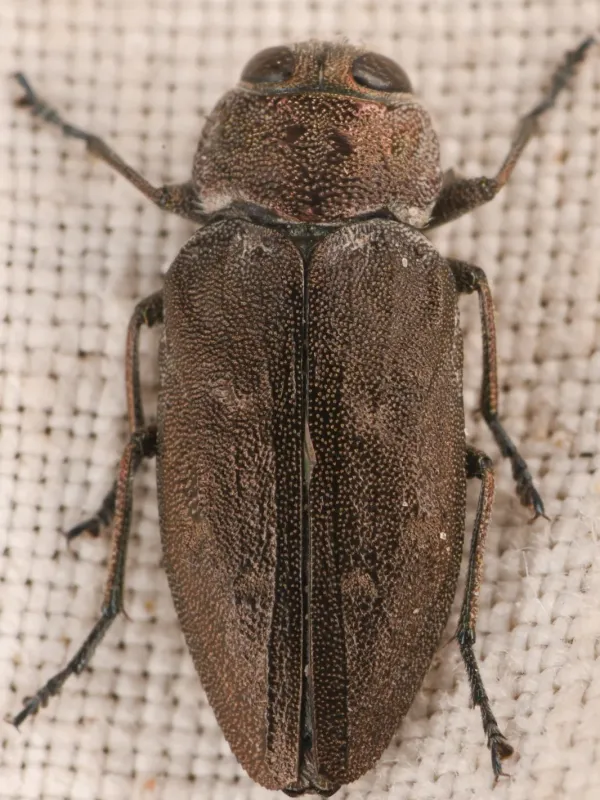
Chrysobothris nixa is a species of metallic wood-boring beetle belonging to the family Buprestidae, order Coleoptera. These beetles are characterized by their flattened, elongated bodies often showing a metallic bronze or greenish sheen.
Adult beetles possess well-developed wings, enabling them to navigate tree canopies efficiently to locate suitable hosts for oviposition. Due to their relatively small size and cryptic coloration, they are often difficult to spot during initial tree inspections.
The larvae are typically creamy white with a distinctively broadened anterior segment containing the head. They reside deep within the phloem and cambium layers of host trees, living concealed from view for much of their life cycle.
The life cycle involves complete metamorphosis: egg, larva, pupa, and adult. The success of the development depends heavily on the physiological health of the host tree and seasonal temperature variations.
While they show a preference for weakened or stressed trees, dense populations can potentially infest healthier trees, leading to severe ecological and economic impact in forested or landscaped areas.
What it damages
Chrysobothris nixa primarily affects various broad-leaved tree species. The damage is inflicted by the larvae, which bore irregular galleries through the bark and the cambial layer, disrupting the tree's nutrient transport system.
By girdling the tree through internal feeding, the larvae can cause significant dieback of branches and eventually tree mortality if the infestation is heavy or persistent.
The physiological stress caused by the damage often weakens the tree, making it susceptible to secondary pathogens, fungal infections, and other opportunistic pests.
In nurseries and young plantations, the presence of these beetles can be catastrophic, as even moderate feeding can stunt growth or lead to the total loss of the sapling.
The extent of the damage is often proportional to the environmental stress factors the tree has faced, such as drought, nutrient deficiency, or mechanical injury.
When it appears
Adult emergence typically occurs during the spring and summer months, coinciding with warmer temperatures which trigger the activation of the beetles.
The mating and egg-laying phase often aligns with the period of active sap flow, ensuring that newly hatched larvae have an immediate and high-quality food source.
The developmental period for the larvae can span from one to multiple years, depending on the climatic conditions of the specific geographic region.
Because the emergence period for adults is often staggered, long-term monitoring throughout the entire growing season is essential to gauge the population density accurately.
As autumn approaches, mature larvae burrow deeper into the wood to create pupal chambers, where they remain sheltered during the dormant winter months.
Signs of infestation
One of the most indicative signs of an infestation is the presence of D-shaped exit holes on the tree bark, left behind by emerging adult beetles.
Frass (boring dust) accumulating in bark crevices or at the base of the trunk serves as clear evidence of larval feeding activity occurring beneath the surface.
A noticeable thinning of the canopy and premature leaf drop, particularly starting from the upper crown, are common physiological responses to larval damage.
- Dieback of twigs and smaller branches.
- Reduced annual shoot growth compared to healthy trees.
- Visible winding galleries when the outer bark is carefully peeled away.
Detection often requires a close inspection of the trunk, looking for bark discoloration or sap flow that may indicate the beetle's entry point.
Control measures
Proactive tree health management, including sanitation pruning and the prompt removal of heavily infested or dead trees, is the primary line of defense.
Insecticide treatments applied to the trunk during the peak adult flight period can be effective in reducing the number of reproductive beetles.
Biological control, which includes the encouragement of natural predators like parasitoid wasps and woodpeckers, plays a crucial role in suppressing beetle populations naturally.
Monitoring using pheromone-based traps or sticky barriers can help track adult activity levels and determine the optimal timing for chemical interventions.
Maintaining vigorous tree health through adequate irrigation and proper fertilization helps trees build the natural defenses required to withstand potential infestations.
Taxonomy
- Latin name
- Chrysobothris nixa
- Order
- Coleoptera (beetles)
- Family
- Buprestidae
- EPPO code
- CHRBNI
Discussion
No discussions yet — be the first.