
Chrysobothris chrysoela
Chrysobothris chrysoela
Description
How to identify
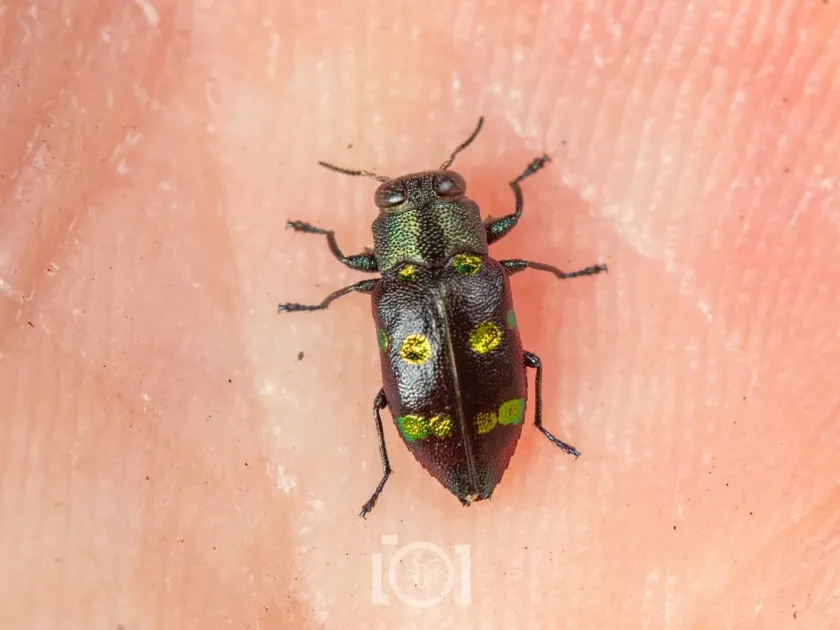
Chrysobothris chrysoela is a species of flat-headed borer belonging to the Buprestidae family. These beetles are typically 8–12 mm long, featuring a metallic sheen that ranges from bronze to gold-green, which serves as excellent camouflage on tree bark.
The adult beetle has a flattened, oval-shaped body with a retracted head and serrated antennae. The elytra (wing covers) are adorned with small, raised ridges and punctures, which are key diagnostic features for identifying this specific species.
The larvae are legless and creamy-white, characterized by a significantly enlarged, flattened prothoracic segment. This specialized body shape allows them to anchor themselves effectively while chewing through tough wood fibers.
The life cycle typically spans one to two years, depending on the host tree's condition and local climate. Adults emerge in late spring or summer, seeking sunlight to feed and mate before initiating the next generation.
These insects are highly adapted to the subcortical environment, spending the vast majority of their life cycle hidden within the cambium layer of their host plants, which protects them from many external predators.
What it damages
The beetle primarily targets members of the Rosaceae family, including apple, pear, plum, and cherry trees. Stress-prone trees, such as those suffering from drought or mechanical damage, are the most susceptible to infestation.
Larval activity is the most damaging phase. As they feed, they create meandering, broad tunnels in the cambium and sapwood, effectively girdling the tree and disrupting the transport of water and nutrients.
Adult beetles cause minor damage by feeding on foliage and young succulent shoots. However, this feeding rarely threatens the tree's health compared to the structural damage caused by the larvae inside the trunk.
As the infestation progresses, trees exhibit declining vigor, reduced foliage density, and eventual dieback of limbs. Chronic infestations can lead to total tree death within a few seasons.
Secondary infections are common, as the tunnels created by the larvae provide easy entry points for wood-decaying fungi and other pathogenic organisms, further weakening the tree's structural integrity.
Signs of infestation
A primary indicator of presence is the appearance of distinct D-shaped exit holes on the bark surface. These holes are created when mature beetles bore their way out of the tree to mate.
Bark surfaces may show signs of sap flow, cracking, or slight depressions where the larvae have extensively fed on the underlying cambium. These patches are often localized and prone to peeling.
Early wilting and yellowing of leaves on specific branches are classic symptoms. This is often followed by branch dieback, which creates a sparse, unhealthy crown appearance.
If the bark is carefully peeled back in suspicious areas, one can find flat, meandering galleries packed with frass (larval excrement and wood shavings). These galleries are characteristic of buprestid activity.
In heavily infested trees, the bark may become loose or brittle. In the late stages of infestation, the presence of woodpecker activity—small holes drilled into the bark—often suggests the presence of larvae underneath.
Control measures
Cultural management is the first line of defense. Keeping trees vigorous through proper irrigation, fertilization, and avoiding physical trauma prevents the tree from becoming an attractive host for the beetles.
Sanitation is critical. All infested branches or dead trees should be pruned, removed, and destroyed by burning or chipping to eliminate the larval population before new adults emerge.
Chemical control focuses on the adult stage. Applying systemic insecticides to the tree canopy during the peak flight period can effectively reduce the adult population and prevent egg-laying on the bark.
Natural biological control should be encouraged. Protecting populations of woodpeckers and parasitic wasps can significantly help regulate the number of borers within an orchard or landscape setting.
In high-value nurseries, applying white latex-based paint to trunks during the early season can act as a physical and visual barrier, discouraging females from laying eggs on the bark surface.
Taxonomy
- Latin name
- Chrysobothris chrysoela
- Order
- Coleoptera (beetles)
- Family
- Buprestidae
- EPPO code
- CHRBCH
Discussion
No discussions yet — be the first.