
Chalcophora fortis
Chalcophora fortis
Description
How to identify
Chalcophora fortis, commonly known as a type of large pine borer, belongs to the family Buprestidae, also known as metallic wood-boring beetles.
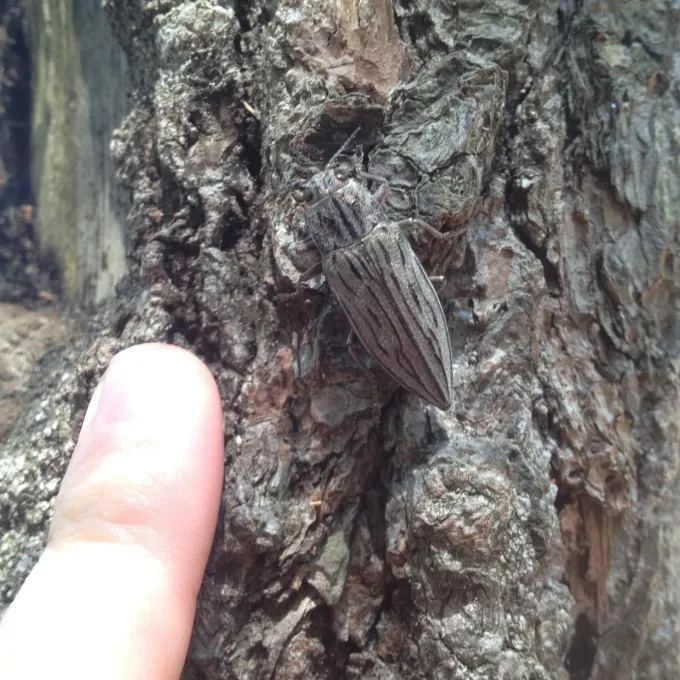
The adult beetle is quite large, typically reaching a length of 25 to 30 millimeters. Its body is elongated, slightly flattened, and features a brilliant metallic bronze or copper coloration.
The elytra, or wing covers, are sculptured with longitudinal ridges and depressions, which give the insect a distinctive, armored, and rugged appearance.
The larvae are apodous, meaning they lack legs, and have a fleshy, creamy-white appearance with a hardened, chitinous head equipped with powerful mandibles.
These beetles are primarily recognized by their size and the metallic luster that sets them apart from other common bark-inhabiting insects.
What it damages
The primary hosts for Chalcophora fortis are coniferous trees, with a strong preference for Pinus species, especially those that are already stressed.
Larvae feed beneath the bark, excavating extensive, winding galleries that can extend deep into the sapwood and heartwood, disrupting the tree's vascular system.
As the tree's ability to transport water and nutrients is compromised, the foliage begins to yellow and wither, eventually leading to the death of branches or the entire tree.
Infested trees often become highly susceptible to secondary attacks from other pests, such as bark beetles and wood-rotting fungi, which accelerate the decline.
In forestry and plantations, the presence of these beetles can lead to significant economic losses, particularly during prolonged drought periods that reduce natural tree resistance.
When it appears
Adults emerge in late spring and are typically active throughout the summer months, from May through August, when they can be seen flying on warm, sunny days.
Following mating, females deposit their eggs into crevices in the pine bark. The larvae hatch and immediately bore into the inner bark layers to begin feeding.
The life cycle of this beetle is relatively long, often spanning several years as the larvae slowly develop within the hardwood galleries.
Larvae remain active through the growing season and go dormant during the winter, overwintering in specialized pupal cells carved deep within the wood.
Monitoring the flight season of adults is crucial for determining the timing of preventative measures or for setting up traps in endangered plantations.
Signs of infestation
One of the most noticeable signs of infestation is the presence of large, oval-shaped exit holes on the surface of the bark, left behind by emerging adults.
Beneath the bark, one can observe broad, flattened tunnels filled with frass, indicating where the larvae have been feeding for several seasons.
Top-down dieback, where the crown of the tree begins to fade and die before the rest of the tree, is a common symptom of severe internal damage.
Resinosis, or excessive resin flow, may occur on the trunk in response to larval boring, although this depends on the tree's overall vigor.
Visual observation of the adult beetles during the summer flight period on trunks is also a reliable indicator of potential infestation in the immediate area.
Control measures
Sanitation felling is the most critical management strategy; removing and destroying infested trees prevents the next generation of beetles from emerging.
Proper forest hygiene, including the prompt removal of logging debris and fallen timber, helps eliminate breeding grounds for the population.
Pheromone-baited traps can be deployed during the summer months to monitor adult activity and mass-trap them to reduce the density of the pest population.
Maintaining high vigor in forest stands through thinning and proper spacing ensures that trees are better able to defend themselves against borer attacks.
In high-value ornamental or park settings, systemic insecticides can be applied as trunk injections or soil treatments to protect individual specimen trees.
Taxonomy
- Latin name
- Chalcophora fortis
- Order
- Coleoptera (beetles)
- Family
- Buprestidae
- EPPO code
- CHACFO
Discussion
No discussions yet — be the first.