
Sculptured pine borer
Chalcophora angulicollis
Description
How to identify
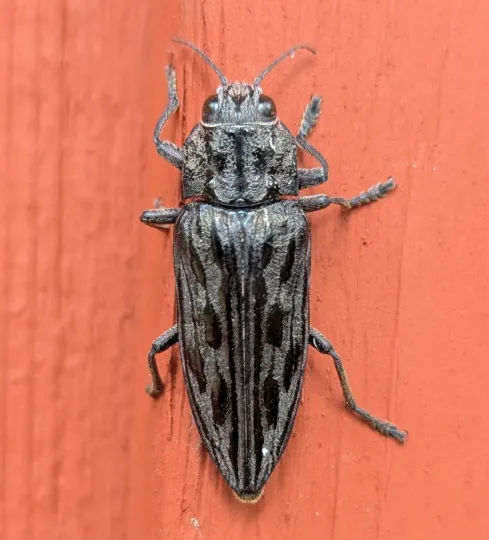
The Sculptured pine borer (Chalcophora angulicollis) is a large beetle belonging to the Buprestidae family. Adult beetles measure up to 30 mm in length and exhibit a distinct, elongated body with a dark bronze or metallic black coloration.
The name "sculptured" refers to the beetle's elytra, which feature pronounced ridges and pits, giving them a rugged, carved appearance. The antennae are serrate, and the head is largely retracted into the thorax.
Larvae are legless, white to creamy yellow, and possess a significantly enlarged prothorax. Their strong, dark mandibles are specialized for boring through tough pine wood, leaving behind characteristic larval galleries.
The life cycle is relatively long, often spanning several years depending on environmental conditions. Adults emerge during the warmer months, focusing their activity on flight and reproduction.
As wood-boring insects, these beetles are primarily attracted to trees that are already suffering from environmental stress, disease, or physical damage, which makes them opportunistic invaders of forest stands.
What it damages
The primary hosts for this species are members of the Pinus genus, particularly pine trees that are in a weakened state. They are common in areas where trees are stressed by drought or poor soil conditions.
Secondary host trees may include spruce or other conifers if they are severely debilitated by fire, mechanical injury, or environmental pressure that prevents normal sap circulation.
Feeding larvae consume the inner bark and cambium, effectively girdling the tree. This activity disrupts the transport of water and nutrients, eventually leading to crown dieback and tree death.
In silviculture, the presence of the Sculptured pine borer is an indicator of declining forest health, as these beetles rarely attack fully vigorous, healthy trees in large numbers.
The physical damage caused by larval tunnels also creates entry points for secondary pests, including various bark beetles, which can accelerate the mortality rate of the affected tree.
Signs of infestation
A key indicator of an infestation is the presence of oval-shaped exit holes on the bark of the trunk, created when the adult beetle emerges after completing its development.
Fine wood dust or "frass" visible in bark crevices or at the base of the tree is a classic symptom of larval boring activity within the conductive tissues of the wood.
As the infestation progresses, the foliage of the tree begins to fade from deep green to yellow, and eventually turns brown as the tree loses its ability to sustain its needles.
Resin flow from the trunk may occur as the tree attempts to push the larvae out, although this response is usually absent in trees that are near death due to heavy infestation.
Removing a portion of the bark on an affected tree will reveal the characteristic, flat, winding galleries filled with sawdust, which confirms the presence of the borer larvae.
Control measures
The most effective management strategy involves sanitary forest practices, such as the rapid removal and disposal of infested trees before the adult beetles emerge to reproduce.
Maintaining high forest hygiene, including the prompt removal of fallen timber and logging slash, helps reduce the breeding habitats available to the beetle population.
In ornamental or high-value landscapes, protective insecticide trunk sprays can be applied during the flight period to prevent adult females from laying eggs on the bark surface.
Promoting tree vigor through appropriate silvicultural techniques—such as thinning and ensuring adequate water availability—helps trees maintain their natural defenses against borer attacks.
Monitoring efforts using pheromone lures or visual traps can provide data on beetle populations, allowing land managers to time interventions correctly and minimize potential damage.
Taxonomy
- Latin name
- Chalcophora angulicollis
- Order
- Coleoptera (beetles)
- Family
- Buprestidae
- EPPO code
- CHACAN
Discussion
No discussions yet — be the first.