
Cercopis vulnerata
Cercopis vulnerata
Description
How to identify
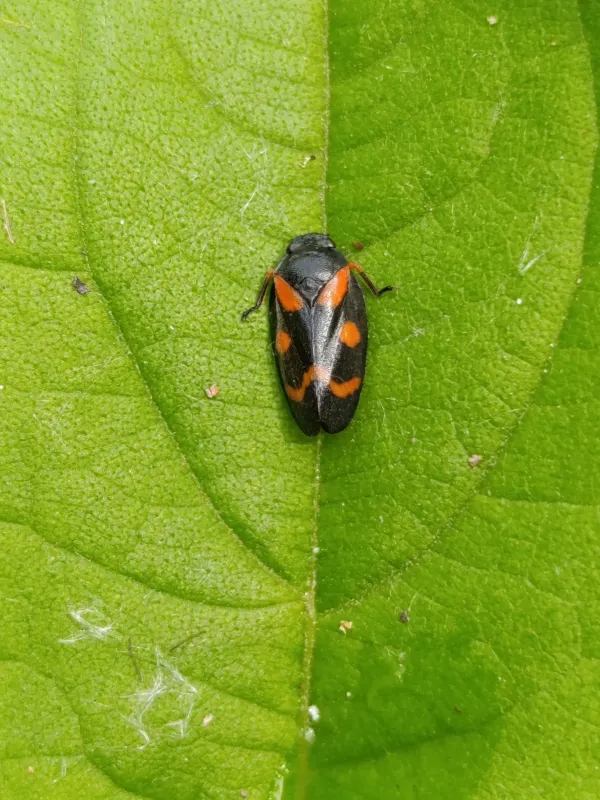
Cercopis vulnerata, commonly known as the red-and-black froghopper, is a conspicuous insect from the order Hemiptera. It is easily recognized by its distinctive black forewings featuring two bright red transverse bands, resembling blood drops.
Adult insects typically measure between 9 and 11 millimeters in length. Their striking coloration serves as a warning signal, though it also makes them relatively easy for gardeners to spot during inspections.
The nymphs of this species lead a secretive lifestyle, residing inside frothy masses commonly referred to as "cuckoo spit." This foam is secreted by the nymphs to protect their delicate bodies from desiccation and predators.
Equipped with powerful hind legs, the adults are agile jumpers. They can flee instantly when disturbed, which makes them quite elusive during manual removal attempts in a garden environment.
The life cycle involves an egg stage, five nymphal instars, and the adult stage. The species typically overwinters as eggs deposited within plant tissues or the upper layers of soil.
What it damages
This pest is a polyphage, meaning it feeds on the sap of a wide variety of plant species. Cercopis vulnerata affects both wild herbaceous plants and various agricultural and ornamental crops.
Their preferred hosts often include various grasses, legumes, and numerous garden perennials. Furthermore, they are frequently found on young nursery trees and various shrubbery.
Adults feed by sucking cell sap from the above-ground parts of plants, which disrupts photosynthesis and nutrient translocation. This leads to weakened plant vitality and reduced growth potential.
Nymphs cause damage by feeding on stems and near the root zone, leading to deformed shoots and stunted growth. Affected parts of the plant may lose turgor, resulting in wilting or curling of the leaves.
In cases of high infestation, the cumulative impact of both nymphal and adult feeding can significantly decrease plant productivity and degrade the aesthetic quality of ornamental landscapes.
When it appears
The emergence of nymphs usually occurs in late spring, coinciding with rising temperatures. This is the optimal time to scout for the characteristic white foam on plant stems.
Adult insects reach their peak activity during the early summer months, particularly in June and July. During this time, they are highly mobile and actively seek out new hosts for feeding.
As summer heat intensifies and potential drought conditions set in, the activity of these insects may fluctuate, as they prefer slightly more humid environments for their feeding sites.
By autumn, the activity levels drop as the insects prepare for reproduction and egg-laying. These eggs will remain dormant throughout the winter, ensuring the population's survival.
Successful management depends on monitoring from late May through July. Regular inspection of lower stems and the base of plants is crucial for detecting early populations.
Signs of infestation
The primary indicator of a Cercopis vulnerata infestation is the presence of white, frothy masses on stems and leaf axils. This foam appears as a dense collection of bubbles hiding the nymphs.
Visual symptoms on leaves include chlorotic spots that may eventually coalesce into larger discolored areas. Affected leaves often show signs of premature yellowing and drying.
For flowering plants, infestations can lead to bud deformation and the bending of flower stalks. In severe cases, buds may fail to open, significantly reducing the plant's decorative value.
Stunted growth of shoots is a common symptom, where the stem appears twisted or shortened. Overall, the plant may look tired, wilted, or noticeably smaller than non-infested counterparts.
A high density of jumping red-and-black insects when touching plant branches is a definitive sign of an established population within your garden beds.
Control measures
The simplest mechanical control method involves washing off the foam masses using a high-pressure water spray. This dislodges the nymphs and removes their primary protection.
For significant infestations, the use of systemic insecticides may be necessary. Products containing active ingredients like imidacloprid can be effective in targeting the sap-feeding insects.
Cultural control is highly effective; regular weeding is essential as it removes the alternative host plants where the nymphs develop before migrating to cultivated crops.
Maintaining proper watering and fertilization schedules helps plants recover from the stress caused by feeding. Healthy, vigorous plants possess better natural resistance to pest damage.
Encouraging natural predators, such as predatory bugs and ground beetles, can assist in keeping the population of the red-and-black froghopper below the economic injury threshold.
Taxonomy
- Latin name
- Cercopis vulnerata
- Order
- Hemiptera (bugs, aphids, leafhoppers)
- Family
- Cercopidae
- EPPO code
- CRCOSA
Discussion
No discussions yet — be the first.