
Red-and-black froghopper
Cercopis sanguinolenta
Description
How to identify
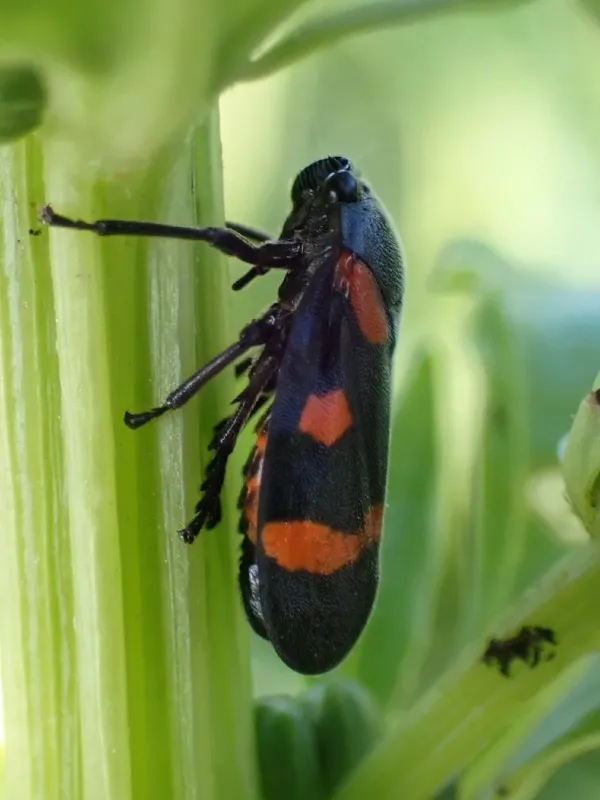
The red-and-black froghopper (Cercopis sanguinolenta) is a conspicuous insect from the Hemiptera order. It is easily identified by its striking black wings adorned with distinct red patterns, making it one of the most recognizable insects in meadows and gardens.
Adults typically measure around 9–10 mm in length. They possess strong hind legs adapted for jumping, which allows them to escape threats rapidly. This mobility makes them difficult to target with mechanical control methods.
The nymphs of this species are rarely seen because they live in a semi-subterranean environment or near the base of plants. They produce a protective froth that helps them maintain moisture and hide from potential predators.
The life cycle consists of the egg stage, five nymphal instars, and the adult stage. The species typically completes one generation per year, with eggs serving as the overwintering stage.
These insects thrive in environments with diverse herbaceous vegetation. They are highly active during warm, sunny days, which facilitates their mating and dispersal patterns across fields.
What it damages
As a polyphagous pest, the red-and-black froghopper feeds on a wide range of plants, including cereals, legumes, grapevines, and various ornamental or fruit-bearing shrubs in agricultural settings.
Damage is caused by both adults and nymphs. Adults feed on the sap of stems and leaves, which leads to metabolic stress in the plant, leaf curling, and yellowing, eventually hindering the development of the plant.
Nymphs feed on roots, often causing root system weakening. This type of damage is particularly severe for young plants or seedlings, as it limits their ability to absorb water and essential nutrients from the soil.
Infestations can result in noticeable yield losses. While individual plants might show minor stress, large-scale populations can significantly reduce the vitality of crops, leading to stunted growth and lower fruit quality.
There is also a concern regarding the role of froghoppers as potential vectors for various plant pathogens, including viruses and phytoplasmas, which can spread diseases throughout a plantation.
When it appears
Adults typically emerge in late spring, with the peak activity period occurring in June and July. During these months, they are most frequently spotted on the foliage of their host plants.
Mating and oviposition occur throughout the early summer. Females lay their eggs in protected sites, such as soil crevices or near the base of vegetation, ensuring their survival until the following spring.
Nymphs become active in early spring, synchronized with the warming of the soil. The period from April to May is critical, as nymphs grow rapidly to reach maturity before the summer heat intensifies.
Once they molt into adults, the cycle continues. The abundance of the population is highly dependent on spring temperatures and moisture levels, which influence the survival rate of the nymphs.
By autumn, the presence of adults declines as their lifespan comes to an end. The species survives the winter exclusively in the egg stage, buried safely within the substrate.
Signs of infestation
The presence of frothy masses near the base of plants or on stems is the primary indicator of infestation. Although the froth of C. sanguinolenta is not as voluminous as that of some other species, its presence confirms the pest's activity.
Feeding damage is characterized by necrotic spots, yellowing, or slight distortion of leaves. If the infestation is concentrated on the stem, the leaves may show signs of wilting or chlorosis.
In fields, the sudden appearance of small, jumping insects when plants are disturbed is a clear sign. Observing these insects in high densities suggests a population that needs monitoring.
Affected young trees or bushes may show stunted growth compared to healthy ones. In severe cases, the tips of young shoots might wither or turn brown, indicating heavy sap depletion.
Gardeners and farmers should perform regular inspections during the peak months to detect any early signs of nymphal froth or adult feeding damage on the leaves.
Control measures
Cultural control is the most effective approach, starting with the removal of weeds around field margins. These weeds act as primary reservoirs for the pest population before they move to main crops.
Deep autumn plowing of the soil is recommended to destroy overwintering eggs. By burying the top layer of soil, farmers can significantly reduce the emergence of nymphs in the following spring.
Chemical control should be applied judiciously, focusing on systemic insecticides if the population density exceeds economic damage thresholds. Proper timing is crucial to target the adults before they lay eggs.
Biological control options, such as using entomopathogenic fungi, can be effective in smaller gardens or organic farms, providing a safer alternative to synthetic pesticides for fruit-bearing crops.
Maintaining crop health through balanced fertilization and adequate water management increases plant resistance, helping them withstand minor feeding pressure from froghoppers.
Taxonomy
- Latin name
- Cercopis sanguinolenta
- Order
- Hemiptera (bugs, aphids, leafhoppers)
- Family
- Cercopidae
- EPPO code
- CRCOSN
Discussion
No discussions yet — be the first.