
Ceratomia amyntor
Ceratomia amyntor
Description
How to identify
Ceratomia amyntor, commonly known as the Elm Sphinx, is a moth species belonging to the Sphingidae family, recognized by its impressive size and larval appearance.
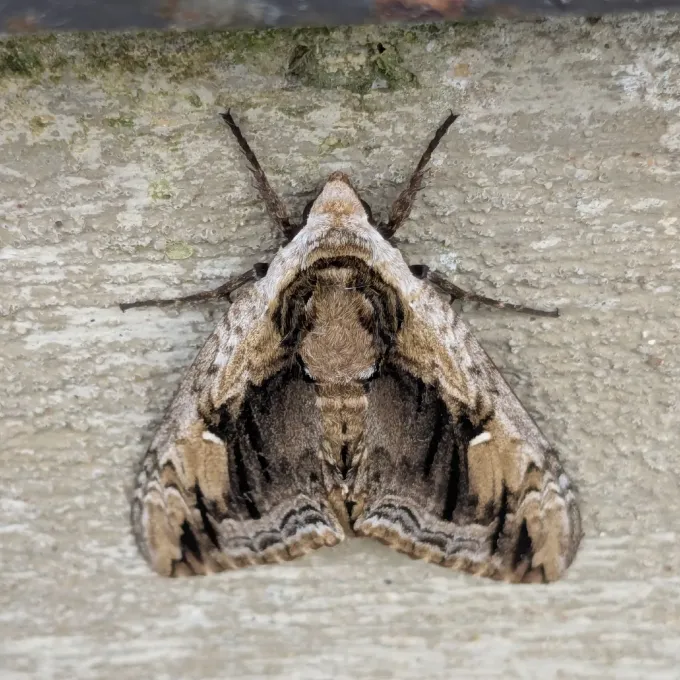
Adult moths feature a cryptic coloration pattern that mimics tree bark, providing excellent camouflage while resting on tree trunks during the day.
The larvae are distinct due to four pairs of fleshy, horn-like projections on the thoracic segments, coupled with a prominent horn at the posterior end.
The lifecycle consists of four main stages: egg, larva (which undergoes five instars), pupa, and adult moth, completing its development within one or two generations per year.
Monitoring adult activity is best achieved using light traps, as these moths are primarily nocturnal and highly responsive to artificial light sources.
What it damages
The damage is caused exclusively by the larvae, which are voracious feeders capable of defoliating significant portions of a host tree's canopy.
The primary host plants are elm trees (Ulmus), though they are also frequently observed on birch (Betula) and linden (Tilia) trees in urban landscapes.
Heavy infestations result in complete foliage loss, which weakens the tree and depletes its energy reserves stored in the root system.
Repeated defoliation over consecutive seasons can lead to the decline of mature trees or the death of younger, less established saplings.
The larvae consume the entire leaf blade, leaving only the primary midrib, which significantly impacts the tree's photosynthetic capability.
When it appears
Adults emerge from their overwintering pupal stage in the soil during late spring, triggered by the warming temperatures of the season.
Eggs are deposited individually or in small groups on the leaves of host trees, with hatching occurring after a short incubation period.
The larval stage is active throughout the peak summer months, with the most severe feeding damage occurring during July and August.
As autumn approaches, mature larvae cease feeding and descend to the ground to pupate in the soil at a shallow depth.
The pupal stage is the overwintering form, allowing the insect to survive harsh winter conditions until the cycle repeats the following spring.
Signs of infestation
Visible signs of infestation include partially or completely skeletonized leaves scattered throughout the tree's canopy.
Accumulations of large, pellet-like frass on the ground beneath the tree are a clear indicator of the presence of actively feeding caterpillars.
Early-stage detection involves inspecting the underside of leaves for small, freshly laid eggs or early-instar larvae.
Damaged bark or minor scarring on new growth may also be observed, as larvae occasionally browse on succulent stems when leaf tissue is depleted.
During the night, the sound of falling debris or frass from the canopy can sometimes alert an observant gardener to an ongoing infestation.
Control measures
Hand-picking caterpillars is a highly effective, non-toxic management strategy for small-scale gardens and individual ornamental trees.
Biological control agents, such as formulations containing Bacillus thuringiensis, are effective against larvae while being safe for beneficial predators.
Tilling the soil around the base of trees in the fall can expose pupae to freezing temperatures and bird predation, significantly reducing the next generation.
- Applying systemic insecticides as a last resort in severe outbreaks.
- Using sticky traps or physical barriers on trunks to hinder larval movement.
- Promoting natural habitats for insectivorous birds and parasitic wasps.
Consistent monitoring and early intervention are the cornerstones of successfully preventing long-term damage from this foliage-consuming pest.
Taxonomy
- Latin name
- Ceratomia amyntor
- Order
- Lepidoptera (butterflies)
- Family
- Sphingidae
- EPPO code
- CERIAM
Discussion
No discussions yet — be the first.