
Ceratina mandibularis
Ceratina mandibularis
Description
How to identify
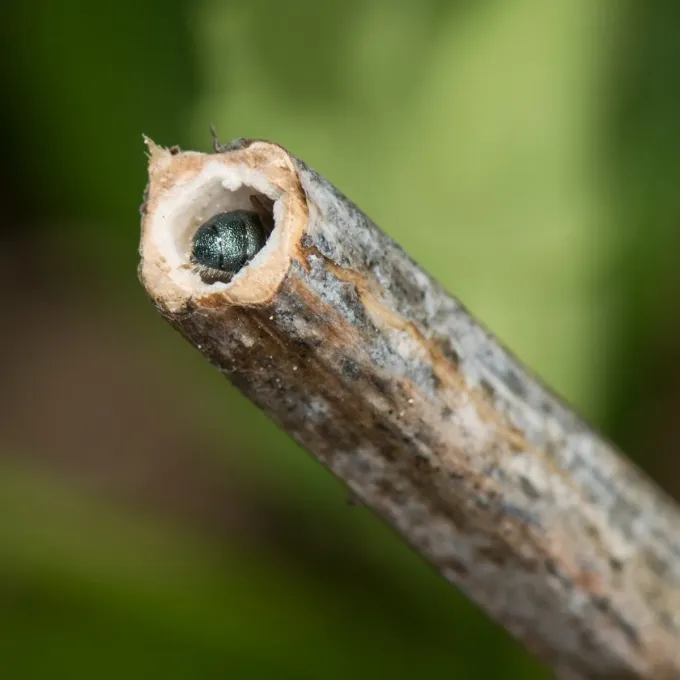
Ceratina mandibularis is a species of bee belonging to the family Apidae. They are solitary bees, known for their habit of nesting within the stems of plants.
Adult bees are relatively small, often dark in color, and possess specialized mandibles designed for excavating the soft pith of plant stems.
They are generally elusive, and their lifecycle is strictly dependent on finding suitable substrates for their brood nests.
Unlike social bees, these insects work individually, which often makes their presence go unnoticed until physical damage to the plants becomes visible.
Understanding their nesting behavior is key to identifying them, as they prefer dry or weakened stems where they can easily create tunnels.
What it damages
This insect primarily attacks plants with soft pith, including berry bushes like raspberry or blackberry and various garden perennials.
The damage is caused when the female bee bores into the stem to create a gallery for her eggs, which disrupts the structural integrity of the branch.
Affected stems often show reduced vigor, stunted growth, and decreased yield, as the internal damage interferes with water and nutrient transport.
The tunnels created by these bees weaken the plant, making stems susceptible to breaking under wind pressure or the weight of fruit.
Furthermore, the physical wounds provide an entry point for opportunistic plant pathogens, leading to secondary rot and tissue decay.
Signs of infestation
The most reliable sign of an infestation is the presence of small, perfectly circular entry holes on the stems, typically located near pruning cuts.
If a suspected stem is split open, one will find excavated channels in the pith, often partitioned into small cells for the developing larvae.
Visible wilting of the stem tip or premature yellowing of foliage can indicate that the internal vascular system has been compromised.
Plants may show reduced reproductive success, with flowers failing to develop properly if the stem supporting them is heavily bored.
In cases of long-term infestation, the overall density and health of the plant canopy may decline significantly across the growing season.
Control measures
Effective management relies heavily on good horticultural hygiene, specifically the regular removal and destruction of dead or damaged stems.
Applying pruning sealants to fresh cuts on canes and stems is crucial to prevent the bees from utilizing these openings as entryways for their nests.
Clearing away old plant debris at the end of the season prevents overwintering populations from establishing themselves in the garden area.
Maintaining high plant vigor through proper fertilization and watering helps the plants withstand and recover from minor tunneling damage.
Chemical control is rarely effective or recommended because the insects are protected within the stems, making preventative cultural practices the best defense.
Taxonomy
- Latin name
- Ceratina mandibularis
- Order
- Hymenoptera
- Family
- Apidae
- EPPO code
- CRATMA
Discussion
No discussions yet — be the first.