
Ceratina cyanea
Ceratina cyanea
Description
How to identify
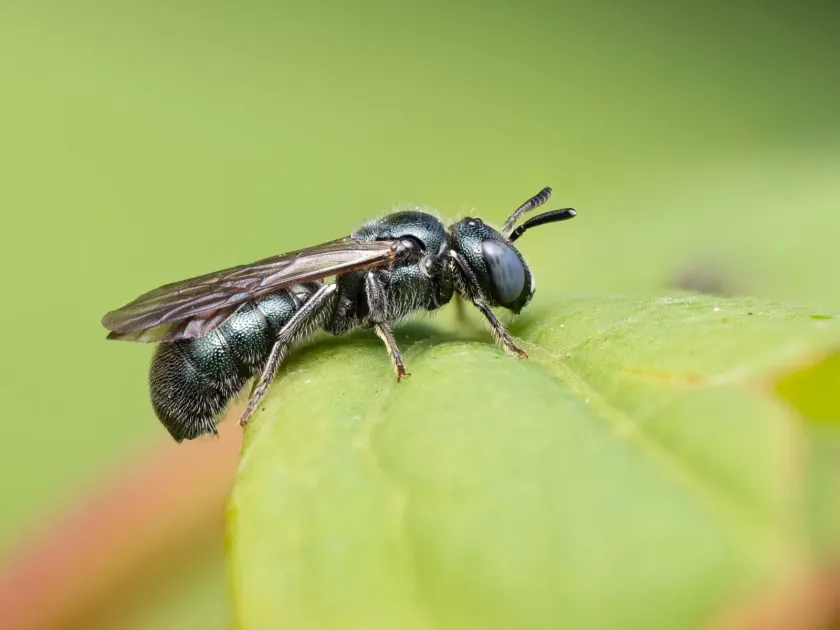
Ceratina cyanea, commonly known as a small carpenter bee, belongs to the family Apidae and is distinguished by its small size and metallic blue coloration.
Adult bees typically measure between 5 to 8 mm in length, featuring a smooth, sparsely hairy body that reflects light with a distinct metallic sheen.
Unlike honeybees or bumblebees, Ceratina cyanea lives a solitary lifestyle, meaning each female independently constructs her own nest.
These bees are often found in habitats where dry, pithy stems are available for nesting, including gardens, parks, and meadows.
Their morphological structure allows them to navigate narrow spaces, making them efficient at colonizing hollow or soft-centered plant stems.
What it damages
The primary damage caused by Ceratina cyanea is the mechanical excavation of plant tissue during the nesting process.
Females prefer to bore into the pith of stems such as roses, raspberries, blackberries, and sunflowers, weakening the structural integrity of the plant.
While a single nest rarely causes significant plant death, a high concentration of nesting activity can lead to the wilting of affected branches.
The damage is more pronounced in younger or already stressed plants that cannot tolerate the internal tunneling caused by the bees.
However, it is vital to balance the damage with the ecological benefit, as these bees are important pollinators for many backyard plants.
When it appears
The activity of adult bees begins in the spring when temperatures rise, signaling the emergence from their overwintering sites.
The nesting season spans throughout the warmer months, typically from late spring until late August, depending on the local climate.
During this time, females actively hunt for suitable nesting sites to lay their eggs and provision them with pollen and nectar.
As the season progresses toward autumn, the offspring mature and prepare to overwinter within the same stems they were raised in.
Winter survival is crucial, as the population relies on the availability of sturdy, pithy plant stems to protect them from harsh weather.
Signs of infestation
The most visible sign of nesting is the presence of small, perfectly round entrance holes in the ends of cut or damaged plant stems.
Upon inspecting the interior of a stem, one may find partitions made of chewed plant fibers, separating individual brood cells.
Small piles of sawdust or pith debris near the stem entrance serve as a reliable indicator of recent excavation activity.
Unexplained wilting of shoots that appear healthy externally often points to internal tunneling or pith removal by wood-boring insects.
Gardeners may observe adult bees hovering near potential nesting sites, looking for an entry point in exposed pith or broken stems.
Control measures
Effective control for Ceratina cyanea focuses on physical barriers and garden sanitation to reduce available nesting sites.
Regular pruning of dead or decaying stems in early spring helps remove overwintering sites before the bees emerge to establish new nests.
Applying pruning sealers or garden paint to the ends of thick stems prevents bees from accessing the soft pith inside the plant.
Maintaining high plant vigor through proper fertilization and watering makes plants less susceptible to the negative effects of stem-boring insects.
- Remove old raspberry and rose canes in late winter.
- Avoid leaving jagged stem ends that provide easy entry points.
- Support beneficial pollinators while managing nest density through cultural practices.
Taxonomy
- Latin name
- Ceratina cyanea
- Order
- Hymenoptera
- Family
- Apidae
- EPPO code
- CRATCY
Discussion
No discussions yet — be the first.