
Horned viper
Cerastes cerastes
Description
How to identify
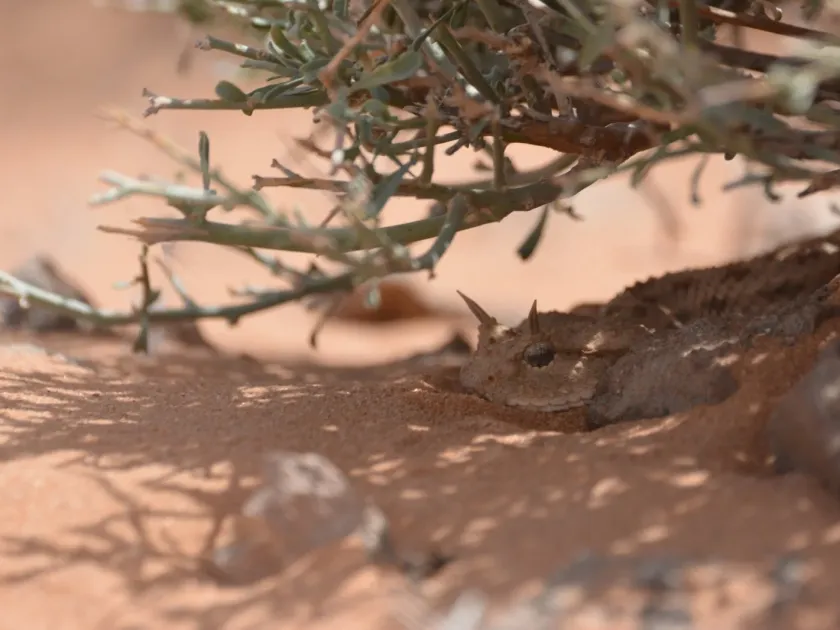
The horned viper (Cerastes cerastes) belongs to the Viperidae family and is characterized by the presence of a horn-like scale above each eye.
These snakes are typically small to medium-sized, ranging from 30 to 60 cm in length, with a thick, heavy body and a broad triangular head.
Their skin coloration is adapted to the desert environment, usually consisting of yellow, sand, or light gray shades with darker, irregular patterns.
The most iconic movement pattern of this species is sidewinding, which allows the snake to navigate effectively over loose, shifting desert sands.
They are primarily nocturnal, using their camouflage and ability to bury themselves in the sand as a strategy to stay hidden from potential threats and prey.
What it damages
The horned viper is not considered a pest in agriculture because it does not consume plants, seeds, or any parts of agricultural crops.
As a predatory species, it lives in and around agricultural areas primarily to hunt rodents and small birds, effectively contributing to natural pest control.
There is no direct damage to crops, irrigation systems, or infrastructure, making the species ecologically neutral or even beneficial to the farm's balance.
The primary concern regarding this snake in an agricultural context is human safety, as the species is venomous and defensive if threatened by workers.
Therefore, farmers should view the horned viper as a component of the local ecosystem rather than an enemy to be targeted by control measures.
When it appears
The seasonal activity of the horned viper is heavily influenced by the extreme temperature cycles typical of its natural arid and semi-arid habitat.
Spring marks the beginning of their activity as temperatures rise, signaling the transition from the winter dormancy period to active hunting.
During the intense heat of summer, the snakes shift their activity to the night to avoid extreme daytime temperatures and maintain physiological balance.
As autumn approaches and temperatures drop, their hunting activity increases in preparation for the winter dormancy period.
Winter dormancy occurs in subterranean burrows or rodent holes, where the snakes remain inactive until spring temperatures return.
Signs of infestation
The primary sign of the horned viper's presence is the unique tracks left in the sand, characterized by a series of diagonal lines with terminal marks.
Abandoned rodent burrows near the farm may be occupied by vipers, as these structures provide necessary shelter from the sun during the day.
Shed skins left in hidden or protected spots near debris or rocky areas are a clear indication of a resident snake population in the area.
A distinctive hissing sound, created by rubbing the scales against each other, is a defensive signal that warns of a snake's immediate vicinity.
Frequent sightings of these predators are often correlated with areas of high rodent density, which serves as a natural indicator of the farm's food chain status.
Control measures
No agricultural control measures are required or recommended, as the species is not a pest and performs a valuable function in the ecosystem.
Risk mitigation is best achieved through personal protective equipment (PPE), such as wearing heavy boots and long trousers when working in fields.
Keeping the agricultural area clean by removing piles of rocks, wood, and waste reduces the availability of hiding spots, minimizing snake-human contact.
Safety training for staff is essential; it should emphasize that snakes should be left alone and never handled or provoked under any circumstances.
If a horned viper is found in a work zone, the best practice is to stop activity and allow the snake to vacate the area naturally without interference.
Taxonomy
- Latin name
- Cerastes cerastes
- Family
- Viperidae
- EPPO code
- KERSCE
Discussion
No discussions yet — be the first.