
Palm dart
Cephrenes trichopepla
Description
How to identify
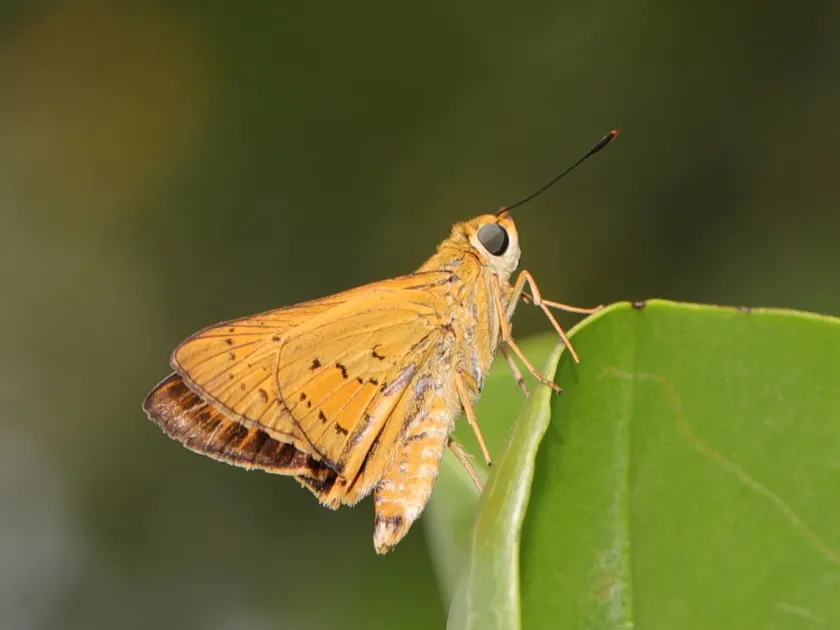
The palm dart (Cephrenes trichopepla) is a butterfly species within the Hesperiidae family, known for its distinctive behavior as a palm-infesting pest.
Adult butterflies have a wingspan of approximately 40–50 mm, featuring a vibrant orange-brown coloration with dark borders and translucent wing spots.
The larvae, or caterpillars, are smooth-bodied and green, often showing a dark dorsal line, which aids in their camouflage against palm fronds.
Pupation occurs within a shelter created by the caterpillar, which rolls or folds portions of the palm leaf and binds them with silk webbing.
Adults are diurnal, preferring to fly and mate during bright, sunny conditions, making them easy to spot during the day in warm climates.
What it damages
The palm dart primarily targets various palm species, including popular ornamental varieties and commercial crops like coconut palms.
Larvae feed on the foliage, consuming large portions of the leaf blade and leaving behind irregular, ragged edges on the fronds.
The loss of significant leaf surface area hampers the plant's ability to perform photosynthesis, leading to stunted growth and reduced vigor.
In ornamental nursery settings, the damage caused by this insect significantly lowers the marketability and visual appeal of the palms.
Heavy infestations can result in the complete stripping of younger fronds, making the plant vulnerable to stress and opportunistic diseases.
Signs of infestation
The most diagnostic sign of an infestation is the presence of rolled leaf "tents" or cylinders, which are distinctly created by the caterpillars.
Inspecting the foliage often reveals ragged edges and distinct notches in the leaf margins where the larvae have been actively grazing.
Small piles of frass (caterpillar droppings) found on the lower fronds or on the ground beneath the canopy indicate active larvae above.
The appearance of multiple orange-brown butterflies fluttering around the canopy suggests active egg-laying and a potential outbreak.
Young fronds may appear wilted or deformed if the caterpillar has spun its protective shelter across the emerging leaf growth.
Control measures
Manual removal of leaf shelters is a highly effective cultural control method for small palms, preventing the next generation of the pest.
Biological control using Bacillus thuringiensis (Bt) sprays targets the caterpillars specifically without harming beneficial insects or the environment.
Systemic insecticides are recommended for large-scale infestations, as they provide longer-lasting protection by translocating within the palm tissue.
- Maintain vigorous palm health with proper fertilization and irrigation.
- Use pheromone-baited traps to monitor adult butterfly activity levels.
- Encourage local populations of natural predatory wasps and birds.
Early detection through frequent canopy inspections remains the best strategy to prevent significant economic or aesthetic damage to the palm trees.
Taxonomy
- Latin name
- Cephrenes trichopepla
- Order
- Lepidoptera (butterflies)
- Family
- Hesperiidae
- EPPO code
- CEPRTR
Discussion
No discussions yet — be the first.