
White-lined sphinx
Celerio lineata
Description
How to identify
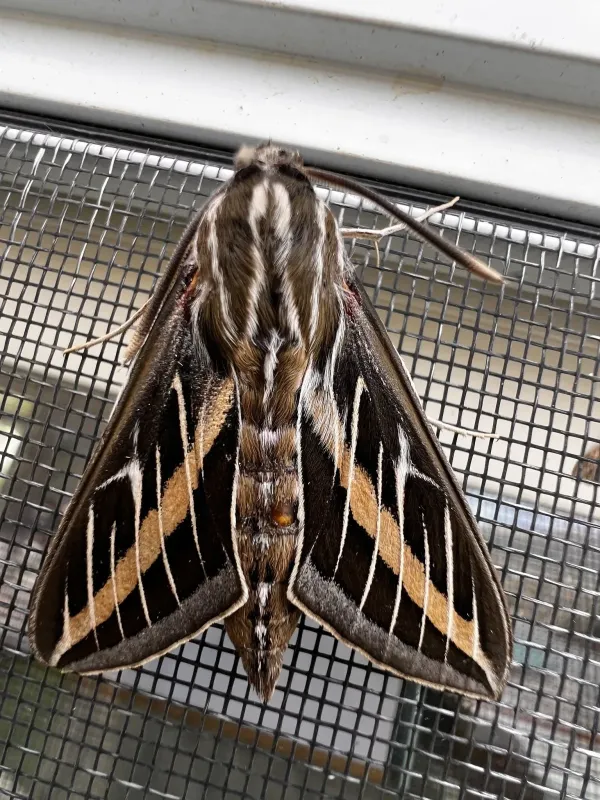
The white-lined sphinx, scientifically known as Hyles lineata, is a prominent member of the Sphingidae family. Adult moths feature a large wingspan of up to 80 mm and are distinguished by olive-brown wings with striking white longitudinal lines.
The larvae, or caterpillars, are highly recognizable and can grow up to 8 cm in length. They exhibit a wide color range from bright green with yellow markings to almost black patterns. A signature feature is the horn-like appendage on the posterior, characteristic of the sphinx moth family.
The life cycle involves complete metamorphosis, progressing through egg, larval, pupal, and adult stages. In warmer climates, this species can produce multiple generations annually, significantly increasing its population pressure on local vegetation.
Overwintering occurs primarily in the pupal stage, with pupae burrowing into the soil or hiding under debris. Adult emergence typically takes place in late spring or early summer, following the warming of soil temperatures.
Adult moths are powerful flyers and are known for their migratory behavior. This mobility allows them to colonize new areas rapidly and find suitable host plants across vast geographical ranges.
What it damages
The larvae of the white-lined sphinx are generalist feeders, meaning they attack a wide variety of plant species. Common hosts include grapevines, tomatoes, peppers, eggplants, and various garden ornamentals.
Damage is characterized by severe defoliation. Caterpillars consume large amounts of leaf tissue, often leaving only the main veins behind. In cases of heavy infestation, entire plants can be stripped of their foliage in a matter of days.
The destruction of leaves leads to a significant decrease in photosynthetic capacity, which directly stresses the plant. This stress reduces overall growth, weakens the plant's natural defense mechanisms, and can lead to yield failure.
Beyond foliage, caterpillars may feed on young fruit, buds, or flowers. This feeding behavior can ruin the marketability of crops and result in direct financial losses for farmers and gardeners alike.
Outbreaks are usually sporadic but intense. When population density is high, the collective feeding activity can cause irreversible damage to crops, necessitating rapid management intervention.
Signs of infestation
The presence of large, pellet-like frass (excrement) on the ground or on lower leaves is a primary indicator of larval activity. Finding these droppings is often the first hint that caterpillars are present.
Careful inspection of the underside of leaves can reveal the presence of eggs or young, early-stage larvae. The discovery of jagged, eaten leaf margins is another clear visual signal of an ongoing infestation.
Adult moths are often seen hovering over flowers at dusk, exhibiting a flight pattern very similar to that of hummingbirds. Spotting these adults is a strong sign that egg-laying is occurring nearby.
The characteristic horn on the caterpillar’s abdomen serves as a reliable diagnostic tool to distinguish this species from other lepidopterans that might occupy the same ecosystem.
Sudden wilting or localized plant dieback can indicate the presence of hidden caterpillars. Although larvae are often visible, they may rest in the dense foliage during the day, becoming active primarily as light levels drop.
Control measures
Cultural control begins with thorough soil cultivation in the autumn. Tilling the soil helps disrupt the overwintering pupae and exposes them to environmental factors and natural predators.
Manual removal of caterpillars is a practical approach for small-scale gardens. Collecting them in the evening, when they are most active, can significantly reduce the impact on your vegetable patches.
Biological control, particularly the use of Bacillus thuringiensis sprays, is highly effective against younger larval stages. This method is environmentally friendly and targets the pest without harming beneficial insects.
Chemical intervention should be used as a last resort during heavy outbreaks. Select appropriate insecticides and strictly follow the label instructions regarding application rates and pre-harvest intervals to ensure safety.
Integrated Pest Management (IPM) is the best long-term strategy. By combining cultural practices, biological agents, and selective use of pesticides, growers can effectively keep white-lined sphinx populations below economic damage thresholds.
Taxonomy
- Latin name
- Celerio lineata
- Order
- Lepidoptera (butterflies)
- Family
- Sphingidae
- EPPO code
- CELELI
Discussion
No discussions yet — be the first.