
Bedstraw hawk-moth
Celerio gallii
Description
How to identify
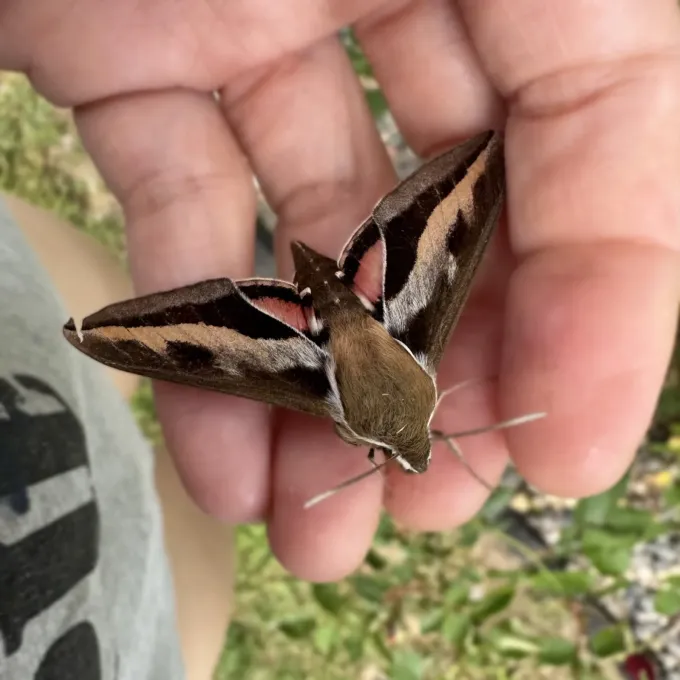
The bedstraw hawk-moth (Hyles gallii, syn. Celerio gallii) is a large moth in the Sphingidae family. The adult moth features a robust body with narrow forewings that have a distinct white central band, with a wingspan typically ranging from 65 to 80 mm.
The caterpillar of this species is its most recognizable stage, growing up to 80 mm in length. Its color is variable, ranging from vibrant green to dark brown, and it features distinctive "eyespot" markings on the sides, which serve to deter potential predators.
A well-developed horn on the posterior end of the abdomen, usually red or yellow, is a characteristic feature of this caterpillar. When threatened, the larva often rears up its front part, a defensive posture common among many hawk-moth species.
The pupa is dark brown and typically undergoes metamorphosis within a silken cocoon in the soil. This underground stage allows the insect to successfully overwinter in temperate climates, surviving harsh weather conditions.
These moths are found in a variety of habitats, including forest edges, meadows, and occasionally gardens. While generally fascinating, their presence in large numbers can lead to significant foliage loss on specific host plants.
What it damages
The primary host plants for the bedstraw hawk-moth larvae belong to the Galium (bedstraw) and Chamaenerion (willowherb) families. In agricultural contexts, they may also occasionally feed on related garden crops.
The larvae are voracious eaters, capable of stripping entire leaves from stems in a very short time. This defoliation can be detrimental to the plant's health, particularly if the larvae are present in high densities.
For young shrubs or ornamental plants, heavy feeding pressure reduces the photosynthetic area, which inhibits overall plant development and stresses the plant, making it more vulnerable to secondary infections.
While the bedstraw hawk-moth is rarely considered a major agricultural pest like aphids or beetles, localized infestations can be quite noticeable and require intervention to protect the aesthetic or productive value of the plants.
Damage is characterized by complete leaf loss or skeletonized veins, as the caterpillars often consume everything but the toughest parts of the foliage and stems of their host plants.
When it appears
The life cycle typically includes one or two generations per year depending on the geographic location. Adult moths are primarily active during the summer months, from late spring until early autumn.
Caterpillars are most active and visible during July and August, when they feed intensely to accumulate the energy required for pupation. This is the period when most feeding damage occurs in garden settings.
Winter is spent in the pupal stage within the soil. This survival strategy ensures that the population can emerge in the following spring once the ambient temperatures and host plant availability are favorable.
Emergence of the adult moths often coincides with the blooming of various nectar-rich flowers. The adults are strong fliers and can travel significant distances, which facilitates the wide distribution of the species.
Environmental conditions such as soil moisture and temperature during the summer and winter months are the key factors determining the survival rate and population density of the moth for the following season.
Signs of infestation
The first sign of an infestation is often the sudden appearance of bare branches or leaves with irregular edges, accompanied by dark, pellet-like frass scattered on the ground beneath the plants.
The caterpillars are quite large and relatively easy to spot if you examine the undersides of leaves or along the stems during the early morning or evening hours when they are most active.
During the twilight hours, adult moths may be seen hovering over nectar-rich flowers. Their behavior of hovering in place while feeding often leads them to be mistaken for hummingbirds.
- Defoliation of specific plant branches.
- Large, cylindrical frass pellets found beneath the foliage.
- Visible presence of large, colorful caterpillars with eyespot markings.
- Stunted shoot growth in young ornamental or fruit plants.
Regular monitoring of your garden beds is the best strategy to detect the larvae early, allowing for quick control measures before the population reaches damaging levels.
Control measures
Hand-picking the caterpillars is the most effective and eco-friendly control method for small-scale infestations in home gardens. It is best performed in the early morning or late evening.
For larger areas, biological control agents such as Bacillus thuringiensis (Bt) can be used. This bacterial insecticide is effective against young larvae and is selective, minimizing harm to beneficial insects and pollinators.
Chemical insecticides should be used as a last resort, as the bedstraw hawk-moth is not a major agricultural pest, and broad-spectrum chemicals can disrupt the balance of beneficial predatory insects in the garden.
Cultural practices, such as turning over the soil around host plants in the late autumn, can expose and destroy the pupae, significantly reducing the number of moths that will emerge in the following spring.
Removing wild bedstraw and willowherb species in the immediate vicinity of your garden can help reduce the attractiveness of the area to egg-laying moths, thereby lowering the risk of infestation on your ornamental crops.
Taxonomy
- Latin name
- Celerio gallii
- Order
- Lepidoptera (butterflies)
- Family
- Sphingidae
- EPPO code
- CELEGI
Discussion
No discussions yet — be the first.