
Carcharodus lavaterae
Carcharodus lavaterae
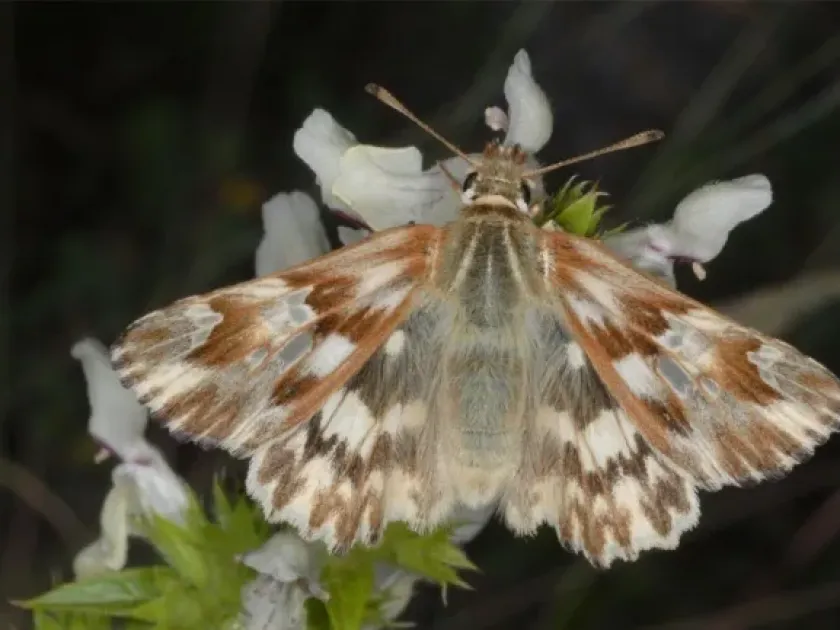
Description
How to identify
Carcharodus lavaterae, commonly known as the marbled skipper, belongs to the order Lepidoptera and the family Hesperiidae. It is a small butterfly species characterized by its distinctive mottled wing pattern.
The adult butterfly has a wingspan of approximately 30-35 mm. Its wings are typically grey-brown with translucent white spots, providing excellent camouflage against soil and dry vegetation backgrounds.
The larvae, or caterpillars, are green or greyish with a prominent dark dorsal line and a black head capsule. They are notoriously cryptic, often remaining hidden within the foliage of their host plants.
The species usually has one generation per year, overwintering as a mature larva or pupa. Adults emerge in spring or early summer to mate and lay eggs on the leaves of specific host plants.
Their life cycle is highly influenced by climatic conditions, with development rates accelerating during warm, sunny periods. The survival of the population depends on the availability of suitable host plants during the early larval stages.
What it damages
The primary hosts for Carcharodus lavaterae are plants belonging to the Malvaceae family. While they rarely cause catastrophic damage in large-scale agriculture, they can be significant pests in herbal gardens and decorative landscapes.
Key plants affected include Lavatera species, various mallows (Malva), and Althaea. The larvae feed on the leaf tissue, which can lead to significant defoliation if infestation levels are high.
Signs of infestation
The most reliable sign of an infestation is the presence of rolled or folded leaves. The caterpillar uses silk webbing to tie leaf edges together, creating a protected shelter for feeding and resting.
Inside these silken shelters, one can find signs of frass (caterpillar excrement) and irregularly shaped holes in the leaf blades. Affected plants may show stunted growth and cosmetic degradation due to the loss of leaf area.
Control measures
Manual removal of infested, rolled leaves is the most environmentally friendly and effective strategy for small-scale gardens. By checking plants regularly, gardeners can eliminate larvae before they reach maturity.
Biological control agents, such as formulations containing Bacillus thuringiensis, are highly effective against young larvae while preserving beneficial insect populations in the area.
If chemical intervention becomes necessary, systemic insecticides should be applied selectively. Always refer to local regulations regarding the use of pesticides on ornamental or medicinal plants.
Cultural practices, including the removal of wild mallow weeds in the vicinity, are essential to break the pest's reproductive cycle. Maintaining plant health ensures better tolerance against herbivory damage.
Monitoring for adult flight activity helps in predicting potential outbreaks. Setting up traps or simply performing weekly visual inspections of host plants during the growing season is a proactive way to manage the population.
Taxonomy
- Latin name
- Carcharodus lavaterae
- Order
- Lepidoptera (butterflies)
- Family
- Hesperiidae
- EPPO code
- CRCHLA
Discussion
No discussions yet — be the first.