
Southern Marbled Skipper
Carcharodus boeticus
Description
How to identify
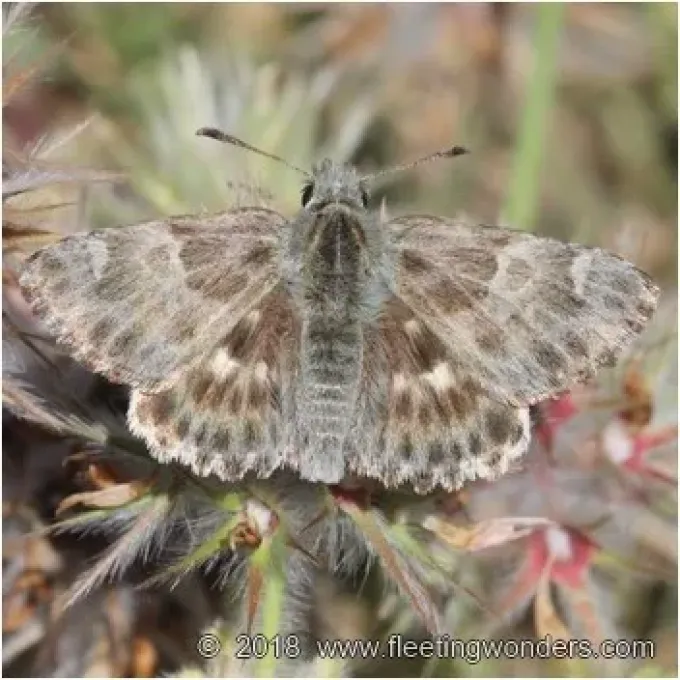
The Southern Marbled Skipper (Carcharodus boeticus) is a butterfly belonging to the Hesperiidae family within the order Lepidoptera. The adults are characterized by a wingspan of approximately 25–30 mm and wings featuring a distinct dark brown and greyish-brown marbled pattern with white spots.
Their bodies are densely covered in fine hairs, typical for the skipper butterfly family, giving them a robust appearance. When at rest, they often keep their wings in a way that provides excellent camouflage against soil or withered vegetation, making them difficult to detect in the field.
What it damages
The larval stage of this species primarily feeds on plants within the Fabaceae (legume) family. They are known to infest various wild and cultivated legume species, which can lead to significant biomass loss if the population density reaches high levels during the growing season.
The damage is primarily caused by the larvae consuming leaves, which reduces the plant's ability to photosynthesize. In cases of severe infestation, the larvae may also target flower buds, which directly impacts the yield of leguminous crops grown for seed or forage production.
When it appears
The life cycle of the Southern Marbled Skipper is highly dependent on climatic factors. In most temperate to warm regions, the adults are active from late spring through late summer, typically between May and August, with the possibility of multiple generations in favorable southern climates.
The winter is passed in the larval stage, often hidden within sheltered areas at the base of host plants or within the debris layer. As temperatures rise in spring, the larvae resume feeding before pupating, leading to the emergence of the first adult generation of the year.
Signs of infestation
To identify an infestation, look for irregular feeding patterns on the foliage, such as notched or skeletal leaves. A hallmark behavior of the larvae is the construction of protective shelters made by tying leaves together with silk, which provides a refuge from predators and extreme heat.
The presence of small pellets of frass (excrement) within these leaf shelters or on the leaves below is a definitive indicator of the pest's presence. Monitoring should focus on the younger, tender growth of the host plants, where larvae are most commonly found in the early stages.
Control measures
Effective management begins with strict field hygiene, including the removal of weeds that act as alternative host plants, particularly those belonging to the Fabaceae family. Deep cultivation of the soil after harvest can disrupt the overwintering sites of the larvae, thereby reducing future pressure.
Biological control, such as the use of Bacillus thuringiensis, is recommended for eco-friendly population suppression. Chemical insecticides should be reserved for scenarios where monitoring indicates that the larval damage is approaching economic thresholds, ensuring applications are targeted correctly.
Taxonomy
- Latin name
- Carcharodus boeticus
- Order
- Lepidoptera (butterflies)
- Family
- Hesperiidae
- EPPO code
- CRCHAB
Discussion
No discussions yet — be the first.