
Mallow skipper
Carcharodus alceae
Description
How to identify
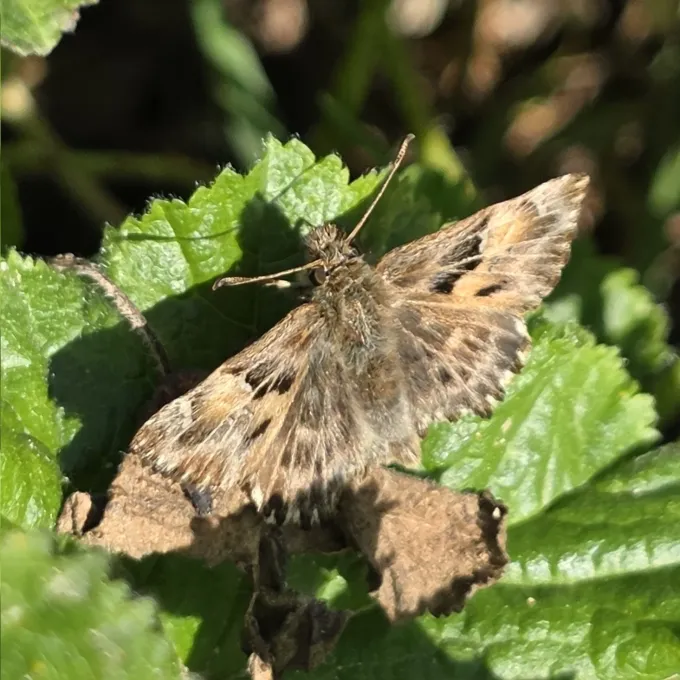
The mallow skipper (Carcharodus alceae) is a butterfly belonging to the order Lepidoptera and the family Hesperiidae. Adult butterflies have a wingspan of approximately 30–35 mm.
The wings exhibit a mottled pattern with shades of brown, grey, and dark spots. The insect's body is robust and covered with fine hairs, which is a distinctive characteristic of the Hesperiidae family.
The larvae (caterpillars) are about 20-25 mm long. They possess a black head and a greenish-brown body with faint pale longitudinal lines along their back.
The life cycle includes the stages of egg, larva, pupa, and adult. The pupal stage typically occurs within a shelter made of folded leaves tied with silk threads.
This species is widely distributed across Europe and parts of Asia, frequently inhabiting gardens, meadows, and areas where its host plants are present.
What it damages
The primary hosts for the mallow skipper larvae are plants belonging to the Malvaceae family, particularly hollyhocks (Alcea), mallows (Malva), and related wild species.
Damage is caused by the caterpillars feeding on the leaves. They graze on the leaf blade, creating large irregular holes or completely skeletonizing the leaf area.
In high populations, the larvae can consume a significant amount of foliage, which weakens the plant's physiological health and reduces its capacity for photosynthesis.
While the economic impact on commercial crops is generally low, these pests can be highly destructive in ornamental gardens, ruining the aesthetic appeal of decorative mallow plants.
Severe infestations can lead to stunted growth, premature leaf loss, and weakened stems, making the plants more susceptible to secondary fungal infections.
When it appears
The mallow skipper completes two generations per year in most regions. The first flight of adults usually occurs in late spring, around May.
Larval activity is highest during June for the first generation and again in August for the second generation, coinciding with the peak vegetative growth of host plants.
The species overwinters as a larva in a silk-lined shelter formed by folding a leaf, which often remains on the plant or in the plant litter through the winter.
Pupation takes place in the spring as soon as temperatures rise, leading to the emergence of the first adult generation of the season.
Monitoring should be focused on the period between late spring and late summer to detect early signs of larval activity before significant defoliation occurs.
Signs of infestation
The most visible sign of an infestation is the presence of leaves that are folded or rolled into small tubes, securely fastened with silken webbing.
Upon opening these leaf shelters, you will typically find the caterpillar inside, along with fresh frass (excrement) which serves as a diagnostic indicator of its presence.
The leaves surrounding the shelters often show ragged edges or holes resulting from the caterpillar's feeding activity.
In severe cases, you may notice clusters of partially eaten leaves, which may turn yellow or brown as the plant struggles to compensate for the tissue loss.
In the evening, larvae may emerge from their shelters to feed on more exposed parts of the leaf, making them easier to spot during a visual inspection.
Control measures
The most effective cultural control is the removal of wild mallow weeds from the garden, as these act as a reservoir for the pest population.
Garden sanitation is essential; collecting and destroying fallen leaves and plant debris in the autumn helps reduce the number of overwintering larvae.
For small-scale infestations in home gardens, manual collection and destruction of the folded leaf shelters is a highly effective and eco-friendly method.
Biological control using Bacillus thuringiensis (Bt)-based insecticides is highly recommended, as it selectively targets caterpillar larvae without harming beneficial pollinators.
Chemical intervention should be considered a last resort. If necessary, choose targeted insecticides and always apply them according to local regulations and manufacturer guidelines.
Taxonomy
- Latin name
- Carcharodus alceae
- Order
- Lepidoptera (butterflies)
- Family
- Hesperiidae
- EPPO code
- CRCHAL
Discussion
No discussions yet — be the first.