
Skipper butterfly
Carcharodus
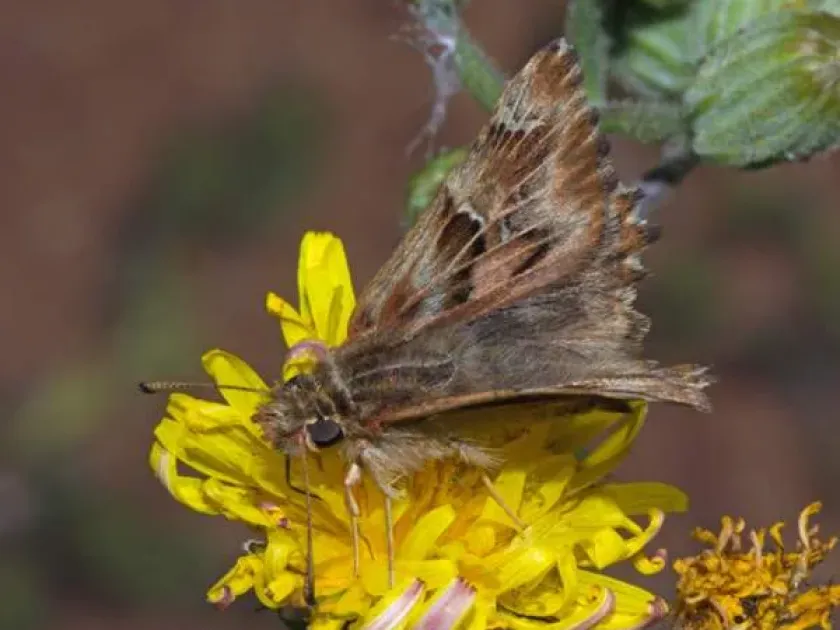
Description
How to identify
The genus Carcharodus belongs to the family Hesperiidae (Skippers). Adults are characterized by a stocky body, a large head, and a wingspan of approximately 25–35 mm, making them distinct from other butterflies.
Their wing coloration typically features cryptic shades of brown and gray, often with mottled patterns, which provides excellent camouflage against bark and plant foliage.
The antennae are notably clubbed at the tips, often forming a distinct hook, which is a classic identification feature for this group of lepidopterans.
Larvae are generally solitary and secretive, often found inside shelters constructed by silk-spinning leaves together, which offers protection from birds and other predators.
Pupation occurs in a tough, camouflaged silk cocoon hidden among plant debris or tucked into the lower foliage near the root zone of the host plant.
What it damages
Skippers of this genus primarily utilize plants from the Malvaceae family as hosts, although some species can adapt to other agricultural or ornamental plant species.
Damage is exclusively caused by the larval stage, which feeds on the leaf tissue, leading to skeletal remains or large, irregular holes in the foliage.
Significant defoliation can occur in nurseries or greenhouse settings, where high larval density can severely impact the biomass of young seedlings.
The loss of leaf surface area reduces the photosynthetic capacity of the plants, ultimately causing a decline in overall vigor and potential harvest yield.
Secondary damage often follows, as the feeding sites become susceptible to pathogen entry, which can lead to localized necrosis on the remaining plant tissue.
When it appears
The life cycle typically spans one or two generations per year, influenced by regional climatic conditions and the duration of the growing season.
Adult flight usually begins in late spring, continuing periodically throughout the summer as different generations emerge according to environmental cues.
Eggs are deposited individually on the undersides of leaves, ensuring that hatching larvae can immediately access the nutritional resources of the host plant.
The most active feeding stage for larvae occurs mid-summer, coinciding with the peak vegetative growth period of host plant species in the field.
Overwintering as a pupa or late-stage larva allows the species to survive harsh winter temperatures within stable micro-habitats like soil or leaf litter.
Signs of infestation
The most reliable sign of an infestation is the presence of neatly rolled or folded leaves, which serve as protective tents for the developing caterpillars.
Accumulation of larval excrement inside the silken shelters is a clear indicator of a resident larva actively consuming the surrounding plant material.
Irregularly shaped holes or chewed edges on the foliage, often appearing in clusters, suggest that larvae have been grazing on the surrounding leaf surface.
Wilted or chlorotic leaf areas near the feeding tunnels indicate a reduction in water and nutrient transport due to significant larval tissue damage.
Observing egg clusters or the small, shy adult butterflies in early spring serves as an early warning to begin inspecting the field for larval activity.
Control measures
Effective control starts with sanitation, including the removal of weeds belonging to the Malvaceae family, which act as primary reservoirs for the pest population.
Deep autumn tilling helps disrupt the pupation cycle by exposing larvae and pupae to predators and environmental stresses like frost.
Biological control, including the use of microbial insecticides like B. thuringiensis, provides a targeted approach that minimizes harm to beneficial insects.
Chemical intervention should be reserved for outbreaks exceeding economic threshold levels and must be applied to reach the larvae within their leaf shelters.
- Integrated Pest Management (IPM) practices.
- Early season weed management.
- Encouraging natural predatory wasps.
Taxonomy
- Latin name
- Carcharodus
- Order
- Lepidoptera (butterflies)
- Family
- Hesperiidae
- EPPO code
- CRCHSP
Discussion
No discussions yet — be the first.