
Capnodis tenebricosa
Capnodis tenebricosa
Description
How to identify
Capnodis tenebricosa, commonly known as a type of metallic wood-boring beetle, is a significant agricultural pest belonging to the Buprestidae family.
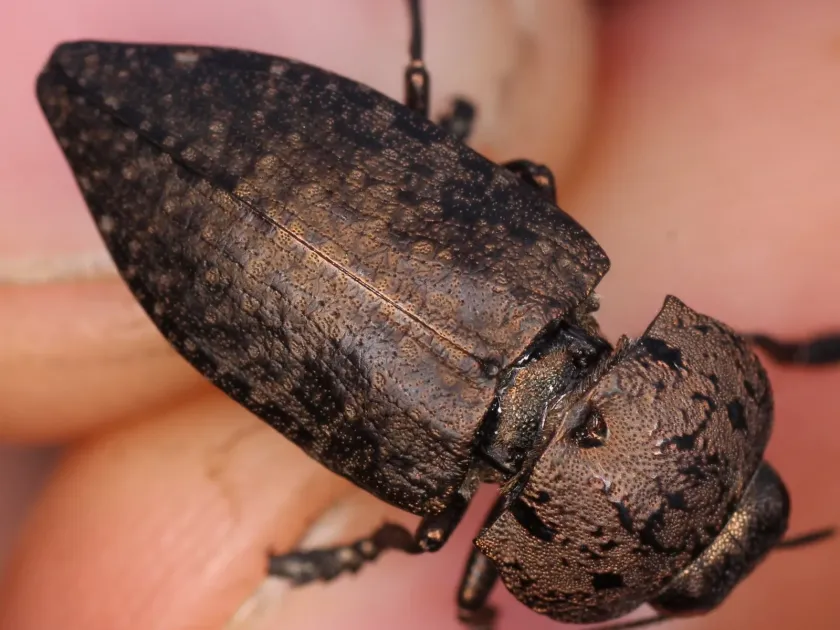
Adult beetles are robust, typically measuring between 15 and 25 mm in length, and are characterized by a solid, dull black coloration.
The body is dorsoventrally flattened with a granular texture on the elytra, and the head is deeply set into the pronotum, which is a classic identification marker.
Larvae are legless, white to yellowish in color, and feature a notably enlarged thoracic segment, often reaching lengths of up to 60 mm during their final stages.
The life cycle is long, often requiring one to two years to complete, depending on ambient temperatures and the nutritional quality of the host plant.
What it damages
This pest primarily targets stone fruit trees, including apricot, peach, plum, cherry, and almond, causing severe physiological stress to the host.
Adults cause damage by feeding on buds, leaves, and young shoots, which can lead to reduced canopy density and weakened photosynthetic capacity.
The most destructive phase is the larval stage; larvae bore deep tunnels into the root collar and primary roots, disrupting vascular transport of nutrients and water.
Infested trees often exhibit signs of sudden wilting and branch dieback, as the root system is effectively compromised by the larvae's feeding tunnels.
Severe infestations frequently result in the death of entire young trees in orchards and nurseries, leading to substantial economic losses for fruit growers.
When it appears
Adult beetles emerge from their overwintering sites in the soil or under bark when spring temperatures begin to rise, usually from late April onwards.
The feeding activity of adults is most intense during the late spring and early summer, coinciding with the rapid growth of new tree foliage.
Egg-laying by female beetles occurs throughout the summer months, with eggs deposited in the soil or into crevices in the bark near the base of the trees.
Larvae hatch after approximately two weeks and immediately bore into the roots or crown of the tree to begin their development.
Overwintering occurs primarily as larvae inside the root tissue or as adults in the soil, allowing the species to survive harsh winter conditions successfully.
Signs of infestation
Visible symptoms often begin with irregular feeding patterns on leaf edges and stunted growth of buds early in the spring season.
By mid-summer, infested trees may show premature yellowing of leaves and significant thinning of the canopy as water stress takes hold.
Gumming or sap exudation at the base of the trunk is a common sign indicating that larvae have successfully penetrated the root collar.
The presence of fine frass (insect excrement and wood dust) near the entry points of the larvae is a definitive indicator of an active infestation.
Trees that appear suddenly unstable or lean during moderate winds may be suffering from advanced root damage caused by the larvae.
Control measures
Integrated pest management (IPM) is essential for controlling Capnodis tenebricosa, focusing on both cultural and chemical intervention strategies.
Orchard hygiene, including the removal and destruction of severely infested trees, is crucial to prevent the population from spreading to healthy specimens.
Maintaining vigorous tree health through optimal irrigation and balanced fertilization helps trees tolerate low-level infestations more effectively.
- Application of contact insecticides during the adult emergence phase in spring.
- Soil treatments or drenching around the root collar to target young larvae.
- Whitewashing trunks to discourage females from laying eggs on the bark surface.
Regular scouting and the use of pheromone or visual traps are recommended to detect the presence of adults early, allowing for timely protective measures.
Taxonomy
- Latin name
- Capnodis tenebricosa
- Order
- Coleoptera (beetles)
- Family
- Buprestidae
- EPPO code
- CAPNTN
Discussion
No discussions yet — be the first.