
Capnodis porosa
Capnodis porosa
Description
How to identify
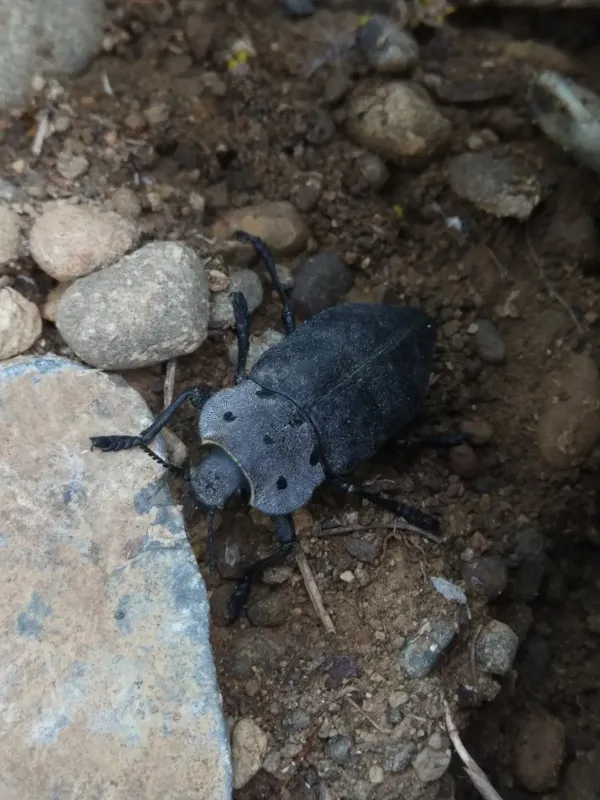
Capnodis porosa is a species of metallic wood-boring beetle belonging to the Buprestidae family. Adult beetles typically reach 25–30 mm in length and exhibit a dark, matte-black body color.
The name refers to the distinctive texture of their elytra, which are covered in numerous small pits and irregularities, creating a porous appearance across the back of the beetle.
Larvae are legless, white to cream-colored, and characterized by a significantly broadened, flattened thoracic segment behind the head, which is typical for many wood-boring larvae.
These insects are highly adapted to a life within woody tissues. Adults are robust flyers and active during the day, particularly in warm, sunny weather conditions common in their range.
The life cycle is long, often spanning one to two years, as the larvae must feed extensively within the tough woody parts of the host plant to complete their development.
What it damages
This beetle is a serious threat to stone fruit trees, including apricot, peach, cherry, almond, and plum. It is particularly destructive in regions with hot and dry climates.
Adults cause damage by feeding on the buds, leaves, and young shoots of the tree. This consumption can lead to stunted growth and deformation of the tree canopy.
The primary damage is caused by the larvae, which bore into the bark and cambium layer of the root collar and main roots, disrupting the flow of water and nutrients.
This internal girdling weakens the tree significantly, making it susceptible to drought stress, secondary diseases, and eventual collapse of the entire structural system.
Orchards infested with Capnodis porosa suffer from reduced fruit yield and premature tree mortality, which can cause significant economic losses for commercial fruit growers.
When it appears
Adult beetles typically emerge from their overwintering sites in the soil or tree wood during late spring, triggered by the rise in ambient temperature.
The period of maturation feeding for adults occurs during the early summer months. During this time, they are most visible on the trees while consuming vegetative parts.
Egg-laying takes place throughout the summer. Females often search for crevices in the bark near the base of the trunk or lay eggs directly into the soil close to the tree.
Newly hatched larvae immediately seek out cracks in the bark to penetrate the wood. They remain active as wood-borers throughout the autumn, growing in size.
Winter is spent as larvae of various instars inside the tunnels they have excavated within the wood, waiting for the return of favorable spring temperatures to continue their development.
Signs of infestation
Infested trees often show signs of general decline, including yellowing foliage, reduced shoot growth, and a tendency to wilt even when soil moisture is adequate.
Gummosis (oozing of sap) at the base of the trunk is a common symptom of larval entry. Examining these areas often reveals circular or oval boreholes on the bark.
During the day, adult beetles can sometimes be found resting on the branches or trunks of infested trees, although they are wary and may drop to the ground when disturbed.
The presence of sawdust or frass at the base of the tree is a strong indicator that larvae are actively feeding within the bark and sapwood layers.
In advanced stages of infestation, the bark may become loose or peel away, exposing the extensive, winding galleries carved out by the larvae within the trunk.
Control measures
Integrated pest management is essential, focusing on keeping the trees in optimal health through proper irrigation, balanced fertilization, and avoiding mechanical damage to the trunk.
Highly infested or dead trees must be promptly removed and burned, including the major root system, to kill the larvae inside and prevent them from completing their cycle.
Chemical control involving systemic insecticides is most effective when applied during the peak emergence of adults to prevent them from laying eggs on the trees.
Whitewashing the lower part of the tree trunk with lime or specialized protective paints can deter females from laying eggs on the surface of the bark.
- Apply systemic insecticides during the peak summer adult activity period.
- Routinely inspect the base of the trunk for boreholes and frass.
- Remove and destroy all dead and heavily infested host trees.
- Maintain orchard hygiene to minimize available breeding sites for beetles.
Taxonomy
- Latin name
- Capnodis porosa
- Order
- Coleoptera (beetles)
- Family
- Buprestidae
- EPPO code
- CAPNPO
Discussion
No discussions yet — be the first.