
Canna leaf roller
Calpodes
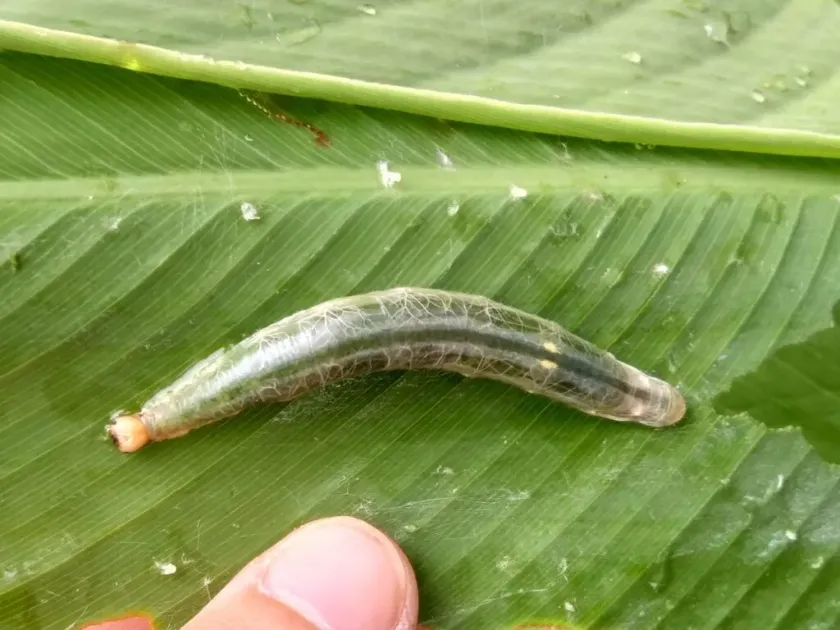
Description
How to identify
The Canna leaf roller (Calpodes ethlius) is a moth belonging to the family Hesperiidae (skippers). Adult moths have a wingspan of approximately 5 centimeters and are characterized by brown wings with distinctive semi-transparent patches.
The larvae, or caterpillars, are easily recognizable by their translucent, pale green to yellowish bodies through which internal organs are visible. They possess a prominent head, which is usually dark brown or black.
The life cycle is closely tied to warm climates, as the species thrives in tropical and subtropical regions. The development from egg to adult goes through several larval stages, each requiring significant feeding to support rapid growth.
Females lay eggs individually on either the upper or lower surfaces of the host plant leaves. A single female can produce hundreds of eggs, which can lead to rapid population explosions in garden settings.
The pupae are typically found inside the rolled-up leaves of the host plant, secured by silk webbing and plant debris, providing an effective refuge from many common predators and environmental factors.
What it damages
The primary host plants for Calpodes ethlius are members of the Cannaceae family, especially the common garden Canna lily. When the preferred host is unavailable, they may occasionally infest related ornamental species.
Larvae are foliage feeders that lead a concealed life. They start by creating small holes in the leaf tissue, which eventually expand into large, irregular gaps, sometimes leaving only the leaf veins behind.
Due to the high metabolic rate of the caterpillars, a localized infestation can drastically reduce the ornamental value of the plants in a very short time, significantly affecting the aesthetic appeal of a garden.
Severe infestations interfere with the plant's photosynthetic capacity, causing stunted growth and poor flower production. This is particularly problematic in landscape plantings where plant vigor is essential.
The rolled leaves created by the larvae provide a humid micro-environment that can encourage the development of secondary fungal pathogens, further exacerbating the damage to the plant's foliage.
Signs of infestation
The most reliable sign of an infestation is the characteristic leaf-rolling behavior. The caterpillar uses silk threads to pull the edges of a leaf together, forming a tube or "capsule" that serves as its primary shelter.
Gardeners should look for the presence of frass, which appears as small, dark, granular pellets. These often accumulate inside the leaf rolls or fall onto the ground directly beneath the infested leaves.
The sight of semi-transparent, active caterpillars that react quickly to physical disturbance is a definitive indicator that Canna leaf rollers are present on the plants.
The observation of adult moths flying in the vicinity of canna plants during dusk or early evening suggests egg-laying activity, which signals a potential increase in caterpillar activity in the coming weeks.
If you notice ragged leaf margins or leaves that appear stuck together, carefully unroll them to inspect for the larvae, which allows for early intervention and effective control before widespread damage occurs.
Control measures
For small infestations, manual removal of the caterpillars and the infested, rolled-up leaves is the most environmentally friendly and effective control strategy for home gardeners.
Biological control using products based on Bacillus thuringiensis is highly effective against lepidopteran larvae. These biopesticides are preferred as they specifically target the pest while minimizing impact on beneficial insects.
In cases of severe infestation, systemic insecticides may be necessary. Applications should be performed in the evening when the larvae are more active and less protected within their leafy rolls.
Good garden sanitation is a crucial cultural control method. Removing and destroying dead plant materials at the end of the growing season can help eliminate over-wintering pupae from the soil or debris.
Preventive monitoring and early-season treatments are recommended to reduce the first generation of moths, thereby preventing the population from reaching damaging levels during the peak of the growing season.
Taxonomy
- Latin name
- Calpodes
- Order
- Lepidoptera (butterflies)
- Family
- Hesperiidae
- EPPO code
- CLPOSP
Discussion
No discussions yet — be the first.