
Callosamia angulifera
Callosamia angulifera
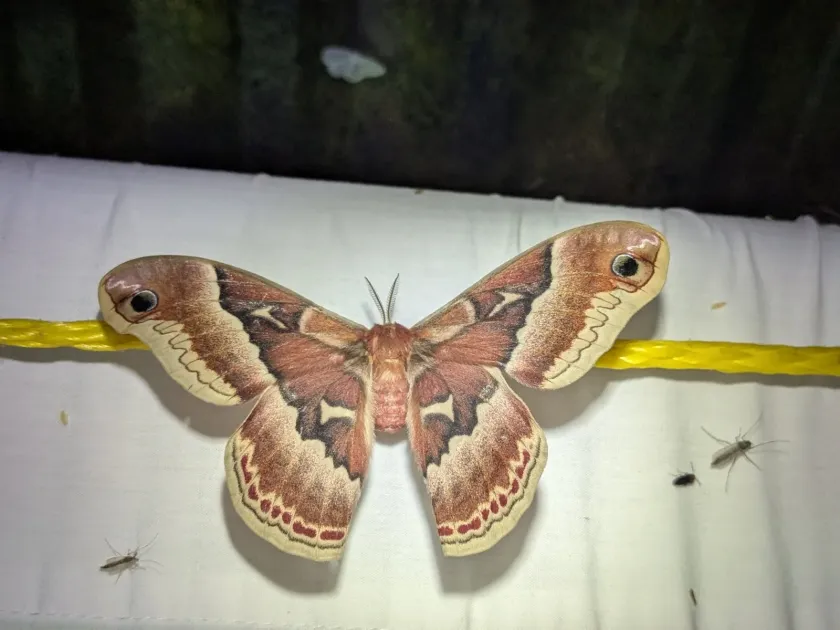
Description
How to identify
Callosamia angulifera, commonly known as the tulip-tree silkmoth, is a large moth in the Saturniidae family. It is recognized for its impressive wingspan, which typically ranges from 75 to 115 millimeters, making it a prominent insect in its native range.
The species exhibits sexual dimorphism, with males displaying dark, deep chocolate-brown wings and females showcasing lighter, yellowish-brown to orange hues. Both sexes feature characteristic angled spots and white crescent markings.
The body is covered in dense, insulating hair, typical of the family. The larvae undergo several instars, transforming from small, inconspicuous creatures into large, vibrant green caterpillars decorated with colorful, fleshy tubercles along their dorsal side.
The pupal stage occurs within a sturdy, silken cocoon. The cocoon is expertly camouflaged, often mimicking a dead, curled leaf, and is securely attached to the host tree's twigs, providing protection from harsh winter elements and predators.
As nocturnal insects, adult moths are rarely seen during the day. Their lifecycle is specialized, with development being closely tied to the physiological cycles of their specific host trees, ensuring larvae emerge precisely when fresh foliage is available.
What it damages
The primary host for Callosamia angulifera is the tulip tree (Liriodendron tulipifera). While caterpillars may occasionally feed on other related deciduous species, their presence is most common and damaging on tulip trees.
Damage is caused exclusively by the larval stage. Caterpillars possess strong, mandibulate mouthparts designed for efficient consumption of leaf tissue. They feed by consuming the leaf blade, often starting from the margins and moving inward.
While mature, healthy trees can usually withstand moderate feeding, heavy infestations can lead to significant defoliation. This reduction in leaf area impairs the tree's ability to photosynthesize, potentially stunting growth over the season.
The aesthetic impact is significant in nursery or ornamental settings, where even partial defoliation is undesirable. Furthermore, wounds on the leaves may serve as entry points for pathogens, potentially leading to secondary infections.
Young trees are particularly vulnerable. Heavy feeding can lead to severe stress, reduced biomass accumulation, and an overall decline in vigor, making the host more susceptible to drought, competition, or further pest attacks.
When it appears
This species typically completes one generation per year (univoltine). The insect spends the entire winter in the pupal stage protected within its cocoon, which remains suspended on the host tree or rests in the leaf litter below.
Adult moths emerge in the spring, timed perfectly with the opening of host tree buds. This synchronization ensures that when the eggs hatch, the larvae have immediate access to a high-quality, fresh food supply.
The larval stage is active during the warmer months, typically from late spring through late summer. During this phase, caterpillars feed voraciously to build up the energy reserves necessary for successful pupation and metamorphosis.
As autumn approaches, the caterpillars stop feeding, select a suitable branch, and begin constructing their silken cocoons. This process is critical for the survival of the next generation through the winter months.
Environmental factors such as local temperature and humidity can influence the specific timing of emergence. A mild spring can lead to earlier activity, while a cool season may delay the entire developmental timeline.
Signs of infestation
The first indicator of an infestation is the presence of irregular bite marks along the leaf edges. As caterpillars grow, these marks become larger, eventually leading to leaves appearing ragged or partially consumed.
Frass (caterpillar droppings) accumulating on the ground beneath the tree canopy is a clear signal of an active population. The size and quantity of these droppings often correspond to the growth stage of the larvae.
Observing the caterpillars directly can be challenging due to their green coloration, which provides excellent camouflage against the foliage. Searching for signs of movement or slight disturbances in the leaves can help locate the larvae.
In winter, the most distinct sign is the presence of brown, papery cocoons attached to the ends of twigs. These are much easier to detect once the trees have lost their leaves, facilitating easier management and removal.
Increased activity of birds or predatory wasps around the tree canopy can sometimes indicate the presence of high caterpillar density, as these predators target the larvae as a valuable food source.
Control measures
The most effective and sustainable method for controlling this pest in small gardens is mechanical removal. Hand-picking the cocoons during the dormant winter season effectively eliminates the next generation without chemical use.
For larger infestations, biological controls are recommended. Products containing Bacillus thuringiensis (Bt) are highly effective against young larvae while remaining safe for beneficial insects, pollinators, and the environment.
When chemical intervention is necessary, selective insecticides should be applied with precision. It is crucial to target specific life stages and use methods that minimize impact on non-target species, such as evening applications.
- Pruning and destroying heavily infested branches to reduce local populations.
- Encouraging natural predators by maintaining bird-friendly garden environments.
- Using light traps to monitor adult moth activity and population density.
Regular monitoring is the cornerstone of effective management. By inspecting host trees during key life cycle phases, landowners can identify potential problems early and implement control measures before significant damage occurs.
Taxonomy
- Latin name
- Callosamia angulifera
- Order
- Lepidoptera (butterflies)
- Family
- Saturniidae
- EPPO code
- CAOSAN
Discussion
No discussions yet — be the first.