
Callosamia
Callosamia
Description
How to identify
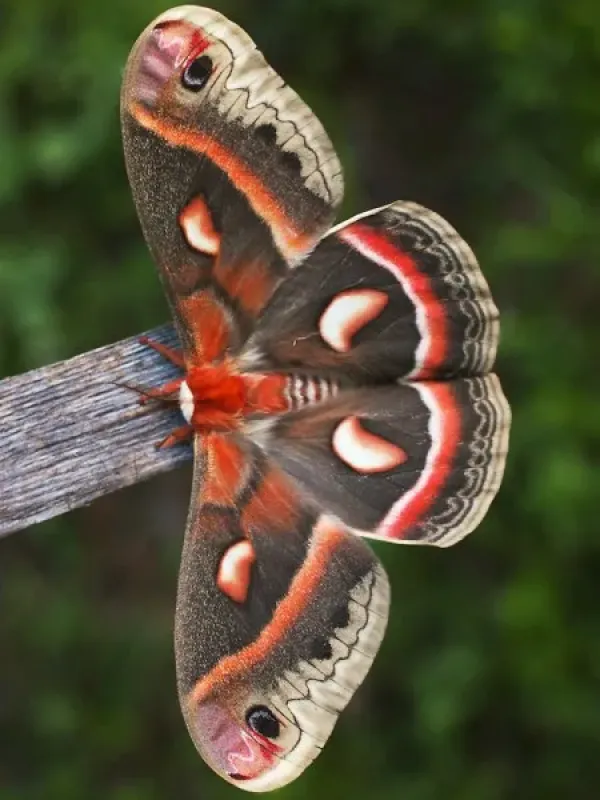
Callosamia is a genus of large nocturnal moths belonging to the family Saturniidae, also known as giant silk moths. While the adult moths are noted for their impressive size and coloration, the larval stage is the primary focus for pest management.
The larvae, or caterpillars, undergo several instars during their development. They are often distinguished by their vibrant colors and the presence of prominent tubercles or horn-like projections on their bodies, which serve as a defense mechanism.
Once the larvae complete their feeding cycle, they spin tough, silk-lined cocoons. These cocoons are typically firmly attached to the branches of the host tree, where the insect pupates throughout the dormant season.
Adult moths of this genus do not feed, as their primary function is reproduction. They are typically active during the night, making them difficult to detect unless they are attracted to artificial light sources.
Systematically, Callosamia belongs to the order Lepidoptera. Their life cycle is well-defined, which allows arborists and gardeners to predict when damage is likely to occur and to implement timely monitoring.
What it damages
Callosamia caterpillars are specialized herbivores that feed on a variety of deciduous trees and shrubs. Their feeding behavior can lead to significant foliage loss if the caterpillar population is dense.
Preferred host plants often include species from the Rosaceae and Magnoliaceae families, such as apples, pears, cherries, and tulip trees. They consume leaves by chewing from the margins toward the midrib.
The impact on the host plant is primarily related to the reduction of photosynthetic surface area. Severe defoliation can weaken trees, reduce annual growth, and decrease the plant's overall energy reserves.
Young trees and nursery stock are particularly vulnerable. A heavy infestation on a small tree can strip nearly all its leaves, making the plant highly susceptible to secondary stressors, including drought and cold injury.
While mature, established trees can usually withstand occasional defoliation, persistent annual outbreaks can eventually lead to canopy dieback and reduced vigor in affected plant specimens.
When it appears
The seasonal development of Callosamia is governed by temperature and photoperiod. Depending on the species and the geographic region, they may produce one or two generations per year.
Caterpillars typically emerge in the spring or early summer, coinciding with the flush of new growth on host trees. This period of rapid feeding is essential for the larvae to accumulate the energy needed for pupation.
By mid-to-late summer, the larvae complete their growth and construct their protective cocoons. The pupal stage is often the overwintering phase, protecting the developing moth from harsh winter conditions.
Adult moth emergence generally occurs during warm nights, when mating and egg-laying take place. Eggs are deposited on the undersides of leaves, ensuring that the next generation of larvae has immediate access to food.
The transition between generations is distinct, allowing for effective monitoring windows. Understanding these seasonal triggers is crucial for applying any necessary management tactics at the right developmental stage.
Signs of infestation
The most recognizable sign of an infestation is the presence of chewed foliage. As larvae grow in size, the amount of leaf tissue removed per day increases, leading to noticeable gaps in the canopy.
Frass (caterpillar droppings) accumulating on the ground beneath the host tree is a strong indicator of an active caterpillar presence in the upper branches, even if the larvae are hard to spot.
During the winter, when deciduous trees lose their leaves, the presence of the species is easily identified by the persistent cocoons. These cocoons look like small, dried leaves wrapped in silk, hanging from thin twigs.
Finding these cocoons during winter pruning is the most straightforward way to assess the previous year's pressure and reduce the population for the following spring.
Visual inspections during the growing season should focus on the undersides of leaves for egg clusters, as well as searching for larger larvae that may be resting on branches during the day.
Control measures
Manual removal of cocoons during the dormant season is the most effective and eco-friendly way to manage populations. Simply pruning the branches with cocoons and destroying them prevents the next generation from emerging.
Hand-picking larvae from smaller trees is highly practical and effective for home gardens. This method avoids the use of pesticides and has zero impact on beneficial predatory insects or pollinators.
For larger-scale infestations, biological control agents such as Bacillus thuringiensis (Bt) can be used. This bacterial insecticide specifically targets lepidopteran larvae and is safe for most other non-target organisms.
Pheromone traps are excellent tools for monitoring adult activity. By tracking the number of moths caught, growers can accurately predict when to check for egg masses or newly hatched larvae.
Maintaining tree health through proper irrigation and pruning practices creates a resilient landscape. Well-maintained trees are generally more capable of recovering from the temporary stress caused by caterpillar feeding.
Taxonomy
- Latin name
- Callosamia
- Order
- Lepidoptera (butterflies)
- Family
- Saturniidae
- EPPO code
- CAOSSP
Discussion
No discussions yet — be the first.