
Callimormus corades
Callimormus corades
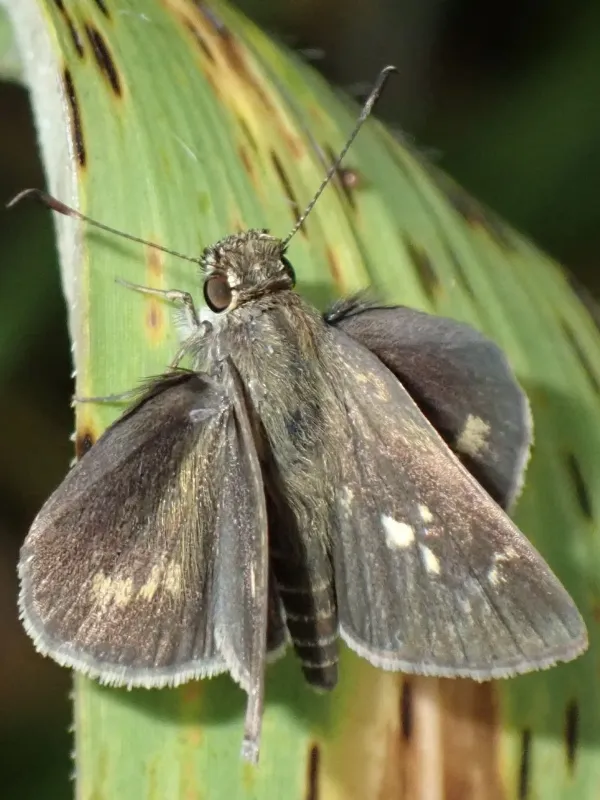
Description
How to identify
Callimormus corades is a member of the Hesperiidae family, commonly known as skippers. This species is indigenous to various regions in the Americas where it interacts with agricultural landscapes.
Adult moths are characterized by a robust body structure and a disproportionately large head compared to other Lepidoptera, which is a hallmark of the skipper family.
The wings typically exhibit a brown coloration with subtle, translucent spots. This camouflage allows them to blend effectively into their habitat, making them difficult to spot during the day.
The development follows a complete metamorphosis: egg, larva, pupa, and adult. Each stage is adapted to specific environmental conditions within their tropical and subtropical range.
Larvae are equipped with powerful chewing mouthparts, enabling them to consume large quantities of plant tissue, particularly during the late instars of their development.
What it damages
The primary hosts for Callimormus corades include various species of grasses. Sugar cane is a notable agricultural target where the larvae cause significant economic concern.
Larvae feed by chewing on the edges of the leaf blades. In cases of severe infestation, this defoliation can be extensive, leaving the crop with a skeletal appearance.
The reduction in leaf surface area directly impacts the plant's ability to photosynthesize, which in sugar cane correlates with decreased sugar content in the stalks.
Young plants are particularly vulnerable, as damage to the meristematic tissues or young developing leaves can stunt growth and delay the overall maturity of the crop.
Furthermore, feeding sites act as entry points for various secondary pathogens, potentially leading to increased susceptibility to fungal and bacterial infections.
Signs of infestation
The most prominent sign of infestation is the presence of irregular notches along the leaf margins. Larvae often create shelters by folding leaves and securing them with silk threads.
The accumulation of larval frass (waste) on leaves or at the base of the plant is a strong indicator of the presence of the pest, even if the larvae themselves are hidden.
Yellowing or necrosis of the leaf margins often occurs following heavy feeding, which reduces the efficiency of the plant's metabolic functions.
Monitoring the adult population through light traps or scouting for eggs on the underside of leaves can provide early warnings of a potential outbreak.
Visible silk webbing on the leaves is a clear diagnostic sign of the presence of Hesperiidae larvae, requiring immediate management actions.
Control measures
Integrated Pest Management (IPM) strategies are essential. Cultural practices, such as removing host weeds around field borders, can significantly reduce the local population.
Biological control using microbial insecticides, such as Bacillus thuringiensis, is effective against early-stage larvae while minimizing impact on beneficial insects.
Chemical control should be implemented based on scouting data and economic thresholds, utilizing selective insecticides to ensure safety for non-target predators.
Encouraging the presence of natural predators, such as parasitic wasps and entomopathogenic fungi, is a long-term solution for maintaining low pest numbers.
- Regular field scouting to monitor pest density.
- Application of bio-pesticides at the first signs of larval activity.
- Crop rotation to break the pest's reproductive cycle.
Taxonomy
- Latin name
- Callimormus corades
- Order
- Lepidoptera (butterflies)
- Family
- Hesperiidae
- EPPO code
- CLMMCO
Discussion
No discussions yet — be the first.