
Callimormus
Callimormus
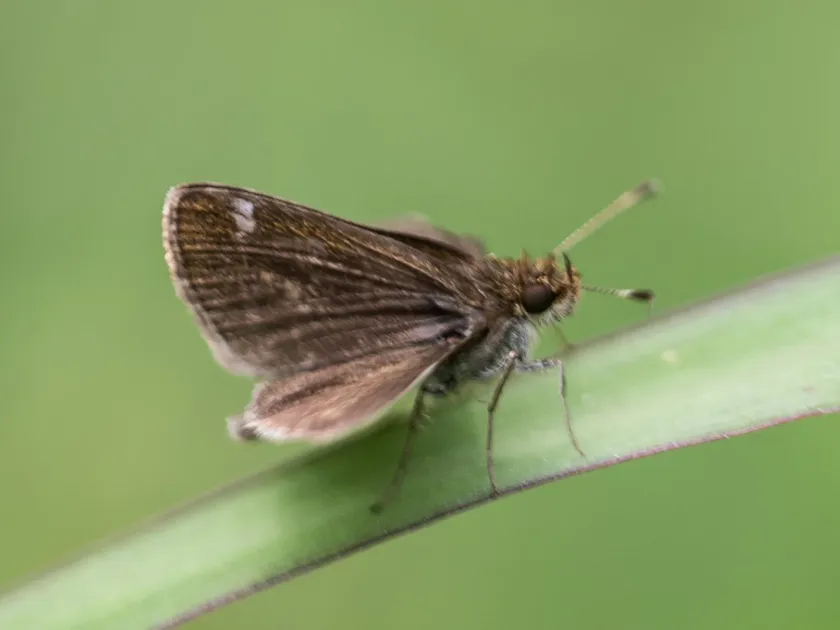
Description
How to identify
Callimormus is a genus of butterflies belonging to the family Hesperiidae (skippers) within the order Lepidoptera. These are small, diurnal insects characterized by a robust body structure and relatively short wings, with a wingspan typically ranging from 25 to 30 mm.
Visually, the adults are identified by their characteristic dark brown or brownish wing coloration, often featuring translucent light spots. The body is densely covered in hair-like scales, a common trait for members of the Hesperiidae family.
The larvae (caterpillars) of these butterflies possess a cylindrical body with a well-defined head capsule. Throughout their development, they undergo several instars, changing color intensity, which can make identification at early stages challenging.
Pupation primarily occurs within rolled-up leaves of host plants. The pupae are elongated and possess specific protective coverings that provide defense against environmental stressors and predators.
The biology of this genus is closely tied to tropical and subtropical climates, where population levels can reach critical thresholds for local agricultural production.
What it damages
This pest affects a wide range of crops, primarily within the Poaceae (grass) family. It poses a significant threat to rice cultivation, sugarcane, and various wild grasses used as a host base.
The primary damage is caused by caterpillars that feed aggressively on leaf blades. During outbreaks, they can completely skeletonize leaves, leaving only thick veins behind, which leads to a critical reduction in the plant's photosynthetic surface area.
Damage to young shoots leads to stunted growth and reduced total biomass. This is particularly critical during the early stages of vegetation when plants are most vulnerable to stress factors.
Under high population density, this pest can cause partial or total crop failure in specific field sections. Damaged tissues also become entry points for secondary fungal and bacterial infections.
Indirect losses include reduced grain quality and weakened plant immunity, necessitating additional agrotechnical and chemical interventions to maintain crop health.
When it appears
The activity of adult Callimormus is directly dependent on temperature and humidity levels. In tropical regions, generations develop almost continuously throughout the year as long as host plants are available.
Adult flight is observed during daylight hours, as these insects are active in searching for mates and oviposition sites. Eggs are typically laid on the underside of host plant leaves.
The developmental period from egg to adult varies significantly based on environmental conditions, averaging three to five weeks. This short cycle allows the species to complete multiple generations within a single growing season.
The highest population levels of larvae are recorded during humid, warm periods when plants are actively producing vegetative mass. During these times, the larvae are most voracious and noticeable in fields.
With the onset of unfavorable conditions, such as drought or significant temperature drops, the developmental cycle slows down, and the insects may enter diapause or seek shelter in plant debris.
Signs of infestation
The first sign of the pest's presence is specific leaf damage, characterized by irregular notches or holes. Larvae often reside within rolled-up leaves secured with silk webbing.
Identification is possible through careful inspection of the crops; the characteristic "shelters" made of rolled leaves are a clear indicator of an infestation. Inside these, one can always find a larva or its excrement.
The presence of frass on the leaf surfaces below feeding sites is another sign of high larval activity. Adult butterflies hovering over the field indicate ongoing egg-laying and the imminent appearance of a new generation.
Sometimes, the damage can mimic nutrient deficiency symptoms or signs of leaf-eating beetles, making visual verification by checking rolled leaves essential for accurate diagnosis.
Widespread yellowing and wilting of plant tops may indicate a severe, advanced stage of infestation where the pest has already compromised a significant portion of the foliage.
Control measures
An integrated pest management approach is required for Callimormus control, starting with agrotechnical practices. It is crucial to manage weeds properly, as they often serve as reservoirs for the pest during off-seasons.
Biological control involves utilizing natural enemies, such as parasitic Hymenoptera and predatory bugs, which effectively regulate population levels in nature.
Chemical control is justified when the economic injury level is reached. Contact-stomach insecticides effective against lepidopteran larvae are the preferred choice for managing active infestations.
Crop rotation is an essential element, as it disrupts the developmental cycle of the pest and reduces the overwintering population density in the field. Optimizing planting dates can help crops bypass peak flight periods.
Applying products based on Bacillus thuringiensis offers an environmentally friendly alternative to synthetic pesticides, providing selective control of larvae without causing harm to beneficial insect fauna.
Taxonomy
- Latin name
- Callimormus
- Order
- Lepidoptera (butterflies)
- Family
- Hesperiidae
- EPPO code
- CLMMSP
Discussion
No discussions yet — be the first.