
Variegated flatworm
Caenoplana variegata
Description
How to identify
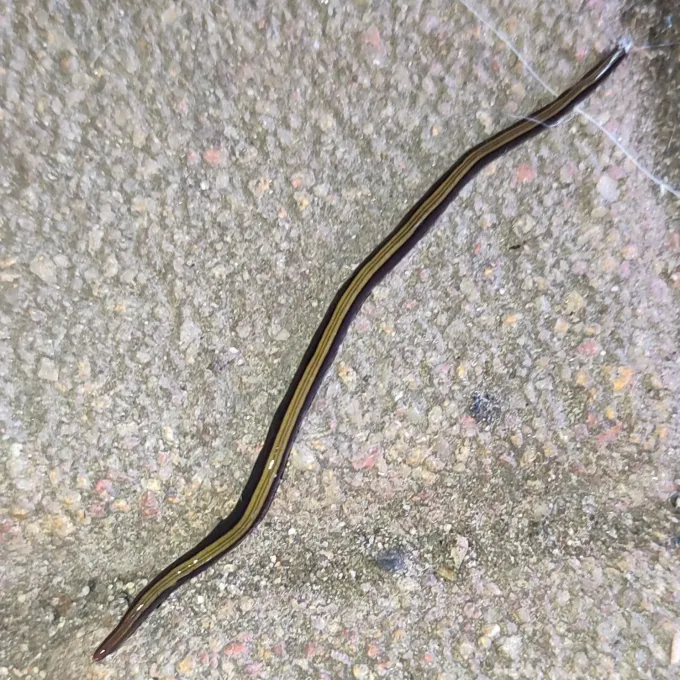
The variegated flatworm (Caenoplana variegata) is a member of the phylum Platyhelminthes, class Turbellaria, order Tricladida, and family Geoplanidae. It is a carnivorous terrestrial planarian known for its ability to significantly stretch and alter its body shape.
Adult specimens typically reach a length of 5 to 10 centimeters. Their bodies exhibit a variegated pattern, ranging from brownish to yellowish hues with dark longitudinal stripes, allowing them to blend into damp soil environments.
The head region features numerous small eyespots, which assist the predator in navigating dark and moist environments while searching for prey. The skin is covered in mucus, which is essential for movement and preventing desiccation.
These flatworms move via a combination of muscular undulations and ciliary beating, resulting in a smooth, gliding motion. Unlike earthworms, they lack segmentation and possess a flattened, ribbon-like appearance.
They are hermaphroditic and capable of both sexual reproduction and fragmentation, where a severed piece of the body can regenerate into a complete new organism.
What it damages
The variegated flatworm is an invasive predator that poses a significant threat to soil ecology. The primary damage is not inflicted upon plants themselves but on the vital soil fauna.
Their main food source consists of earthworms, which are crucial for soil aeration, nutrient cycling, and maintaining soil structure. Their presence leads to the decimation of local earthworm populations.
The resulting lack of earthworm activity leads to soil compaction and reduced fertility, which indirectly stunts the growth and health of garden plants and crops.
In greenhouses and nurseries, these flatworms can thrive in potting soil, where consistent moisture levels provide an ideal environment for their survival and rapid colonization.
While no direct feeding on plant tissue has been confirmed, the ecological destruction caused by their predatory nature makes them a highly undesirable species for growers.
When it appears
The variegated flatworm is most active during periods of high humidity and moderate temperatures, typically peaking during the spring and autumn months.
During hot and dry weather, the flatworms retreat into deeper soil layers or hide under moist, sheltered objects such as rocks, logs, or dense leaf litter to escape desiccation.
They overwinter in the soil, with both adult flatworms and their resilient egg cocoons capable of surviving harsh conditions until the environment becomes favorable again.
Increased activity is often observed immediately following rainfall or heavy irrigation, which encourages the flatworms to move toward the surface in search of prey.
Dispersal to new areas is predominantly human-assisted, occurring primarily through the transport of infested potted plants, nursery stock, or contaminated soil.
Signs of infestation
A primary indicator of a variegated flatworm infestation is a sudden and unexplained decline in the earthworm population within a specific garden bed or greenhouse area.
Observations made early in the morning or after irrigation under moist surfaces (like boards, bricks, or debris) may reveal the flatworms themselves, easily identified by their distinct striped pattern.
The presence of mucus trails on the soil surface, greenhouse benches, or pots is a common sign that flatworms have been active in the area during the night.
In greenhouses, small, bead-like egg cocoons may be found attached to the underside of pots or within the damp nooks of nursery containers.
If plant vitality decreases without evidence of pathogens or nutrient deficiencies, the soil structure should be examined for signs of earthworm absence, which may indicate the presence of these predators.
Control measures
Chemical control for variegated flatworms is challenging, as they show significant resistance to most standard insecticides and molluscicides used in agriculture.
The most effective strategy is stringent biosecurity: inspecting all new plants, root balls, and soil media for the presence of adults or cocoons before introducing them to the garden.
Physical collection and destruction remain the most reliable management method. Simply picking up the flatworms when found under artificial shelters (like moist wood planks) is highly effective.
Using monitoring traps, such as placing damp wooden boards on the soil surface, helps concentrate the flatworms in one location, making them easier to collect and remove manually.
Maintaining proper soil moisture and improving overall garden hygiene help minimize the ideal habitats available to the flatworms, thereby naturally suppressing their population density.
Taxonomy
- Latin name
- Caenoplana variegata
- Family
- Geoplanidae
- EPPO code
- CAEPBI
Discussion
No discussions yet — be the first.