
Green heron
Butorides
Description
How to identify
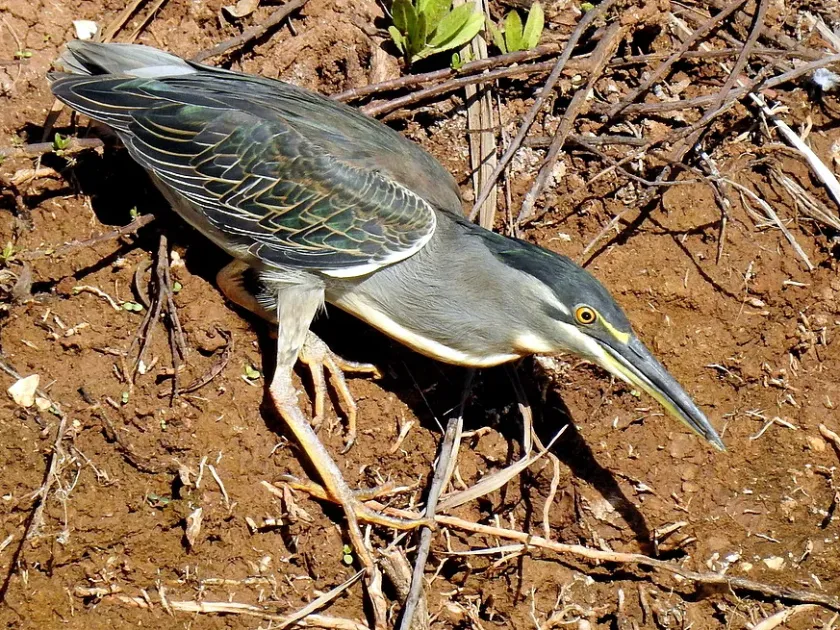
The Green heron (Butorides) is a small wading bird belonging to the heron family. It is recognized by its dark plumage with a greenish metallic sheen and relatively short legs.
These birds are known for their secretive nature, often hiding in thick vegetation near water bodies, which makes them difficult to observe in agricultural settings.
Taxonomically, they are part of the order Pelecaniformes. Their morphology is perfectly adapted for hunting in confined spaces such as irrigation ditches and ponds.
The species displays remarkable intelligence, often using tools or bait to lure small fish or insects toward the water surface for easier capture.
Identification is easier during the breeding season when birds become slightly more active near their nesting sites located in shrubs or trees adjacent to water.
What it damages
The Green heron is not a herbivore and does not consume crops. Therefore, it causes no direct damage to wheat, maize, or vegetable production in standard farm fields.
Its impact is primarily concentrated in aquaculture, where the bird might consume fingerlings in fish ponds, which could lead to economic losses for breeders.
In paddy fields, accidental trampling by hunting birds may occur, but such physical damage to rice stems is usually negligible and rarely impacts total crop yield.
The presence of these birds near irrigation systems does not significantly affect plant health, although their droppings can locally alter water quality parameters.
From an agronomic perspective, the Green heron is typically considered a non-pest species that does not require any specific mitigation efforts in field crops.
When it appears
Green herons are most active during the spring and summer months, which coincide with their nesting and chick-rearing period, increasing their presence near agricultural wetlands.
Migration patterns influence their arrival and departure dates, with northern populations vacating the areas as winter temperatures begin to drop significantly.
During late summer, young birds disperse, which may lead to a temporary increase in the number of individuals sighted near water reservoirs and ditches.
The winter months represent a period of minimal interaction with agricultural landscapes, as most individuals move to warmer climates where food remains accessible.
Monitoring the birds is most relevant during the early growth stages of adjacent aquatic crops or aquaculture cycles to ensure minimal interaction between the fauna and the farming site.
Control measures
Lethal control is generally prohibited and ethically discouraged, as the Green heron plays a role in the natural ecosystem and is protected in many jurisdictions.
Non-lethal deterrents such as reflective tapes or motion-activated sprinklers are effective at keeping the birds away from sensitive aquaculture installations.
Acoustic deterrents that replicate natural alarm calls or predator sounds can successfully discourage these herons from lingering in specific, high-value areas.
Maintaining clear pond edges and minimizing thick canopy cover near irrigation channels can reduce the attractiveness of the site for this specific species.
Integrated management focusing on habitat modification is the best approach to maintain agricultural productivity while respecting wildlife conservation standards.
Taxonomy
- Latin name
- Butorides
- Family
- Ardeidae
- EPPO code
- BUTOSP
Discussion
No discussions yet — be the first.