
Cattle Egret
Bulbulcus
Description
How to identify
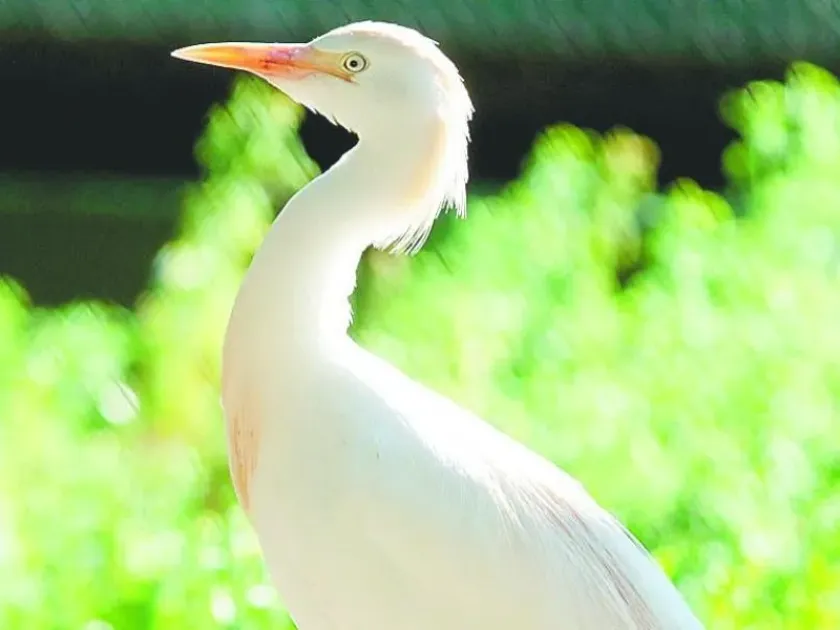
The Cattle Egret (lat. Bubulcus ibis) is a member of the heron family, Ardeidae. It is a stocky, white bird that often displays buff-colored patches on its head, breast, and back during the breeding season.
Unlike other egrets, this species is highly terrestrial and commonly feeds in agricultural fields, pastures, and grasslands, often associating with livestock or farming machinery.
The bird has a relatively short, thick, yellow bill which is perfectly adapted for foraging on the ground for insects, earthworms, and small vertebrates displaced by plows.
They are gregarious birds, living in large colonies. Their ability to adapt to human-modified landscapes makes them a frequent sight in rice paddies and various irrigated crop systems.
Their behavior is characterized by persistent following of tractors during soil preparation, making them easily identifiable by agronomists and farmers during the sowing season.
What it damages
The primary damage to agriculture involves mechanical injury to young crop shoots, particularly in rice fields, due to trampling by large flocks foraging or resting.
Egret colonies can also consume beneficial entomofauna, including predatory insects that naturally suppress major agricultural pests, leading to a breakdown in integrated pest management.
Their droppings can cause phytosanitary issues, potentially contaminating crops and irrigation water, which may lead to compliance problems regarding export quality standards.
In some regions, egrets cause damage to hydraulic infrastructure and water quality in paddy fields due to excessive waste accumulation in concentrated nesting areas.
They also cause localized yield reduction by stripping leaves or using seedlings as nesting materials, creating bare patches in the fields that require replanting.
When it appears
Activity is most intensive during the spring and summer months, which align with the breeding season and the critical growth stages of most agricultural crops.
During the spring plowing and planting phase, the presence of machinery attracts birds to the open soil, leading to an immediate increase in their local population density.
In the summer, egrets frequently use mature, dense crop stands as shade and protection from predators, which causes bending and breaking of plant stalks.
Autumn activity decreases as migration starts, though birds may linger in harvested fields where leftover insects and seeds provide a temporary food source.
Ongoing monitoring is recommended throughout the entire vegetation cycle to prevent the establishment of permanent nesting colonies within the farm perimeter.
Signs of infestation
The most obvious sign of an egret presence is the observation of white bird flocks following farm equipment or gathered in large numbers near water bodies.
- Trampled or flattened areas within the crop rows.
- White-colored guano deposits on foliage, soil, and irrigation structures.
- Presence of damaged shoots used as nesting material in the nearby periphery.
- High levels of avian noise and activity during the dawn and dusk periods.
A noticeable decrease in the population of beneficial insects, such as spiders or ground beetles, can be an indirect sign of an over-populated egret colony.
Soil compaction in resting areas can also be observed, which impacts the drainage and development of the root systems of the adjacent crops.
Control measures
Effective management includes visual deterrents such as inflatable predator decoys or reflective ribbons placed strategically to discourage birds from landing.
Auditory deterrents, including distress call recordings and pyrotechnic devices, can successfully move flocks away from sensitive crop areas during critical growth stages.
Maintaining clean farm boundaries by trimming tall shrubs and removing dense vegetation reduces the appeal of the area for potential nesting sites.
Exclusion methods like netting are recommended only for high-value experimental plots, as they are not feasible for large-scale broadacre agricultural operations.
Always consult with local environmental authorities, as the Cattle Egret is a protected species in many jurisdictions, requiring non-lethal, compliant deterrent methods.
Taxonomy
- Latin name
- Bulbulcus
- Family
- Ardeidae
- EPPO code
- BUBUSP
Discussion
No discussions yet — be the first.