
Great Horned Owl
Bubo virginianus
Description
How to identify
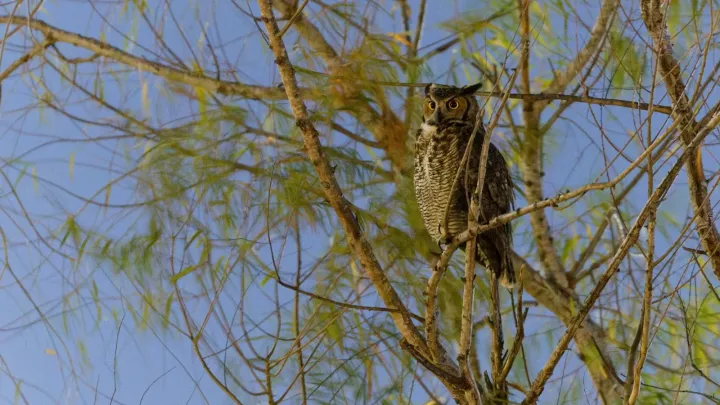
The Great Horned Owl (Bubo virginianus) is a large raptor of the family Strigidae. It is easily recognized by the prominent ear-like tufts of feathers on its head, often referred to as "horns."
The plumage is a complex pattern of brown, gray, and black, providing excellent camouflage against tree bark and forest debris. Their wingspan can reach up to 150 centimeters.
These owls possess large, piercing yellow-orange eyes that allow for exceptional low-light vision, making them formidable nocturnal hunters in rural areas.
The beak is hooked and black, capable of crushing prey, while their feet are covered in thick feathers down to the talons, providing protection and a strong grip.
As nocturnal animals, they are rarely seen during the day, which often makes them difficult to monitor or track on an agricultural property until damage occurs.
What it damages
In an agricultural context, the Great Horned Owl is considered a nuisance rather than a crop pest, primarily due to its impact on poultry farming operations.
They are opportunistic predators that will readily hunt chickens, ducks, and other small livestock if they are left unprotected at night or in open-air runs.
The presence of a Great Horned Owl often causes severe distress to entire flocks of domestic poultry, which can lead to reduced egg production and increased mortality due to panic-related injuries.
Besides direct predation, they can damage farm infrastructure by roosting on barns or attempting to gain entry into poultry houses through roof vents or gaps.
While they do consume rodents, which are agricultural pests, their tendency to target livestock makes them a significant management challenge for many small-scale farmers.
When it appears
The highest level of activity for Great Horned Owls occurs during the breeding season, which typically begins in late winter and continues through spring.
During the nesting phase, adult birds are under intense pressure to gather food for their growing chicks, leading to more frequent hunting ventures near farms.
Summer is a period of learning for juvenile owls, as they begin to hunt independently, sometimes exploring areas closer to human habitation than experienced adults.
Autumn marks the dispersal of young owls searching for their own territories, which may bring them into new agricultural zones previously unaffected by their presence.
In the winter months, when natural forest prey becomes more scarce, these owls are increasingly drawn to farms where domestic animals provide an accessible food source.
Control measures
The most reliable control method is the physical fortification of poultry coops using hardware cloth and solid roofing to prevent any unauthorized entry.
Installing motion-activated floodlights can be highly effective, as Great Horned Owls typically prefer to hunt under the cover of darkness and avoid exposed areas.
Managing the vegetation around the farm, such as trimming tall trees or clearing brush, can reduce the number of favorable hunting perches available to the owls.
Auditory deterrents, including recordings of predator sounds or alarm signals, may offer temporary relief, though owls can eventually become habituated to them.
- Locking poultry in secure houses at night.
- Installing metal wire mesh for all vents.
- Using motion-activated deterrent lights.
- Employing livestock guardian dogs.
Taxonomy
- Latin name
- Bubo virginianus
- Family
- Strigidae
- EPPO code
- BUBOVI
Discussion
No discussions yet — be the first.