
Hairy dragonfly
Brachytron
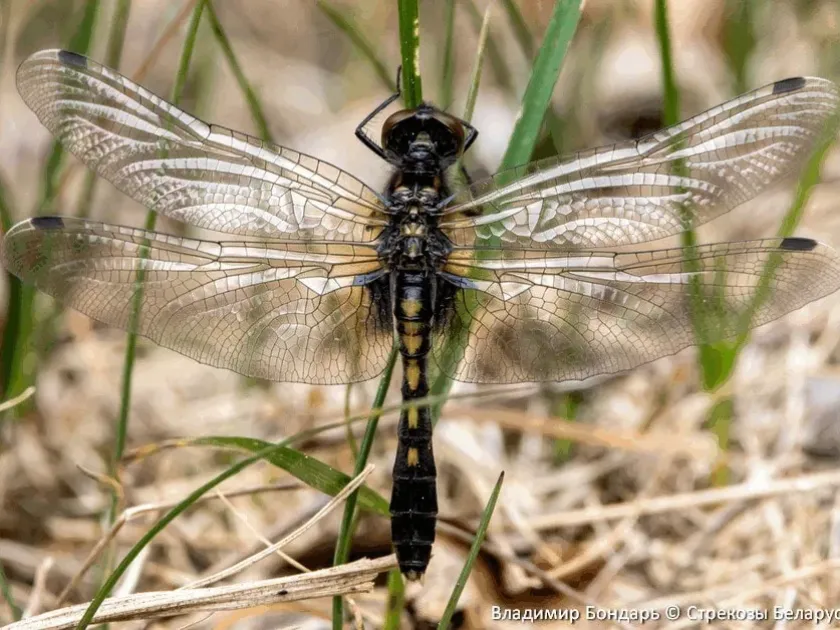
Description
How to identify
The hairy dragonfly, Brachytron pratense, is a distinctive member of the Aeshnidae family. It is named for the fine, hair-like structures found on its thorax, which distinguish it from other species.
Adults possess a dark, robust body decorated with bright blue or yellow-green spots, offering an elegant appearance while in flight during their early-season emergence.
The eyes of the hairy dragonfly meet at the top of the head, a common feature for hawker dragonflies. They are active hunters, often seen patrolling along the edges of ponds.
Larvae are aquatic predators living in stagnant or slow-moving waters. They feature a specialized prehensile mask used to snatch unsuspecting prey in the underwater environment.
The species is commonly found in marshes, ditches, and near bodies of water that have abundant aquatic vegetation, serving as a sign of a healthy wetland ecosystem.
What it damages
Brachytron pratense is not an agricultural pest. In fact, it is considered a beneficial insect because it helps regulate populations of mosquitoes and other flying pests.
Potential conflicts may arise only in specialized fish farming environments. In such cases, the predatory larvae may consume fish fry, leading to reduced survival rates of young fish.
For crops, these insects cause no damage. They feed exclusively on other insects and have no impact on plant growth, yield, or health of agricultural plantations.
The label of "pest" is inappropriate for this species in an agronomic context. They function primarily as apex predators within their aquatic and aerial habitats.
Any negative perception usually stems from confusion regarding the role of predatory insects in the ecosystem rather than actual observed damage to field crops.
When it appears
This species is notable for its early flight season, usually appearing as early as late May and remaining active through July in many temperate regions.
The development cycle is relatively long, with the larvae spending two to three years in the water before undergoing their final transformation into adults.
Overwintering occurs in the larval stage, buried within substrate or among aquatic vegetation, allowing them to resume growth as soon as water temperatures rise.
Emergence typically takes place in the early morning. Adults are most active during warm, sunny days, which they need for thermoregulation and efficient hunting.
Breeding behavior is centered around stagnant water bodies, where females deposit their eggs into the stems of submerged or floating aquatic plants.
Control measures
No pest control measures are required for Brachytron pratense in agriculture. It is a harmless species that does not interact with field crops.
If management is required in fish hatcheries, focus should be on mechanical pond maintenance, such as removing dense vegetation that provides excessive shelter for larvae.
Chemical control is strongly discouraged as it harms beneficial biodiversity and disrupts the natural pest suppression provided by adult dragonflies.
Practicing Integrated Pest Management (IPM) ensures that non-target beneficial insects are protected, maintaining the overall health of the farming area.
- Maintain balanced aquatic ecosystems in local water bodies.
- Avoid broad-spectrum insecticide use near ponds and wetlands.
- Monitor fish fry populations to manage potential larval predation if necessary.
Taxonomy
- Latin name
- Brachytron
- Family
- Aeshnidae
- EPPO code
- BRHTSP
Discussion
No discussions yet — be the first.