

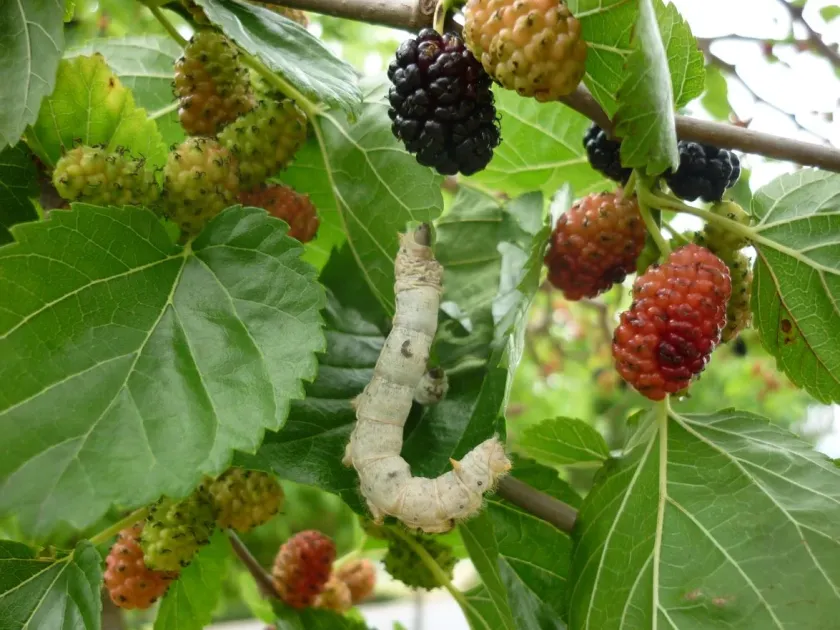
Description
How to identify
The silkworm belongs to the family Bombycidae. Adult moths are characterized by stout, furry bodies and broad wings, which are evolved to conserve heat during their relatively short adult lifespan.
The larvae, commonly known as caterpillars, have a cylindrical body with five pairs of prolegs. Many species possess a distinctive horn or tubercle on the posterior end, aiding in identification.
Their coloration typically ranges from light green to brownish, providing excellent camouflage against tree bark and foliage. The skin texture can vary, featuring subtle hairs or bumps.
Pupation occurs within a highly protective, dense silk cocoon. The color and size of the cocoon can vary significantly depending on the species and the quality of the larva's nutritional intake.
The lifecycle involves a complete metamorphosis: egg, larva, pupa, and adult moth. Environmental conditions, especially temperature, are the primary factors dictating the speed of each stage.
What it damages
Damage is primarily caused by the larvae, which possess robust mandibles for chewing. They are voracious feeders capable of consuming large amounts of foliage in a very short time.
Target crops include a wide variety of deciduous trees, with a strong preference for fruit trees like apples, pears, and plums, as well as many ornamental and forest tree species.
Widespread infestation leads to severe defoliation, which drains the plant's stored energy. This significantly weakens the tree, making it susceptible to secondary pests and various diseases.
In addition to leaf consumption, larvae may damage young buds and growing shoots. This disrupts the tree's spring development and can cause stunted growth or even death in young saplings.
Chronic infestations result in poor fruit quality, reduced fruit size, and long-term economic damage to commercial orchards and agricultural plantations.
When it appears
Adult moths are typically active during warmer months, when mating and egg-laying occur. Eggs often overwinter on the bark of host trees, sheltered by specialized protective secretions.
Hatching is usually synchronized with the flushing of new leaves in spring. This ensures that the newly emerged larvae have immediate access to high-quality, nutrient-rich food sources.
The peak period for larval damage occurs in late spring and early summer when the caterpillars reach their maximum size and nutritional demand before entering the pupal stage.
Pupation generally takes place in mid-summer. The duration of this stage depends on the species and ambient climate, usually lasting several weeks before the adult moth emerges.
Monitoring population levels is crucial during the early stages of spring. Early detection allows for more effective intervention before the larvae cause significant structural damage to the trees.
Signs of infestation
The first signs of infestation are ragged holes in leaves and chewed leaf margins. In severe cases, only the woody midribs of the leaves remain, giving the tree a skeletonized appearance.
Frass (caterpillar droppings) accumulating on the leaves or the ground beneath the canopy is a clear indicator that a colony is actively feeding in the branches above.
Egg clusters, often appearing as small, textured patches on the bark, serve as a warning sign for potential infestation intensity in the following growing season.
Silky webbing or nests found in the terminal parts of branches indicate the presence of colonial larvae, which use these structures for both protection and feeding sites.
A sudden decline in the overall vigor of the tree, yellowing foliage, or premature leaf drop during the peak growing season may indicate high stress levels caused by pest activity.
Control measures
Cultural control practices include the physical removal of infested branches and the scraping of egg clusters from tree bark during the dormant winter season to reduce population pressure.
Biological control using formulations of Bacillus thuringiensis is highly effective against young caterpillars, providing a targeted approach that minimizes harm to beneficial insects.
Pheromone traps are essential for monitoring adult moth flight times, which helps growers time their intervention strategies to coincide with the most vulnerable lifecycle stages of the pest.
Chemical control with systemic or contact insecticides should be reserved for cases where economic thresholds are exceeded, ensuring rotation of chemicals to prevent pesticide resistance.
Promoting a healthy ecosystem by encouraging natural predators such as birds, parasitic wasps, and predatory beetles helps manage pest populations naturally without heavy reliance on chemicals.
Reference
Connections · Silkworm
Most often together:
Marketplace
Products · 4


Biology
Taxonomy
- Latin name
- Bombyx
- Order
- Lepidoptera (butterflies)
- Family
- Bombycidae
- EPPO code
- BOMBSP
Community
Discussion
No discussions yet — be the first.