
Trilocha varians
Trilocha varians
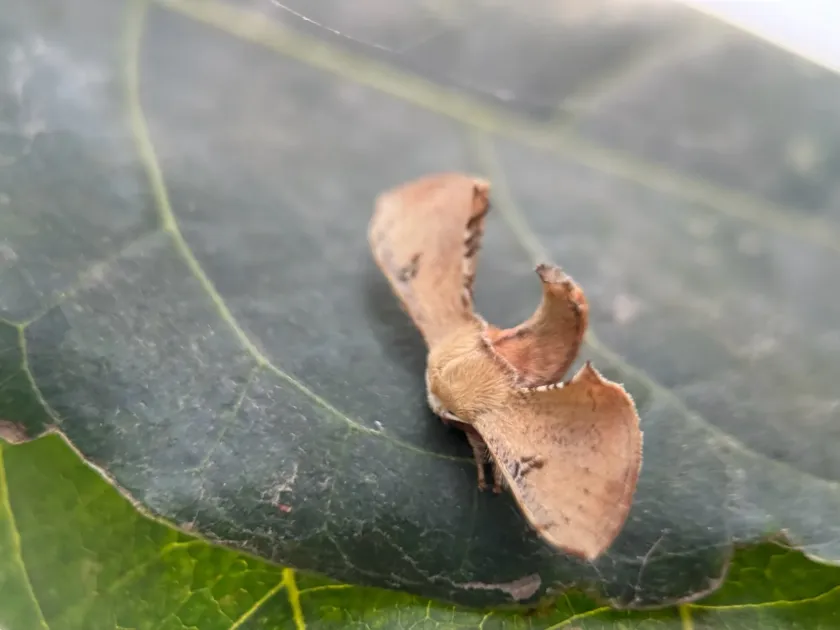
Description
How to identify
Trilocha varians is a species of moth in the family Bombycidae, commonly known as a significant defoliator of plants in the Moraceae family. In its larval stage, it poses a direct threat to ornamental trees, particularly those within the Ficus genus.
The adult moths are nocturnal, exhibiting cryptic coloration that mimics tree bark. This behavior allows them to remain hidden during daylight hours, making early detection of an infestation challenging for nursery managers and plant owners.
The life cycle consists of the egg, larval, pupal, and adult stages. The larvae are characterized by distinct thoracic projections and a variable coloration pattern, which serves as a camouflage strategy while feeding on foliage.
Larval development is highly dependent on ambient temperature and host plant vigor. In tropical or controlled environments, multiple generations can occur annually, leading to rapid increases in population density if not managed.
Eggs are typically deposited in clusters on the abaxial (underside) surface of leaves. They are often covered with scales from the female's abdomen, providing protection against predators and environmental stress.
What it damages
The primary hosts of Trilocha varians are various species of Ficus. In urban landscapes and plant nurseries, this moth can cause severe defoliation, stripping trees of their foliage within a short period during peak larval activity.
Feeding damage begins with the consumption of leaf margins and progresses to skeletonizing the leaves, leaving only the midribs and major veins. This loss of surface area severely impacts the plant's ability to photosynthesize.
Heavy infestations weaken the host tree, making it susceptible to secondary environmental stressors such as drought or heat stress. In nurseries, the aesthetic damage caused by leaf loss leads to significant economic losses as plants become unsalable.
Repeated or severe defoliation events can stunt tree growth and lead to dieback of secondary branches. This disrupts the tree's structural development and compromises its long-term health and vitality.
Furthermore, the weakened state of the plant often attracts secondary pests or diseases, creating a complex problem for plant health management that requires integrated control strategies.
Signs of infestation
The presence of frass (caterpillar excrement) on leaves beneath feeding sites is one of the first visible indicators of an infestation. Fresh, dark pellets are a clear sign that larvae are currently active in the canopy.
Visible leaf damage, characterized by jagged edges or completely missing leaf blades, confirms the presence of larger larvae. Close inspection often reveals the caterpillars resting along leaf veins during the day.
Silk webbing or leaves tied together with silk are common signs of larval shelter and pupation. These protected zones make it difficult for contact insecticides to reach the larvae effectively.
Finding pupae (cocoons) attached to stems, branches, or leaf folds is a definitive sign of an established population. These cocoons are often well-camouflaged, matching the color and texture of the host plant's bark.
Nighttime monitoring with a flashlight is the most accurate diagnostic method. The larvae are most active after dusk, and their feeding patterns become clearly visible under artificial light during the night hours.
Control measures
Mechanical control involves the manual removal and destruction of larvae, egg clusters, and cocoons. This is highly effective for small-scale infestations in home gardens or collections where chemical use is restricted.
Biological control using microbial insecticides, such as those containing Bacillus thuringiensis, is the preferred method for managing larval populations while minimizing harm to beneficial insects and the environment.
Chemical control should be implemented during periods of high larval density using systemic or contact insecticides. It is critical to ensure thorough coverage of the entire canopy, particularly the underside of leaves.
Proactive cultural practices, such as maintaining plant health and performing regular sanitation pruning, help prevent the buildup of pest populations. Removing and destroying infested material disrupts the life cycle.
- Regular monitoring of the abaxial leaf surface for egg masses.
- Use of Bacillus thuringiensis sprays during the early larval instars.
- Application of contact insecticides during high-density outbreaks.
- Sanitation by pruning and disposing of infested shoots.
- Quarantine procedures for new plant stock to prevent introduction.
Taxonomy
- Latin name
- Trilocha varians
- Order
- Lepidoptera (butterflies)
- Family
- Bombycidae
- EPPO code
- TRLOVA
Discussion
No discussions yet — be the first.