
Buff-tailed bumblebee
Bombus terrestris
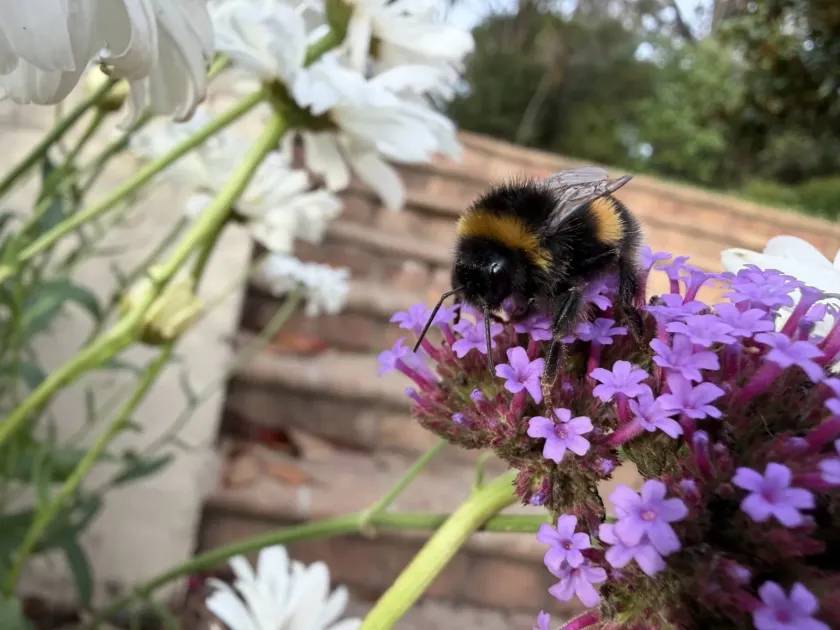
Description
How to identify
The buff-tailed bumblebee (Bombus terrestris) is a member of the family Apidae. While widely used as a beneficial pollinator, it can exhibit pest-like behavior in enclosed greenhouse systems.
They are characterized by a large, hairy body with distinct yellow bands and a white tail. The queen is significantly larger than the workers.
These insects follow a complete metamorphosis lifecycle. In nature, they nest underground, but in agriculture, they are housed in specialized artificial hives.
Understanding their social structure is vital for managing their activity within production facilities, as hunger can drive them to seek alternative food sources.
The balance between their role as pollinators and their potential for damage requires constant attention from greenhouse managers.
What it damages
The primary crops affected by bumblebee feeding include tomatoes, eggplants, and peppers, especially in intensive greenhouse production.
When nectar sources are scarce, workers utilize their mouthparts to pierce the skin of fruits to consume the nutritious juice inside.
This feeding behavior causes significant economic loss by lowering the percentage of Grade A produce available for market sale.
Damage is most prevalent during the fruit set and ripening stages, causing irreversible harm to the vegetable quality.
In addition to direct loss, the mechanical injury creates entry points for secondary pathogens like bacteria and molds that cause fruit decay.
Signs of infestation
The most recognizable signs are tiny, needle-like punctures on the surface of young or ripening fruits, often appearing in clusters.
Darkened or sunken necrotic spots develop around these punctures as the fruit tissue reacts to the injury and oxidation occurs.
Observing bumblebee workers congregating on fruit surfaces instead of focusing on flower blossoms is a clear indicator of aberrant behavior.
Sticky droplets of sap may be visible on the skin of the fruit near the puncture sites, leading to localized wet rot.
Eventually, the damaged fruits exhibit visible signs of premature decomposition, rendering them unmarketable and prone to rapid breakdown.
Control measures
The most effective strategy is to provide adequate supplemental sugar syrup to the hives to ensure the colony has sufficient food at all times.
Implement physical barriers such as protective netting to prevent bumblebees from reaching crops during the peak ripening phase.
Maintain a strict harvest schedule to reduce the duration that ripe, attractive fruits are exposed to potential feeding activity within the greenhouse.
Monitor hive health regularly and adjust the environment to reduce colony stress, which is often the underlying cause of destructive feeding.
Avoid the use of toxic insecticides, as they disrupt the beneficial pollination services that bumblebees provide to the majority of greenhouse crops.
Taxonomy
- Latin name
- Bombus terrestris
- Order
- Hymenoptera
- Family
- Apidae
- EPPO code
- BOMUTE
Discussion
No discussions yet — be the first.