
Red-tailed bumblebee
Bombus lapidarius
Description
How to identify
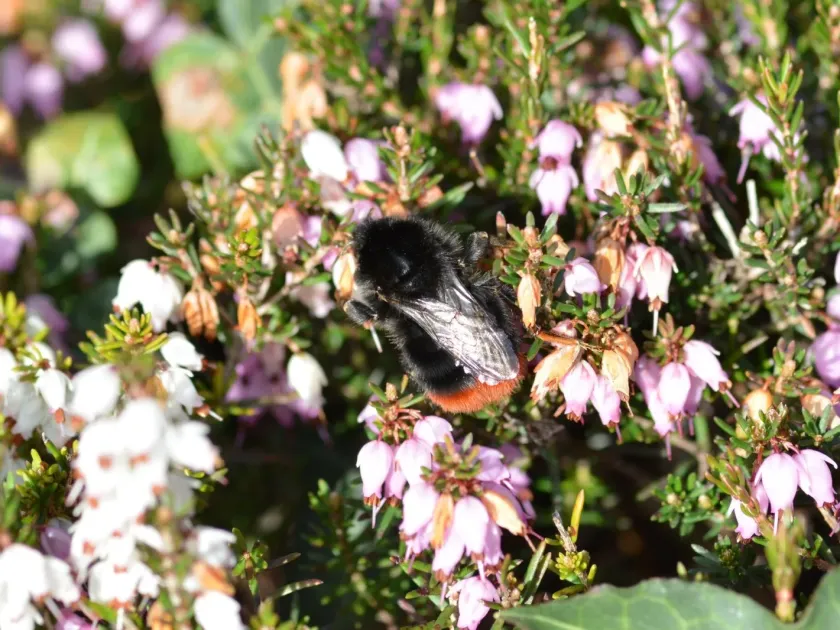
The red-tailed bumblebee (Bombus lapidarius) is a member of the Apidae family, order Hymenoptera. It is easily identified by its black velvet body and a distinct bright red tip on the abdomen.
Workers measure between 12–16 mm in length, while the queen is notably larger, reaching up to 22 mm. Their dense hair provides efficient insulation, allowing them to remain active in cooler weather.
As the name suggests, they typically build their nests in cavities under stones, in rock piles, or abandoned underground rodent burrows, where they are protected from the elements.
A typical colony consists of a few hundred individuals. The social structure is centered around a single queen, with workers and males emerging throughout the summer months.
In the context of farming, this species is widely recognized as a beneficial pollinator that contributes significantly to the health and productivity of diverse plant ecosystems.
What it damages
The red-tailed bumblebee is not considered an agricultural pest. Its diet consists solely of nectar and pollen gathered from a wide range of flowering plants.
They do not cause damage to plant tissues, stems, or leaves, as their mouthparts are specialized exclusively for feeding on fluids and collecting floral resources.
While some reports suggest they may occasionally damage soft fruits in controlled greenhouse environments, this is extremely rare and usually linked to food scarcity.
Misidentifying this bee as a harmful pest can lead to the unnecessary use of pesticides, which causes more damage to the crops by killing off essential pollinators.
The overall impact of this species on agriculture is overwhelmingly positive, as they ensure high seed set and fruit development in various vegetable and legume crops.
When it appears
The life cycle begins in early spring, when the hibernating queen emerges from the soil to find a suitable location for establishing her new nest.
May and June are peak periods for colony development, characterized by intense foraging activity as workers focus on provisioning the nest with food for larvae.
The colony reaches its maximum size in mid-summer, at which point new queens and drones are produced to ensure the continuation of the species for the next year.
By late August, the colony activity begins to decline, eventually resulting in the death of the workers, drones, and the founding queen.
The young, mated queens then enter a state of dormancy, overwintering in sheltered soil sites until the cycle repeats the following spring.
Signs of infestation
The presence of a colony is often marked by a loud, steady humming sound near potential nesting sites such as stone walls or rock piles during warm, sunny days.
Observing large, black bees with bright red tails foraging on nearby flowers is a clear indicator that a colony is active and contributing to pollination in the area.
Regular flight paths of workers traveling between the nest and surrounding floral resources can often be traced if observed carefully during the peak of summer.
The total absence of physical damage to vegetation or crop structure serves as a diagnostic indicator that these insects are foraging helpers rather than threats.
When investigating potential crop damage, the absence of necrotic lesions or larval tunnels confirms that red-tailed bumblebees are not responsible for plant injury.
Control measures
Due to their vital role as pollinators, no chemical control or eradication programs are recommended for the red-tailed bumblebee in agricultural settings.
Management should focus on creating safe zones where colonies can exist without interfering with intensive daily farming operations or heavy machinery.
Staff working in fields should wear appropriate protective clothing if their duties bring them close to known nesting sites to prevent accidental stings.
The application of broad-spectrum insecticides during the flowering stage is strictly discouraged, as it poses a severe risk to bumblebee populations and harvest yield.
Maintaining a healthy, biodiverse environment with undisturbed nesting sites is the most effective way to manage and support these beneficial insects on your farm.
Taxonomy
- Latin name
- Bombus lapidarius
- Order
- Hymenoptera
- Family
- Apidae
- EPPO code
- BOMULA
Discussion
No discussions yet — be the first.