
Tree bumblebee
Bombus hypnorum
Description
How to identify
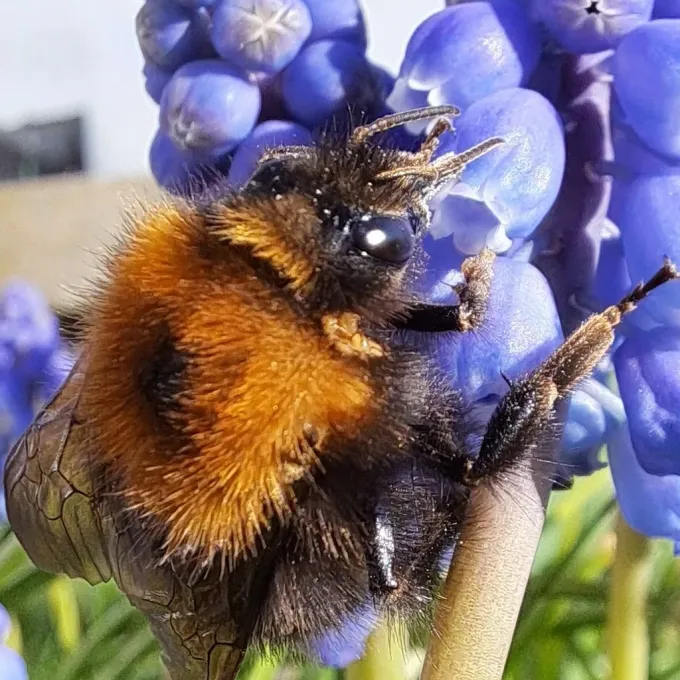
The tree bumblebee Bombus hypnorum is a distinctive species of the bumblebee family characterized by a ginger-brown thorax and a black abdomen with a white tail.
Queen bees are relatively large, while workers are smaller, but all individuals possess the dense hair cover necessary for thermoregulation in various weather conditions.
They are well-known for their nesting habits, often choosing elevated locations such as bird boxes, roof spaces, or tree cavities instead of underground burrows.
These bumblebees are highly adaptable and are among the first to appear in spring, making them effective pollinators for early-blooming fruit trees.
While generally peaceful, they can be defensive if their nest is disturbed, which is a significant factor to consider when planning maintenance in the garden.
What it damages
Although primarily viewed as beneficial, the tree bumblebee can occasionally cause damage to flowers through a behavior known as primary nectar robbing.
Instead of entering the flower to collect nectar and pollen, they may bite a hole at the base of the flower, which bypasses the reproductive parts and prevents pollination.
This can lead to deformed fruits or poor fruit set, particularly in sensitive glasshouse crops or specific berry varieties during nectar scarcity.
Their high activity levels in restricted environments like greenhouses can sometimes lead to the mechanical damage of delicate flower structures.
However, the economic impact is usually minimal compared to the overall benefit they provide through cross-pollination of various garden plant species.
When it appears
The lifecycle begins early in the season when queens emerge from hibernation to find suitable nesting sites for their new colony.
Workers become active throughout the summer months, with population numbers peaking during the warm mid-summer period.
By late summer, the colony enters its final phase, and young queens seek overwintering sites in the soil or under organic debris.
Because they are tolerant of lower temperatures, they are active during the early spring period, providing crucial services when other pollinators are absent.
Daily activity is most intense during daylight hours, as they rely on warmth to maintain the flight muscles required for foraging.
Signs of infestation
Visible punctures at the base of the corolla are the primary indicator of nectar robbing, suggesting that bumblebees are active in the area.
Premature flower drop or a lack of fruit development despite successful flowering can sometimes be linked to disrupted pollination processes.
The presence of a nest in man-made structures like birdhouses, soffits, or shed cavities is a clear sign of a local tree bumblebee population.
High numbers of bumblebees congregating around flowering fruit trees and bushes confirm their presence and active role in the ecosystem.
Increased humming sounds in structural voids or gaps in buildings are common auditory clues that a colony has established itself nearby.
Control measures
Prevention is the best approach, which involves sealing small cracks and gaps in buildings and roofs to deny access to nesting sites.
Installing fine insect-proof mesh on greenhouse vents is an effective way to keep bumblebees out of areas where they might cause unwanted damage.
Avoid using chemical pesticides, as these have broad-spectrum effects that damage not only pests but also the essential pollinator population.
Use natural deterrents or aromatic plants to discourage bumblebees from settling in undesirable areas without causing them permanent harm.
If a nest is situated in a problematic location, consider relocating it during the cooler parts of the day using professional advice to ensure safety for both you and the bees.
Taxonomy
- Latin name
- Bombus hypnorum
- Order
- Hymenoptera
- Family
- Apidae
- EPPO code
- BOMUHY
Discussion
No discussions yet — be the first.