
Common carder bee
Bombus agrorum
Description
How to identify
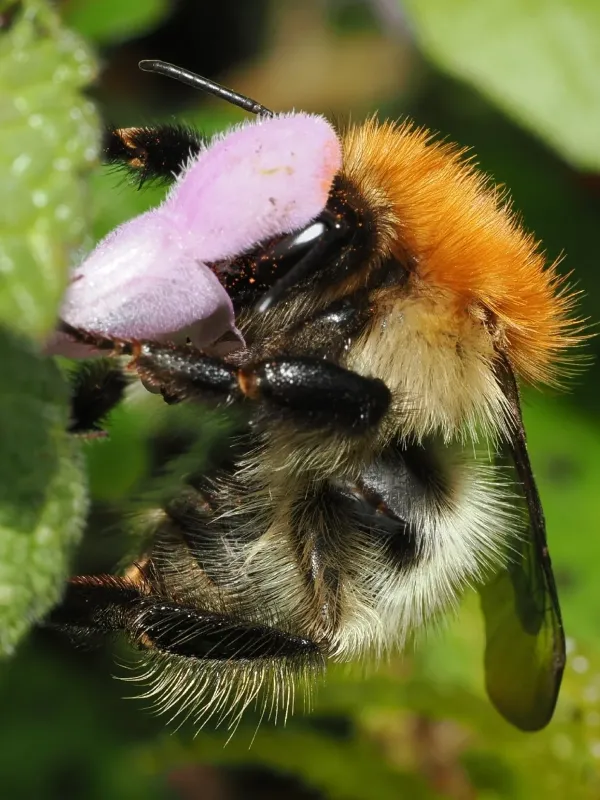
The common carder bee (Bombus pascuorum, formerly Bombus agrorum) is a member of the Apidae family, order Hymenoptera. It is easily recognized by its distinctive reddish-brown, ginger-like coat.
Unlike many other bumblebees, it has a uniform appearance and lacks distinct banding on the abdomen, though color intensity can vary significantly among individuals.
The life cycle follows a social pattern where a solitary queen establishes a nest in spring, followed by the development of workers throughout the summer season.
These bees typically nest on the ground surface, using moss, grass, and dry leaves to construct their nests, which makes them vulnerable to soil disturbance.
As pollinators, they are generally beneficial, but their tendency to nest in various habitats can occasionally place them in conflict with agricultural operations.
What it damages
While primarily considered beneficial pollinators, they can sometimes damage flowers by biting through the base of the bloom to access nectar when access is obstructed.
This behavior, often referred to as nectar robbing, can prevent proper pollination of the flower and may leave open wounds that become sites for secondary infections.
In greenhouses or intensive tunnel farming, a high density of bees can lead to physical damage of delicate plant tissues during foraging flights.
Economic damage is rarely high enough to warrant mass eradication, as these bees usually contribute more to yield through pollination than they take via damage.
The presence of these bees is usually a sign of a healthy ecosystem, though monitoring is recommended in high-value seed production plots.
When it appears
The queens emerge from hibernation during the first warm days of early spring, typically starting in March or April depending on the local climate.
Worker activity peaks during the height of the summer blooming season, between June and August, when the colony is at its maximum size.
By late summer, the production of new queens and males occurs, marking the final stage of the seasonal cycle before the colony declines.
The foraging activity is strictly diurnal, with bees showing higher activity levels during sunny, warm weather conditions across the season.
The seasonal cycle concludes as temperatures drop, leading to the death of workers and the successful hibernation of mated new queens.
Signs of infestation
Identification of their presence is straightforward due to their constant buzzing sound and distinctive ginger-colored fur observed on flowering plants.
Visible damage to flowers, such as punctured corollas or ragged petals, is a common sign of nectar-robbing behavior in areas with high bee activity.
The presence of moss-covered, messy nests hidden in thick vegetation or near the base of fences indicates a thriving colony in the vicinity.
Observations of bees frequently flying in and out of a specific hole in the ground suggest a nest site that requires monitoring if it is in an inconvenient area.
Late summer encounters with large, slow-moving bees near nesting sites are characteristic indicators of the colony's final phase.
Control measures
Physical barriers like insect-proof netting are the most effective management strategy to prevent bees from entering greenhouses or protected cultivation zones.
Maintaining a clean field environment by removing excessive brush and tall grass near critical infrastructure discourages the establishment of nests.
Chemical control is generally discouraged because the common carder bee is a protected and highly beneficial species in most agricultural landscapes.
If bee activity must be redirected, non-toxic repellents or aromatic plant intercropping can be used to naturally discourage foraging in sensitive sections.
Regular monitoring of nesting sites allows for safe relocation if a nest is found in an area where human-bee conflict is unavoidable during field work.
Taxonomy
- Latin name
- Bombus agrorum
- Order
- Hymenoptera
- Family
- Apidae
- EPPO code
- BOMUAG
Discussion
No discussions yet — be the first.