
Bolitobius castaneus
Bolitobius castaneus
Description
How to identify
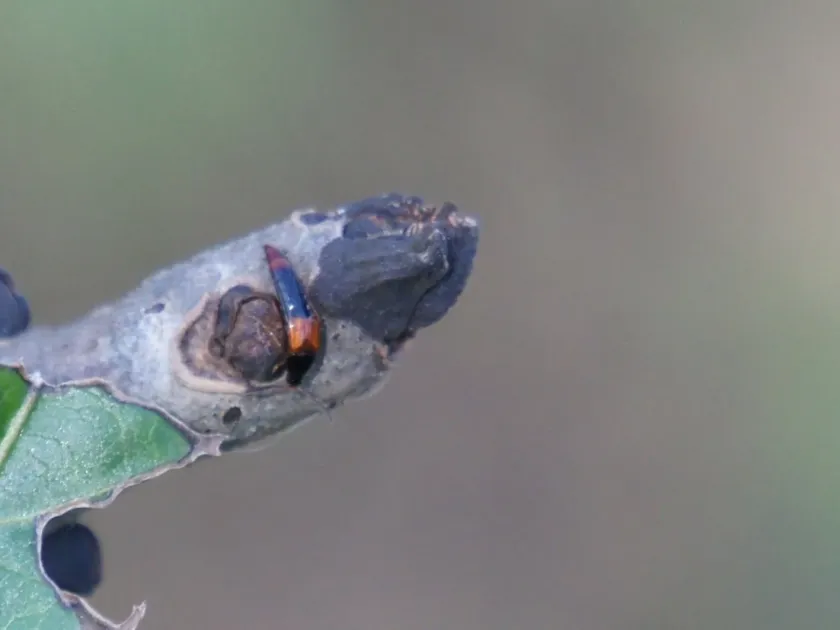
Bolitobius castaneus is a member of the rove beetle family, scientifically known as Staphylinidae. This species is characterized by an elongated, slender body typical of the genus Bolitobius.
The beetle typically features a glossy, dark brown or chestnut-colored exoskeleton. The head and pronotum are often darker, while the shortened elytra may have a distinct metallic or shiny appearance.
These beetles possess well-developed legs, which allow them to maneuver rapidly through leaf litter, damp soil, and fungal mycelium, which are their preferred environments.
The life cycle involves complete metamorphosis, including egg, larval, pupal, and adult stages. Larvae share similar morphology with adults and are adapted to life in confined or concealed spaces.
As part of the order Coleoptera, this insect is generally a predator, but its close association with fungi and decaying plant material makes it a complex part of the agro-ecosystem.
What it damages
In agricultural settings, Bolitobius castaneus is often secondary to other pests, but it can become harmful under specific environmental conditions that weaken the plant's natural defenses.
The primary damage occurs when beetles feed on tissues of plants already stressed by disease or mechanical injury, often entering stems near the soil surface.
A significant concern is their role as vectors for pathogenic fungal spores, which they carry between plants, accelerating the spread of root and stem rot diseases.
Seedlings in greenhouses are particularly susceptible, as constant irrigation and humid microclimates facilitate the rapid buildup of the beetle population.
While not a major primary pest, their activity can compromise the root systems of young crops, leading to stunted growth or increased vulnerability to other soil-borne pathogens.
When it appears
The activity of Bolitobius castaneus peaks during the warmer months, starting in early spring and continuing throughout the autumn depending on regional climate.
Population surges often coincide with periods of heavy rain or excessive irrigation, which promote the growth of the fungal organisms that these beetles rely on.
They overwinter in sheltered locations, including deep soil layers, crevices in tree bark, or within dense piles of decaying vegetable matter.
In greenhouses and indoor farming environments, the insect can remain active year-round if temperatures are maintained within their optimal development range.
High moisture levels are the most critical factor influencing their appearance and reproduction cycles in managed agricultural lands.
Signs of infestation
Initial signs of infestation often include small, irregular feeding lesions on the lower stems of plants, particularly where the plant touches the soil.
Observation of the soil surface or moving mulch often reveals the presence of these fast-moving, chestnut-colored beetles when disturbed.
Presence of frass or minute debris around the base of plants can indicate feeding activity, often occurring under the cover of darkness or in humid conditions.
Sudden wilting of young plants without clear foliar signs of disease may indicate that the root zone or lower stem has been compromised by beetle activity.
Using pitfall traps or sticky boards near the soil line is an effective way to confirm the presence of this species in commercial planting areas.
Control measures
Effective management begins with maintaining proper soil drainage and avoiding excessive humidity that encourages fungal growth in the root zone.
Sanitation is paramount; removing decaying plant matter and debris significantly reduces the habitat suitable for beetle breeding and survival.
Biological fungicides can be used to control the fungal populations that these insects feed on, thereby reducing the attractiveness of the site to the beetles.
In high-density indoor operations, soil sterilization or the use of targeted insecticides may be necessary to eliminate populations before planting new crops.
- Ensure adequate spacing between plants to allow for airflow and soil drying.
- Practice crop rotation to prevent the buildup of soil-dwelling pest populations.
- Monitor moisture levels strictly to inhibit optimal conditions for beetle larvae.
Taxonomy
- Latin name
- Bolitobius castaneus
- Order
- Coleoptera (beetles)
- Family
- Staphylinidae
- EPPO code
- BLTBCA
Discussion
No discussions yet — be the first.