
Bolitobius
Bolitobius
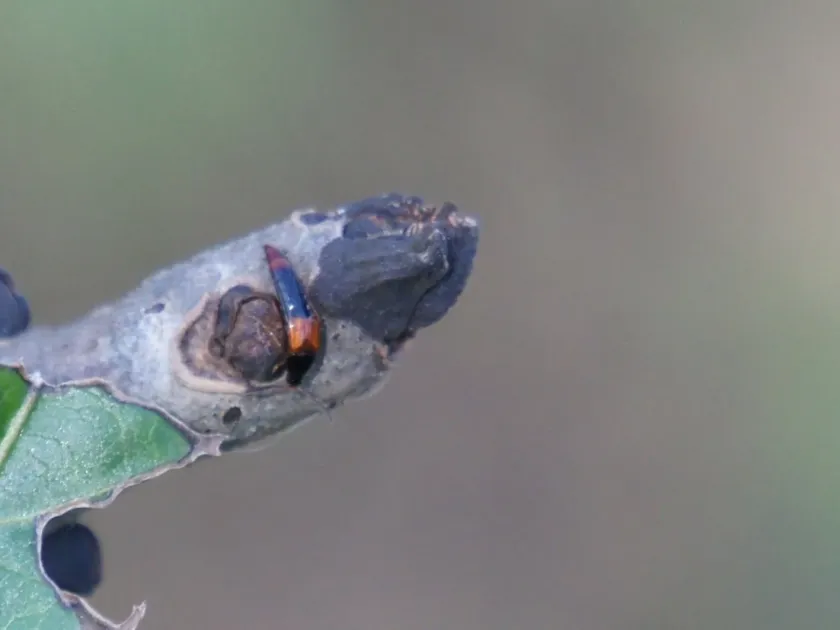
Description
How to identify
Beetles of the genus Bolitobius belong to the Staphylinidae family, commonly known as rove beetles. They are easily recognizable by their elongated, flexible bodies and significantly shortened elytra (wing covers) that expose most of the abdominal segments.
The coloration of these beetles typically ranges from dark brown to black, often featuring yellowish patterns on the wing covers. Their heads are relatively small, equipped with strong mouthparts adapted for consuming organic material or small organisms.
Larvae of Bolitobius are slender and possess well-developed legs, making them highly agile. They reside primarily within fungal tissues, which makes early detection difficult without a thorough inspection of the mushroom crop.
Adult beetles have elongated, sensitive antennae used to navigate complex environments and locate suitable breeding grounds. They are highly active and can move rapidly across the surfaces of mushrooms or substrate.
For precise species identification, professionals usually analyze morphological characters under a microscope, such as the arrangement of setae and the specific structure of the male genitalia, as different species look quite similar.
What it damages
Bolitobius species are primarily mycophagous or predatory. In agricultural settings, they are considered pests mainly in mushroom cultivation, where they damage the fruit bodies of various fungi including oyster and button mushrooms.
The larvae tunnel through the caps and stalks of mushrooms, causing internal tissue destruction. This activity makes the mushrooms aesthetically unappealing and structurally unstable, leading to significant market losses.
Feeding tunnels created by larvae often become gateways for secondary infections, such as bacterial rot or mold contamination. This rapidly accelerates the decay of the mushrooms after harvest.
While they do not cause direct damage to traditional vegetable crops, their presence in greenhouse environments near mushroom production facilities indicates a high risk of infestation for the fungal crop.
High population densities can destroy an entire harvest cycle. Therefore, even minimal presence of these insects in a growing facility must be addressed immediately to prevent exponential population growth.
When it appears
The activity cycle of Bolitobius is largely dictated by temperature and humidity. In natural forest ecosystems, adults are most active from late spring through early autumn, following the natural fruiting cycles of fungi.
In climate-controlled mushroom houses, Bolitobius can remain active year-round. Consistent temperatures above 15°C provide an ideal environment for continuous breeding and larval development.
Winter dormancy occurs in the adult stage. Beetles typically overwinter in forest floor litter, beneath tree bark, or in soil crevices that offer protection against freezing and excessive desiccation.
As temperatures rise in the spring, beetles emerge from their winter hiding spots to seek out fresh fungal substrates. This is a critical time for monitoring potential entry points into growing facilities.
The number of generations per year depends on the environmental conditions; warmer, more humid environments facilitate faster development, leading to several overlapping generations per season.
Control measures
Effective management begins with strict sanitation practices. Removing all debris and spent mushroom substrate from growing rooms is essential to eliminate breeding sites and break the life cycle of the pest.
Installing fine-mesh screens on all ventilation ducts and entryways is a highly recommended physical barrier strategy to prevent adult beetles from migrating into production areas.
Substrate sterilization, specifically thorough pasteurization of the growing medium before inoculation, is the most effective method for eradicating any eggs or larvae present in the bulk materials.
Monitoring programs using light traps or sticky cards should be implemented to detect adult populations early. Early detection is vital for preventing widespread infestation within the growing chambers.
In cases of confirmed heavy infestation, isolating the affected blocks and implementing localized sanitation is preferred over widespread insecticide use, which could be hazardous to the edible product.
Taxonomy
- Latin name
- Bolitobius
- Order
- Coleoptera (beetles)
- Family
- Staphylinidae
- EPPO code
- BLTBSP
Discussion
No discussions yet — be the first.