
Biorhiza
Biorhiza
Description
How to identify
Biorhiza (Biorhiza pallida) is a species of gall wasp belonging to the family Cynipidae, notorious for creating large, conspicuous galls on oak trees.
The adult wasps are small and elusive, often going unnoticed by foresters until the visual evidence of their reproductive activity becomes obvious.
These insects exhibit a heterogonic life cycle, which involves the alternation between sexual and agamic (parthenogenetic) generations.
Their taxonomy identifies them as highly specialized parasites of the genus Quercus, relying on specific tree tissues to support their larval development.
Understanding their morphology and biological requirements is essential for accurate identification and monitoring in both nursery and woodland settings.
What it damages
The primary damage is caused by the formation of galls, which are abnormal growths induced by the wasp to provide nutrients and protection for its larvae.
When these galls develop on young shoots or buds, they divert nutrients away from the healthy development of the tree, resulting in stunted growth.
Heavy infestations can lead to significant deformation of branches and can decrease the overall vigor of young saplings in tree nurseries.
Root galls, often formed by the asexual generation, can compromise the stability and health of the root system, making trees susceptible to environmental stress.
In mature trees, the presence of galls is usually aesthetic, but in younger stands, it can negatively impact the commercial value and timber quality.
When it appears
The life cycle begins in spring, with adult wasps emerging from overwintered galls to deposit eggs into the newly flushing buds of the oak.
During the summer months, the rapid growth of succulent galls occurs, which house the developing larvae of the sexual generation.
As autumn approaches, the cycle moves underground, where eggs are laid in the roots to initiate the formation of the overwintering gall generation.
Environmental conditions, particularly spring temperatures and rainfall, play a crucial role in determining the population density for the upcoming season.
The synchrony between the wasp's emergence and the oak's phenology is vital for the successful survival of the species.
Signs of infestation
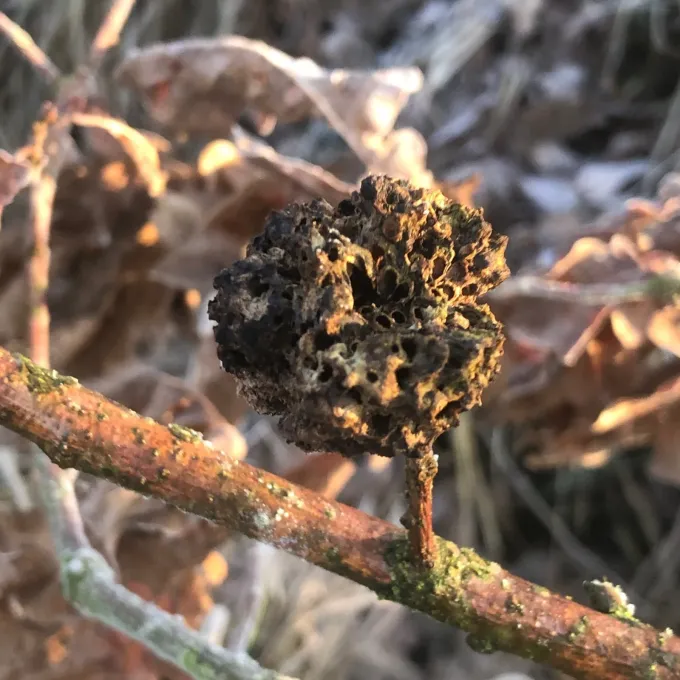
The most recognizable sign of Biorhiza is the presence of 'oak apples' — round, fleshy galls that appear on the twigs and leaves of the oak.
Initially, these structures are green or yellowish-green, turning reddish or brown as they mature and the wasps prepare to emerge.
Structural damage, such as twisted or bent twigs, often occurs at the sites where multiple galls have formed during the spring season.
Small circular exit holes on the surface of the galls are clear indicators that the adult wasps have successfully emerged and left the host.
Root galls are less visible but can be identified as irregular, bumpy swellings on the root surface when the soil is carefully disturbed or examined.
Control measures
In nurseries or small ornamental settings, the physical removal and destruction of galls before the wasps emerge can help keep populations low.
Chemical control using systemic insecticides is generally limited to the periods of adult wasp activity to maximize effectiveness before gall formation.
Maintaining tree health through proper fertilization and watering reduces the impact of the infestation on the tree's physiological resilience.
Biological control, relying on native parasitoid wasps, is the most sustainable approach for managing populations in larger forest stands.
Implementing regular monitoring and sanitation programs is essential to prevent the spread of the insect and ensure the long-term health of oak populations.
Taxonomy
- Latin name
- Biorhiza
- Order
- Hymenoptera
- Family
- Cynipidae
- EPPO code
- BIORSP
Discussion
No discussions yet — be the first.