
Red-winged staphylinid
Belonuchus rufipennis
Description
How to identify
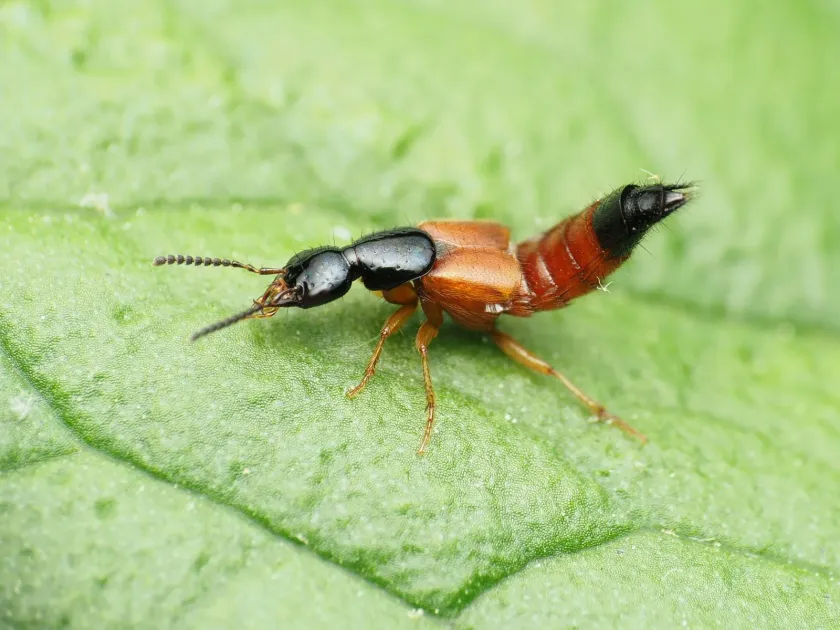
The red-winged staphylinid (scientific name: Belonuchus rufipennis) belongs to the rove beetle family (Staphylinidae), part of the Coleoptera order. These beetles are characterized by an elongated body shape with shortened elytra that leave the majority of the abdomen exposed.
The species is distinguished by its vivid red-orange elytra, which contrast sharply with the dark, often black or brownish head, pronotum, and abdomen. Adult specimens typically measure between 7 and 12 millimeters in length.
The larvae exhibit a typical campodeiform appearance; they are mobile, slender, and possess well-developed legs along with cerci at the end of the abdomen. They primarily lead a cryptic lifestyle within the soil or under organic debris.
Unlike many of their predatory relatives, members of this species may demonstrate a trophic association with specific crops, utilizing plant tissues or fruits for feeding or oviposition purposes.
Precise identification usually requires examination under a dissecting microscope, as morphological features such as the structure of the male genitalia and the punctation of the elytra are critical for distinguishing them from other Belonuchus species.
What it damages
The red-winged staphylinid primarily targets various agricultural crops grown in both greenhouses and open fields, including tomatoes, eggplants, and certain ornamental flower varieties.
Both adult beetles and larvae cause damage to fruits by boring small cavities into the surface, which subsequently triggers premature decay and facilitates the entry of fungal and bacterial infections.
The pest poses a significant threat to seed-producing crops, as damage to the reproductive parts of the plant directly reduces the yield and quality of the seeds being produced.
Furthermore, the physical wounds caused by the beetles serve as entry points for secondary pathogens, such as gray mold (Botrytis) and early blight (Alternaria), which can cause substantial crop loss.
Economic impact is generally highest in humid environments, where the lack of adequate phytosanitary measures allows the population to reach damaging thresholds rapidly.
When it appears
The activity of the red-winged staphylinid begins with the onset of stable warm weather, typically when soil temperatures exceed 12–15 degrees Celsius.
Peak adult emergence usually occurs in mid-summer, coinciding with the flowering and fruit-setting stages of the host plants.
The life cycle is closely tied to moisture levels; consequently, populations tend to surge following heavy rainfall or intensive irrigation practices within greenhouse environments.
As temperatures drop during autumn, the beetles migrate to protected locations, such as beneath plant debris, in the upper soil layers, or within crevices of structures, to overwinter as adults.
The number of generations per year depends on the climatic zone; in warmer southern regions, multiple generations can occur, while in temperate climates, only one full generation is typically observed.
Signs of infestation
Primary signs of infestation include small, sunken spots or punctures on the surface of young fruits, which eventually darken and begin to decay.
During morning inspections, adult beetles can be observed moving rapidly along stems and flower stalks, often hiding in leaf axils or dense foliage when disturbed.
The presence of insect excrement on leaf surfaces and the gradual wilting of individual flower clusters may indicate the hidden activity of larvae feeding within the plant tissue.
Infestation is often accompanied by secondary symptoms, such as the appearance of mold or fuzzy growth on the puncture sites, indicating the development of opportunistic plant pathogens.
Massive infestations often lead to the shedding of fruit buds, deformation of developing fruits, and general stunted growth of the host plant.
Control measures
Cultural control methods include deep autumn tillage and the prompt removal of crop residues, which are essential for destroying the overwintering habitats of the beetles.
Crop rotation and maintaining adequate spatial separation from weed-heavy areas are recommended to reduce the likelihood of pest migration into the main growing zone.
In greenhouse settings, yellow or blue sticky traps serve as effective tools for monitoring population density and reducing the number of adult beetles through physical trapping.
The use of biological control agents, such as entomopathogenic fungi or bacterial products like Bacillus thuringiensis, offers an environmentally friendly way to manage population numbers.
- Regular sanitation of greenhouse structures;
- Application of contact-stomach insecticides if thresholds are exceeded;
- Maintenance of optimal soil moisture levels to discourage secondary rot;
- Removal and destruction of damaged fruits.
Taxonomy
- Latin name
- Belonuchus rufipennis
- Order
- Coleoptera (beetles)
- Family
- Staphylinidae
- EPPO code
- BELNRU
Discussion
No discussions yet — be the first.