
Belionota prasina
Belionota prasina
Description
How to identify
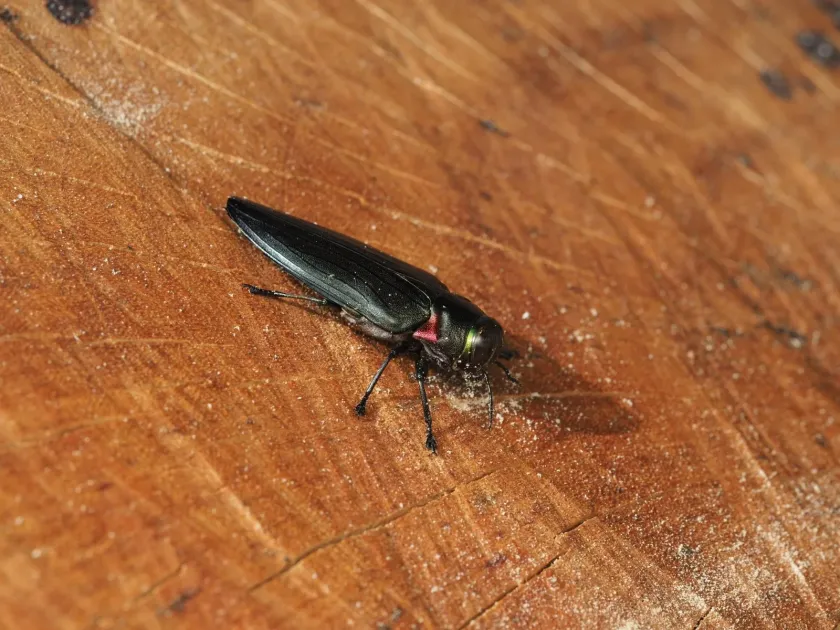
Belionota prasina is a species of jewel beetle belonging to the family Buprestidae and the order Coleoptera. This insect is characterized by its brilliant metallic sheen, which ranges from bright green to bronze.
Adult beetles typically measure 15 to 25 millimeters in length. Their morphology includes powerful mandibles and hardened elytra that protect the abdomen and functional wings folded beneath.
The head is closely attached to the pronotum, a diagnostic feature of the Buprestidae family. These insects possess well-developed eyes, allowing them to navigate effectively within tree canopies.
The larvae of Belionota prasina are apodous, flattened at the anterior end, and whitish in color. They are highly specialized for an endophagous life cycle within woody substrates.
Identification can be challenging due to the visual similarity to other related species, necessitating the use of specialized keys or genitalia examination for accurate taxonomic verification.
What it damages
This pest primarily attacks various species of fruit trees, particularly those within the Rosaceae family. Both wild and cultivated varieties can be targeted by this beetle.
The primary damage is caused by the larvae, which create extensive galleries through the bark, cambium, and sapwood of trunks and thick branches, effectively disrupting nutrient and water transport.
Weakened trees, specifically those suffering from drought stress, sunburn, or poor nutrition, are the most susceptible to infestation. Healthy trees are less likely to be successfully colonized.
Severe infestations frequently result in the dieback of individual branches, reduced fruit production, and the eventual death of the tree if structural integrity is compromised.
The economic impact of Belionota prasina is characterized by its tendency to establish chronic infestations in neglected orchards, leading to widespread loss of woody tissues.
Signs of infestation
An early sign of infestation is the appearance of distinct exit holes in the bark, usually oval or D-shaped, created when the adult beetle emerges after pupation.
The presence of brownish or resinous sap exuding from bark lesions indicates active larval feeding beneath the bark surface, often accompanied by localized tissue necrosis.
Orchard inspection may reveal canopy thinning, premature yellowing of leaves, and reduced annual growth, all of which are indicators of impaired vascular system function.
Upon removing dead bark, one can often find winding larval galleries tightly packed with frass, which appears as finely pulverized woody material (boring dust).
During the flight season, which corresponds with warmer months, adult beetles may be observed feeding on leaves or basking on sun-exposed sections of the tree trunk.
Control measures
Maintaining high-level agrotechnical practices is the cornerstone of management. Vigorous, well-irrigated, and adequately fertilized trees possess better natural defenses against beetle colonization.
Sanitary pruning is essential: all dead, dying, or infested branches must be removed and destroyed immediately to prevent the emergence of subsequent generations of the beetle.
To prevent sunscald, which often acts as an entry point for larvae, it is recommended to whitewash tree trunks and major limbs using lime-based solutions supplemented with insecticides.
Chemical control focuses on applying systemic insecticides during the peak flight period of adult beetles, aiming to eliminate the population before oviposition occurs.
Biological control strategies, including the application of entomopathogenic fungi or the conservation of natural parasitoid wasps, can be integrated into broader orchard protection programs.
Taxonomy
- Latin name
- Belionota prasina
- Order
- Coleoptera (beetles)
- Family
- Buprestidae
- EPPO code
- BELIPR
Discussion
No discussions yet — be the first.