
Belionota
Belionota
Description
How to identify
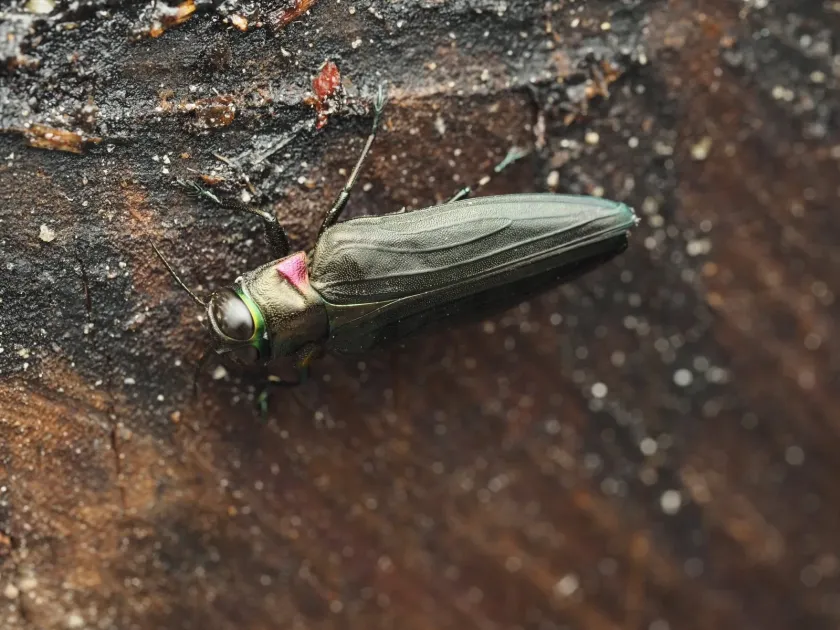
The genus Belionota belongs to the family Buprestidae, commonly known as jewel beetles. These insects are easily recognized by their shiny, metallic, and often iridescent wing covers, which reflect light intensely.
Adult beetles have a characteristic streamlined, elongated body shape, typically ranging from 15 to 30 mm. Their head is deeply retracted into the prothorax, allowing for agile movement within narrow crevices in tree bark.
The larvae are typically legless and have a flattened, white, or cream-colored body. The first thoracic segment is significantly wider than the rest of the body, a common adaptation for wood-boring larvae.
As wood-boring insects, these beetles are biologically adapted to exploit the vascular tissues of weakened trees. Their development is largely hidden from the surface, making them elusive during the early stages of infestation.
Taxonomically, the genus is well-represented in tropical and subtropical zones, though its impact is felt globally in orchards where host trees are subjected to environmental stress.
What it damages
Belionota beetles primarily target fruit-bearing trees, particularly stone and pome fruits such as plum, cherry, apricot, and apple. They are also known to affect various ornamental trees in landscapes.
Larval feeding occurs beneath the bark and in the cambium layer. By destroying the conductive tissues responsible for water and nutrient transport, larvae effectively starve the tree of its essential resources.
Severe infestations often result in the death of the tree, especially when larvae create galleries around the entire circumference of the trunk. This type of girdling is fatal and happens relatively quickly.
Young trees are at high risk, as their bark is thinner and more susceptible to penetration by adult females laying eggs. Infested saplings often show rapid decline and stunted growth.
Economic damage is substantial in commercial orchards, as infested trees often require complete removal and replacement, alongside loss of fruit yield over several seasons.
When it appears
Adult beetle emergence typically peaks in the warmer months, often spanning from late spring to early summer. This is when environmental conditions are most favorable for mating and oviposition.
During the peak season, adults are often spotted basking on sunlit trunks, where they feed on foliage and bark tissues. This is the optimal window for detecting the presence of the beetle in the orchard.
The egg-laying process occurs in cracks or mechanical wounds on the trunk. The larvae emerge shortly after and begin their burrowing activity, which can persist through the entire growing season.
Overwintering usually takes place in the larval stage, protected deep within the wood or under the bark. This allows them to survive lower temperatures and resume development when spring warmth returns.
The total lifespan of a single generation can vary from one to several years, depending on tree health and climatic variables, which complicates the timing of control interventions.
Signs of infestation
One of the most obvious signs of infestation is the presence of distinct exit holes. These holes are typically oval or D-shaped and indicate that an adult beetle has successfully completed its life cycle and emerged.
Frass, or fine wood dust, accumulating at the base of the tree or within bark fissures, is a tell-tale sign of larval activity. This debris is pushed out of the galleries as the larvae feed and enlarge their tunnels.
As the tree's internal circulation is impaired, the foliage will show signs of wilting, chlorosis, and premature senescence. The overall canopy vigor will noticeably decline over time.
If the bark is carefully peeled away at affected sites, characteristic serpentine galleries packed with frass can be observed. This structural damage is often accompanied by the detachment of the bark from the trunk.
Localized sunken patches or dark stains on the bark surface are often associated with deeper feeding galleries. These areas are prone to secondary pathogen infections, which further stress the host tree.
Control measures
The most effective strategy for managing Belionota is maintaining high tree vigor. Healthy, well-watered trees produce sap that can deter or kill larvae before they establish deep galleries.
Sanitation is paramount. All wood affected by the beetle should be pruned and destroyed immediately to prevent the emergence of a new generation of beetles. Do not store firewood from infested trees near the orchard.
Chemical control is most effective when targeted at adults during the peak flight season. Contact insecticides applied to the bark can reduce the number of females available to lay eggs.
Mechanical barriers, such as trunk protectors or white-washing with specialized additives, can make the trunk less attractive for oviposition, effectively protecting the tree during the summer months.
- Monitor for exit holes and frass regularly.
- Prune damaged branches immediately.
- Avoid mechanical injuries to trunks during maintenance.
- Use systemic or contact insecticides during peak adult activity.
Taxonomy
- Latin name
- Belionota
- Order
- Coleoptera (beetles)
- Family
- Buprestidae
- EPPO code
- BELISP
Discussion
No discussions yet — be the first.