
Atlas moth
Attacus atlas
Description
How to identify
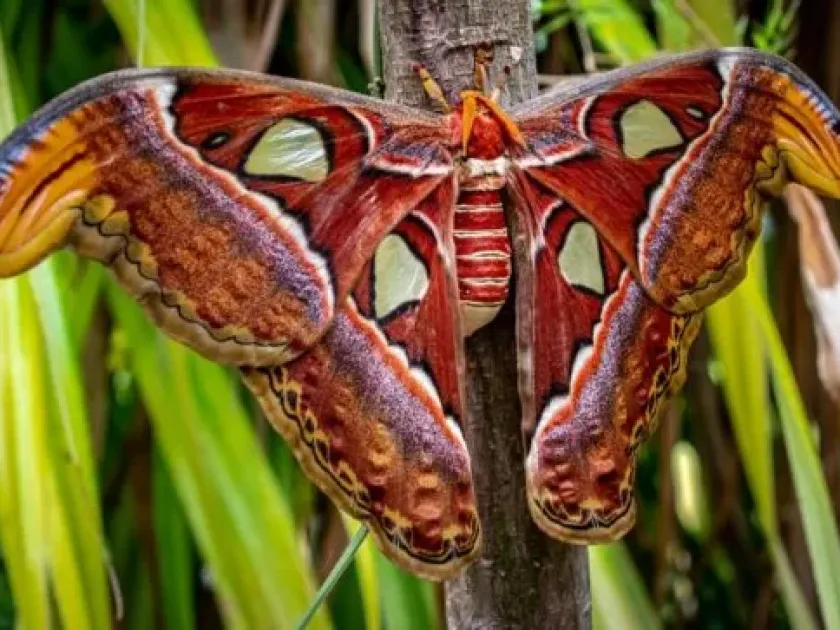
The Atlas moth (Attacus atlas) is one of the world's largest lepidopterans, belonging to the Saturniidae family. With a wingspan reaching up to 25–28 centimeters, the adult moth is easily identified by its impressive size and distinctive wing patterns that resemble a map, featuring translucent "windows" in the center.
The adult moth possesses a heavy, fur-covered body and a color palette ranging from reddish-brown to ochre. It is crucial to note that the adult stage does not feed, as its mouthparts are reduced, and it lives only for a short time on energy reserves gathered during the larval stage.
The larval stage passes through several instars. In the final stage, the caterpillar can reach a length of 11–12 centimeters. It is typically pale green or bluish and is covered in numerous fleshy spines or tubercles coated with a waxy, white substance, giving it a unique appearance.
The lifecycle follows a complete metamorphosis: egg, caterpillar, pupa, and adult. This development process requires specific environmental conditions, which is why the species is primarily found in the tropical and subtropical regions of Southeast Asia.
While not a major pest in temperate climates, the Atlas moth can become a localized nuisance in greenhouses or specialized botanical gardens where host plants are cultivated in controlled, warm conditions.
What it damages
Atlas moth caterpillars are polyphagous, capable of feeding on a wide range of woody plants and shrubs. Known host plants include species from the Magnoliaceae and Lauraceae families, as well as various fruit crops like citrus and other tropical species.
The primary damage is caused by the larval stage. Due to their significant size, caterpillars consume large amounts of foliage. This high rate of consumption can quickly strip a plant of its leaves, severely hampering the plant's photosynthetic capacity.
In cases of heavy infestation, where multiple caterpillars inhabit a single plant, total defoliation can occur. This stress significantly weakens the plant, hinders new shoot growth, and may lead to the death of young saplings if the attack is prolonged or repeated.
For commercial plantations, the presence of these larvae can lead to reduced yields and lower quality of produce. Furthermore, the extensive tissue damage creates entry points for secondary fungal and bacterial infections, which can further jeopardize the plant's health.
Although the Atlas moth rarely causes widespread agricultural epidemics, local outbreaks can be economically damaging. Monitoring is essential in regions where host plants are grown to ensure populations do not reach destructive levels.
Signs of infestation
The most obvious sign of an infestation is the rapid disappearance of leaf blades. Caterpillars typically begin feeding along the edges of the leaves, eventually moving toward the central vein. Large amounts of frass (excrement) under the tree canopy are also a clear indication of their presence.
During the day, the large caterpillars may be camouflaged within the dense foliage. However, their presence is betrayed by the significant skeletonization of the plant. Searching for their dense, silk-like cocoons attached to leaves or twigs is another way to confirm an infestation.
The cocoons of Attacus atlas are remarkably strong and bag-like in appearance, anchored to branches by a sturdy silk stalk. Finding these cocoons suggests the end of the larval cycle and indicates that an adult will soon emerge to continue the lifecycle.
The presence of adult moths in the vicinity at night serves as a warning, as they will likely lay eggs on the undersides of leaves. Identifying these egg clusters early is key to preventing a larger outbreak in the following generation.
Regular visual inspections of the plant crown are recommended. Because of their voracious appetite, even a few larvae can cause noticeable damage in a very short period, making prompt intervention necessary once they are detected.
Control measures
The most effective method for controlling the Atlas moth at low population levels is manual collection and destruction of the caterpillars. Their large size and distinct appearance make them easy to spot, allowing for quick mechanical removal from the foliage.
Preventive maintenance includes the regular pruning of infested branches, specifically looking for and removing cocoons. Burning the collected material is an effective way to eliminate the pest before the next generation begins its cycle.
Biological pesticides based on Bacillus thuringiensis have proven to be highly effective against Lepidoptera larvae. These treatments are environmentally friendly and specifically target the digestive system of the caterpillars, leading to their rapid mortality without harming beneficial insects.
In large-scale infestations within greenhouses, systemic insecticides approved for use on specific crops may be required. It is vital to strictly adhere to label instructions, including application frequency and safety intervals, to prevent chemical residues.
Maintaining plant vigor through proper irrigation and balanced fertilization increases the natural resilience of the plants. Healthy specimens are better equipped to withstand minor leaf loss and can recover their vegetative potential much more effectively.
Taxonomy
- Latin name
- Attacus atlas
- Order
- Lepidoptera (butterflies)
- Family
- Saturniidae
- EPPO code
- ATTCAT
Discussion
No discussions yet — be the first.