
Attacus
Attacus
Description
How to identify
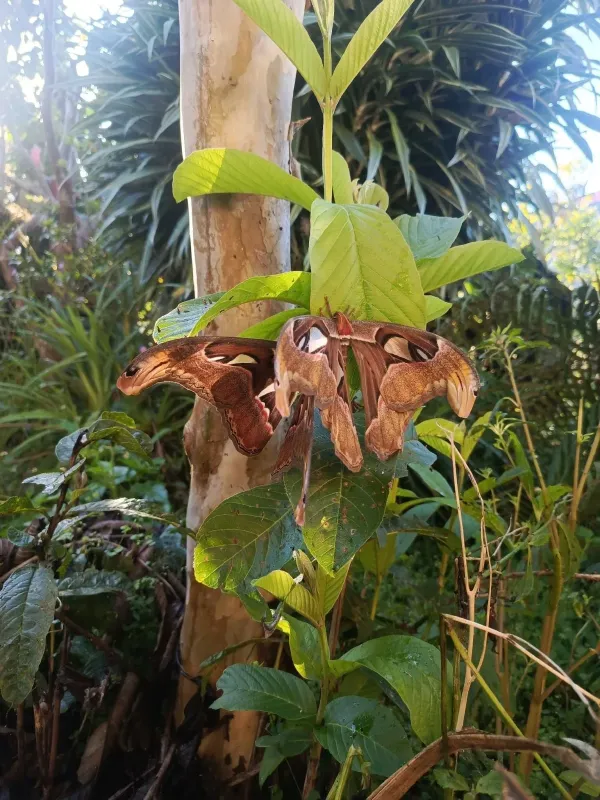
Attacus is a genus of large nocturnal moths belonging to the family Saturniidae. This genus includes some of the largest insects in the world, most notably the famous Atlas moth.
Adult specimens possess a wide wingspan, often reaching 25 to 30 centimeters. The wing coloration typically ranges from reddish-brown to yellowish-tan, featuring distinct transparent "windows".
The body of the adult is covered in dense hair. Male antennae are feathery and highly developed, allowing them to detect female pheromones over great distances.
Attacus caterpillars are extremely large, covered with fleshy protuberances and a waxy coating that gives them a whitish or bluish-gray appearance.
The insect follows a complete metamorphosis life cycle: egg, larva (caterpillar), pupa, and imago (adult moth).
What it damages
Attacus caterpillars are polyphagous phytophages. In tropical regions, they prefer the foliage of various tree and shrub species.
Primary host plants include different species of Ficus, cinnamon trees, and several fruit crops such as citrus plants.
Significant damage is observed in nurseries, where young caterpillars can defoliate plants en masse, leaving branches bare.
In their natural habitat, they also damage wild plants that are utilized in forestry and ornamental landscaping.
Due to their massive size, a single caterpillar requires a substantial amount of plant biomass to develop successfully through to the pupation stage.
When it appears
Adult activity occurs during the warmer seasons when tropical climatic conditions are favorable for their lifecycle.
Adult moths do not feed, and their lifespan as imagines is limited to 1-2 weeks, during which the primary goal is reproduction.
Caterpillars are most active during periods of intense vegetative plant growth, when foliage is at its most succulent and accessible stage.
The complete life cycle from egg to moth can vary from a few months to an entire year depending on ambient temperatures.
Dormancy or diapause in tropical climates is often triggered by rainy seasons or droughts, slowing down the insect's development at the pupal stage.
Signs of infestation
The first sign of infestation is the presence of large frass (excrement) on leaves, which is characteristic of large lepidopteran larvae.
Severe skeletonization or total destruction of the leaf blade occurs, with caterpillars frequently aggregating on the underside of leaves.
In areas where the pest is concentrated, massive silky cocoons can be found attached to the branches of the host plants.
Damaged branches appear stripped, leading to a reduction in the tree's photosynthetic capacity and overall weakening of the plant.
The presence of caterpillars is often accompanied by damage to terminal buds, which stunts the growth of the woody culture.
Control measures
Hand-picking caterpillars remains the most effective and safe method of control in private gardens and small-scale farms.
The application of biological products based on Bacillus thuringiensis allows for the effective management of young larvae without harming the environment.
Preventive pruning of affected branches containing cocoons during the off-season helps to significantly reduce the population of the next generation.
The use of light traps at night can assist in capturing adults, thereby preventing them from laying eggs on cultivated plants.
Chemical control is justified only during mass outbreaks, with a preference for using selective insecticides to minimize ecological impact.
Taxonomy
- Latin name
- Attacus
- Order
- Lepidoptera (butterflies)
- Family
- Saturniidae
- EPPO code
- ATTCSP
Discussion
No discussions yet — be the first.