
Atheta
Atheta
Description
How to identify
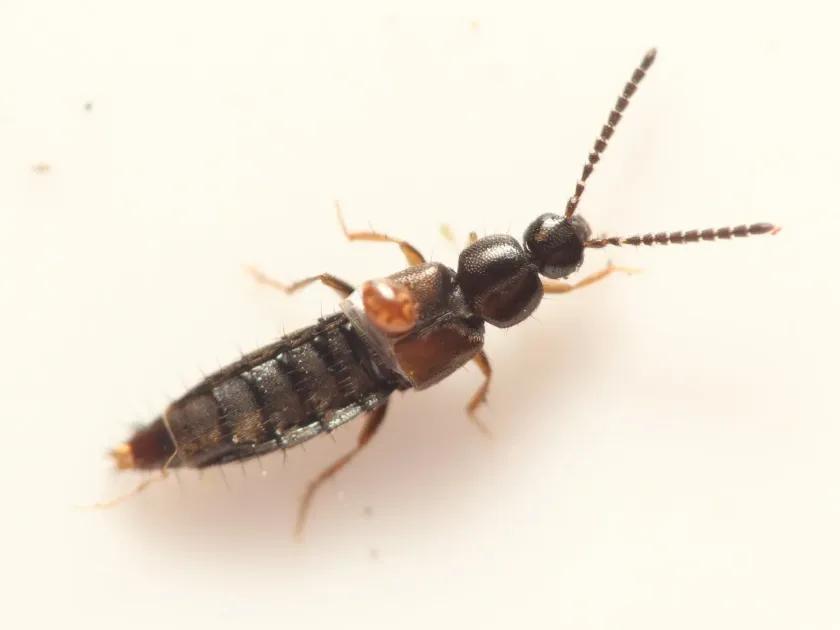
Atheta (lat. Atheta) is a genus of rove beetles belonging to the family Staphylinidae. These insects are generally recognized by their short elytra that leave most of their abdomen exposed, and their high mobility.
Adult beetles are typically small, ranging from 2 to 4 mm in length. They are usually dark brown or black in color, which helps them blend into moist soil or organic substrates where they prefer to reside.
Their behavior is quite distinct; they are frequently seen running rapidly across the soil surface and often arch their abdomen upwards when disturbed.
The larvae share a similar slender appearance to the adults, equipped with functional legs that allow them to crawl through dense growing media or fungal mycelium.
While many species within this genus are predatory and beneficial, certain species can become problematic in intensive cultivation environments like greenhouses or mushroom farms.
What it damages
In mushroom cultivation, Atheta larvae can cause significant damage by feeding on the mycelium and boring into the stems of mushrooms, rendering them unmarketable.
In greenhouse vegetables, these beetles can become pests when their natural food sources are scarce, leading them to feed on the delicate roots of seedlings or young transplants.
Feeding damage to roots often manifests as necrotic spots or stunted root tips, which limits the plant's ability to absorb water and essential nutrients.
Beyond physical damage, their presence creates entry points for various phytopathogenic fungi and bacteria, which can lead to secondary infections in the crop.
Heavy infestations can lead to a noticeable decline in plant vigor, leaf chlorosis, and in severe cases, the collapse of young seedlings.
When it appears
Atheta reproduction is highly favored by the warm, humid conditions typically found in greenhouses, glasshouses, and mushroom growing houses.
The insects can remain active throughout the year in controlled indoor environments, with overlapping generations making management more complex.
In outdoor settings, they overwinter in the soil or beneath leaf litter, emerging as temperatures rise during the spring and early summer.
High soil moisture is a critical factor for their survival; sudden shifts in environmental conditions can trigger movement into different soil depths.
Lifecycle speed is temperature-dependent, with developmental stages progressing rapidly in temperatures between 20°C and 25°C.
Signs of infestation
Visual identification starts with observing small, dark, fast-moving beetles scurrying on the substrate surface, especially after irrigation.
For mushroom growers, tunnels inside the mushroom caps or stems are a clear indication of larval activity within the product.
For greenhouse plants, stunted growth accompanied by wilting during peak sunlight hours often points to root system damage by larvae.
The presence of fine, granular insect frass on top of the soil is another sign of an established population within the container or bed.
Discolored or damaged root hairs upon visual inspection of root balls indicate that these beetles may be grazing on the plant's root system.
Control measures
Sanitation is the most effective management strategy; removing crop debris and maintaining clean surfaces reduces breeding sites for the beetles.
Yellow sticky traps should be placed throughout the cultivation area to monitor the adult population and capture them before they reproduce.
Biological control using entomopathogenic nematodes, such as Steinernema feltiae, has proven highly effective at suppressing larval populations in the soil.
Managing irrigation practices to avoid constant saturation of the growing medium is essential, as dry surfaces discourage their movement and survival.
- Application of Beauveria bassiana based bio-insecticides.
- Ensuring all incoming soil or compost is heat-treated or sterilized.
- Regular monitoring of root zones in early developmental stages.
Taxonomy
- Latin name
- Atheta
- Order
- Coleoptera (beetles)
- Family
- Staphylinidae
- EPPO code
- ATHTSP
Discussion
No discussions yet — be the first.