
Spittlebug
Aphrophora saratogenensis
Description
How to identify
The spittlebug, also known as a froghopper, belongs to the order Hemiptera. These insects are easily identified in their nymph stage by the frothy white mass, resembling saliva, which they produce around their bodies for protection.
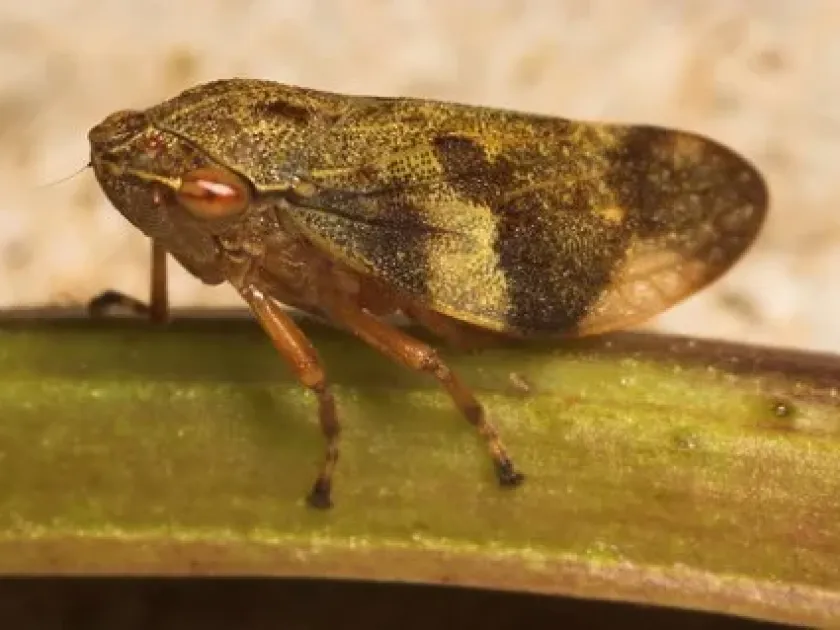
Adult spittlebugs are about 10 millimeters long, with a robust body and a jumping ability typical of leafhoppers. They are usually mottled brown or gray, which allows them to blend in perfectly with plant stems and foliage.
The life cycle involves an egg stage, five nymphal instars, and an adult stage. Eggs are typically laid in the fall within plant tissues or bark crevices, where they remain dormant throughout the winter until spring temperatures rise.
Equipped with piercing-sucking mouthparts, these insects are specialized in tapping into the plant's vascular system. They feed on xylem sap, which is nutrient-poor, necessitating the consumption of large volumes to meet their dietary requirements.
The characteristic foam is not just a home but a vital survival tool. It protects the soft-bodied nymphs from desiccation, heat stress, and various predators, creating a stable environment while they feed and grow.
What it damages
Spittlebugs are polyphagous, meaning they feed on a wide variety of plants, including strawberries, legumes, ornamental flowers like roses, and various shrubs. They can cause significant stress to these crops during the active growth period.
Direct damage occurs when nymphs suck sap from tender shoots, buds, and young leaves. This reduces the plant's vigor, causes stunting, and can lead to the wilting of terminal shoots if the infestation density is high enough.
Leaves often exhibit curling, crinkling, or chlorosis (yellowing) due to the feeding activity. In severe cases, the affected plant parts may become necrotic, significantly reducing the aesthetic value of ornamental plants and the yield of fruit crops.
Spittlebugs are also known to serve as vectors for various plant pathogens, including bacteria and viruses. By moving from plant to plant, they can spread systemic diseases that are far more damaging than the feeding process itself.
Flower production is often impaired, with buds failing to open or dropping prematurely. For strawberry growers and nursery owners, even a low population of spittlebugs can lead to substantial financial losses due to quality degradation.
When it appears
The appearance of spittlebugs is tightly linked to spring temperatures. Nymphs typically emerge as soon as plants begin active growth, usually in late April or May, depending on the geographical location and local climate.
The nymphal stage is most active during late spring and early summer, which is when the distinctive foam masses become highly visible on plants. This is the critical window for detection and management before they mature.
Adult spittlebugs emerge in mid-to-late summer. They are highly mobile and less localized than the nymphs, meaning they can spread across a field or garden rapidly, potentially laying eggs for the next generation.
The end of the season marks the period of egg-laying. Adult females deposit eggs on host plants to ensure the survival of the species during the winter months, completing the annual cycle as temperatures drop in autumn.
Early season scouting is essential. Checking the base of leaves and tender stems in the spring allows growers to identify infestations early, preventing the population from exploding later in the season.
Signs of infestation
The most telltale sign is the presence of frothy, white "spittle" or foam covering the nymphs. These masses are most frequently found in leaf axils or on the tips of developing shoots.
Malformed or stunted growth is a common indicator. If you notice shoots that are curled, twisted, or failing to elongate at the normal rate, you should inspect the area for signs of spittlebug feeding.
Yellowing or chlorotic leaves, often starting from the edges, can indicate that the vascular tissue has been damaged by prolonged feeding. The plant may appear generally weak and less responsive to standard fertilization.
The presence of ants on the plants can also be an indirect sign. Ants are often attracted to the area by the sugary excretions of insects, and their activity can lead you to uncover spittlebug colonies hidden within the foliage.
Visible necrosis or browning on stems where the foam was present is another sign. After the foam dries or the nymphs move on, the feeding sites may remain as visible scars or wilted tissue spots.
Control measures
Mechanical control is often sufficient for home gardens. A strong stream of water from a garden hose is usually enough to dislodge the nymphs and break up the protective foam, effectively controlling small infestations.
Biological control, using beneficial insects like ladybugs or lacewings, can help manage spittlebug numbers naturally. Maintaining a diverse garden environment supports these predators and keeps pest populations in check.
Systemic insecticides may be necessary for commercial crops with severe infestations. These products are absorbed by the plant and provide long-term protection, effectively killing the nymphs as they feed on the sap.
Cultural practices, such as removing weeds that serve as alternate hosts, are critical. By eliminating wild plants around the edges of gardens, you reduce the source population for the following year.
- Regular weeding to reduce host plant availability.
- Autumn soil cultivation to destroy over-wintering egg sites.
- Monitoring plants during the early spring growth phase.
- Encouraging natural predators by avoiding broad-spectrum pesticides.
- Using row covers on young plants to prevent adult egg-laying.
Taxonomy
- Latin name
- Aphrophora saratogenensis
- Order
- Hemiptera (bugs, aphids, leafhoppers)
- Family
- Aphrophoridae
- EPPO code
- APHRSA
Discussion
No discussions yet — be the first.