
Japanese oak silkmoth
Antheraea yamamai
Description
How to identify
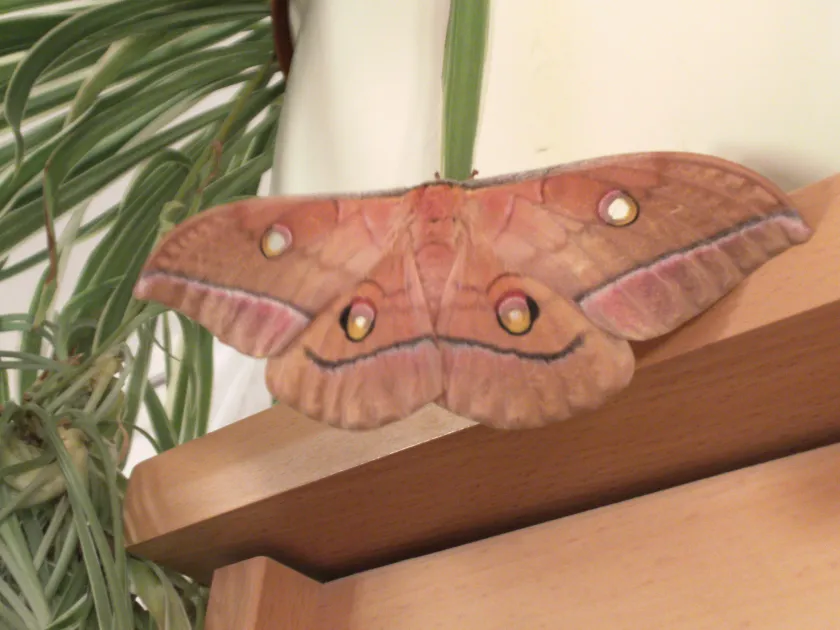
The Japanese oak silkmoth (Antheraea yamamai) is a member of the Saturniidae family, known for its significant size. With a wingspan that can reach 15 centimeters, this moth is characterized by its large, leaf-like appearance and striking eye-spots on its wings, which provide camouflage.
The larvae, or caterpillars, go through five distinct growth stages. In their final stage, they are large, bright green, and covered with small bumps. This coloration allows them to blend perfectly into the foliage of their host plants, making them difficult to spot during the day.
The pupal stage occurs inside a sturdy, dark-brown cocoon constructed of silk fibers. These cocoons are attached to tree branches or wrapped within leaves, providing essential protection from environmental extremes and potential avian predators during the transformation.
Eggs of the Japanese oak silkmoth are oval-shaped and typically laid in clusters on the bark of host trees. Initially yellowish, they darken as the embryo develops, a change that can be monitored by foresters to predict the timing of the hatching period.
While the species is economically important in sericulture, in forest ecosystems, its ability to quickly reach high population densities classifies it as a significant defoliating pest requiring careful management.
What it damages
The primary host plant for this pest is the oak (Quercus). The caterpillars exhibit a strong preference for oak leaves, but they can also feed on a variety of other broad-leaved trees including birch, beech, hornbeam, and hazel, particularly when primary food sources are exhausted.
Damage is exclusively caused by the larval stage, which feeds voraciously on the tree foliage. A large population of caterpillars can consume significant amounts of leaf tissue, drastically reducing the photosynthetic capacity of the host tree.
In cases of severe infestation, the entire crown of the tree may be defoliated. This loss of leaves puts immense stress on the tree, forcing it to use stored energy reserves, which weakens the specimen and makes it vulnerable to secondary pests and fungal infections.
Continued annual defoliation can lead to dieback of the tree crown, reduced annual growth increments, and in severe instances, the mortality of weakened trees, which has negative implications for timber production and forest health.
The presence of this pest necessitates regular monitoring and, if thresholds are exceeded, the implementation of control measures to prevent large-scale degradation of hardwood forests.
When it appears
The life cycle of the Japanese oak silkmoth is univoltine, meaning there is only one generation per year. The winter is passed in the egg stage, which remains dormant on the tree bark until the arrival of favorable spring temperatures.
The hatching of larvae is highly synchronized with the budding of oak trees in the spring. This timing ensures that the first-instar larvae immediately have access to fresh, nutrient-rich leaves necessary for their rapid development.
The active feeding phase occurs throughout the summer months. By mid-summer, the caterpillars reach their maximum size and begin the process of pupation, moving into the cocoon-spinning phase to complete their metamorphosis.
Adult moths emerge in late summer or early autumn, typically in August or September. Their primary function during the short adult stage is reproduction, as the moths do not feed, relying on energy stores accumulated during their larval stage.
Weather conditions in spring are the primary natural check on the population. Cool, rainy spring weather can lead to high mortality rates for young caterpillars, preventing the rapid buildup of pest numbers in the environment.
Signs of infestation
Early symptoms of an infestation include small, irregular holes in the leaves located in the upper canopy. These early signs indicate the presence of younger larval instars beginning their feeding cycle.
A more prominent sign is the accumulation of frass (caterpillar droppings) on the ground or on the forest floor beneath the infested trees. This is a clear indicator of a significant population of older, actively feeding larvae in the crown.
The presence of cocoons is another key indicator. These are often hidden within folded leaves or attached to twigs. Identifying these silk structures in late summer allows for an estimate of the pest load for the upcoming season.
Severe infestations are marked by a visible thinning of the canopy. The leaves may be skeletonized or entirely missing, which creates an unusual light transparency in the forest canopy long before the natural autumn leaf drop occurs.
Adult moths are nocturnal and are attracted to artificial light sources, such as lamps or exterior lighting, which can serve as an early warning system for the presence of a local population.
Control measures
Biological control remains the most sustainable method, particularly the use of Bacillus thuringiensis sprays. These microbial agents effectively target the larvae while remaining harmless to the surrounding ecosystem and beneficial predator populations.
Chemical insecticides are used sparingly and are generally reserved for high-value stands where the risk of total defoliation and tree mortality is critical. Timely application during the most susceptible larval stages is essential for effectiveness.
Maintaining a healthy forest ecosystem is crucial for long-term control. Encouraging natural predators, such as insectivorous birds, parasitic wasps, and predatory beetles, can help keep the population of the Japanese oak silkmoth in check naturally.
Mechanical removal of cocoons in small gardens or sensitive areas can significantly decrease the number of eggs laid for the following year. This manual approach is highly effective in localized outbreaks.
Pheromone traps are excellent tools for monitoring and mass trapping. By deploying these traps, forest managers can detect the start of an infestation early and use the data to make informed decisions about intervention.
Taxonomy
- Latin name
- Antheraea yamamai
- Order
- Lepidoptera (butterflies)
- Family
- Saturniidae
- EPPO code
- ANTAYA
Discussion
No discussions yet — be the first.