
Antheraea simplex
Antheraea simplex
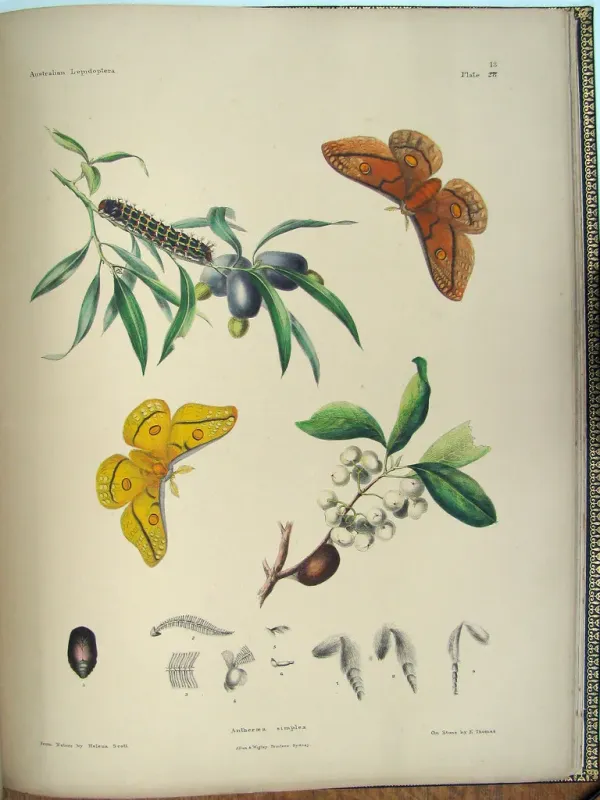
Description
How to identify
Antheraea simplex is a moth species belonging to the order Lepidoptera and the family Saturniidae. It is primarily found in regions of Southeast Asia, where it thrives in specific forest and agricultural ecosystems.
Adult moths display sexual dimorphism and typical traits of the genus, including large wings with distinct eye-spots. Their cryptic coloration helps them blend into tree bark, providing protection from avian predators during the day.
The larvae, or caterpillars, pass through several developmental stages known as instars, growing significantly in size and requiring large amounts of foliage to sustain their rapid development.
The life cycle is dictated by local climatic factors. Females lay eggs on the leaves of host plants, ensuring that neonate larvae have immediate access to food upon emergence.
Pupation occurs within durable, silk-lined cocoons attached to twigs or hidden in leaf litter, providing a secure environment for the insect to survive through the pupal stage.
What it damages
The larval stage is the primary source of damage. As polyphagous insects, these caterpillars feed on a variety of woody plants and shrub species, potentially causing significant foliage loss.
In nurseries and forest plantations, dense populations of these caterpillars can result in severe defoliation, which severely hampers the growth and vitality of the affected plants.
Feeding damage reduces the plant's photosynthetic capacity, leading to weakened trees that are more susceptible to environmental stressors and secondary pests like wood-boring insects.
Young trees are particularly vulnerable, as repeated defoliation can lead to stunted growth, loss of branch structure, and in some cases, the death of the sapling.
Economic damage is also realized through the reduction of vigor in fruit-bearing trees, which often results in diminished yields and lower quality of harvested produce.
Signs of infestation
The most prominent sign of infestation is the presence of large, irregular holes in leaves, often characterized by caterpillars consuming the entire leaf blade from the edges inward.
The accumulation of frass (caterpillar excrement) on the ground underneath the canopy indicates the presence of large, actively feeding larvae in the tree crowns.
Caterpillars may use silk threads to bundle leaves together, creating shelters for molting or pupation, which are visible upon close inspection of the foliage.
Finding cocoons attached to branches or tree trunks is a definitive indicator of the pest's presence and necessitates an immediate evaluation of the infestation level.
- Large irregular holes in foliage.
- Accumulation of larval frass under the canopy.
- Presence of silk-lined cocoons on twigs.
- Visible stunted growth in young shoots.
Control measures
Regular monitoring using pheromone or light traps is essential for detecting the presence of adults and timing control measures to the most vulnerable stages of the life cycle.
Mechanical control, such as hand-picking egg clusters or destroying cocoons during the dormant season, is an effective way to suppress population numbers without chemical input.
Biological control methods, specifically the application of Bacillus thuringiensis, provide a targeted approach to managing caterpillar populations while sparing beneficial insect species.
If chemical intervention becomes necessary due to high infestation rates, selective systemic insecticides should be used in compliance with local regulations and pre-harvest intervals.
Enhancing habitat diversity to support natural predators, including insectivorous birds and parasitic wasps, helps maintain the pest population below economic injury levels.
Taxonomy
- Latin name
- Antheraea simplex
- Order
- Lepidoptera (butterflies)
- Family
- Saturniidae
- EPPO code
- ANTASI
Discussion
No discussions yet — be the first.