
Australian emperor gum moth
Antheraea eucalypti
Description
How to identify
The Australian emperor gum moth, scientifically known as Antheraea eucalypti, is a large moth in the family Saturniidae, primarily found in Australia.
The larvae are notable for their size and feeding capacity, often becoming large, fleshy caterpillars that consume significant amounts of foliage.
Adult moths are recognized by the prominent eyespots on their wings, which serve as a defensive mechanism to deter predators in the wild.
The life cycle involves distinct stages where temperature plays a crucial role in the development from egg to adult moth.
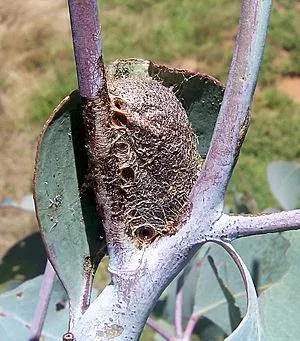
Pupation occurs within a tough, silken cocoon that is firmly attached to the branches or bark of the host tree, protecting the pupa during metamorphosis.
What it damages
The primary host plants are species of the genus Eucalyptus, which provide the essential nutrients required for the rapid growth of the larvae.
In cases of high population density, these caterpillars can cause extensive defoliation, leaving branches bare and reducing the tree's vigor.
Young trees in nurseries or plantations are particularly vulnerable, as severe defoliation can stunt their growth or lead to mortality.
While mature eucalyptus trees often recover from occasional infestations, persistent attacks can weaken the tree, making it susceptible to other diseases.
The overall impact includes economic loss in timber production and a significant decline in the aesthetic value of parks and gardens.
Signs of infestation
The most common sign of infestation is the skeletonization of leaves, starting from the edges and progressing until only the midrib remains.
Large quantities of dark fecal pellets on the ground beneath the tree canopy are a clear indication of a significant caterpillar presence.
Careful inspection of the foliage often reveals the larvae, which, despite their size, can be surprisingly difficult to spot due to their green camouflage.
The presence of silken cocoons attached to twigs or branches confirms that the population is established and active in the area.
Adult moths are often seen attracted to outdoor lights at night, which can serve as an early warning for the start of their reproductive season.
Control measures
Manual removal of caterpillars and cocoons is a highly effective, non-chemical approach suitable for small-scale plantings and residential landscapes.
Biological controls, including the use of Bacillus thuringiensis sprays, provide a targeted solution that minimizes harm to beneficial insects.
Maintaining a healthy ecosystem by encouraging native birds and parasitic wasps helps in naturally regulating the population of the gum moth.
Pheromone traps can be deployed to monitor adult moth numbers and time any necessary intervention to ensure the highest level of efficiency.
Chemical intervention should be considered as a last resort, focusing on restricted use to avoid damaging the broader environment and non-target species.
Taxonomy
- Latin name
- Antheraea eucalypti
- Order
- Lepidoptera (butterflies)
- Family
- Saturniidae
- EPPO code
- ANTAEU
Discussion
No discussions yet — be the first.