
Antheraea
Antheraea
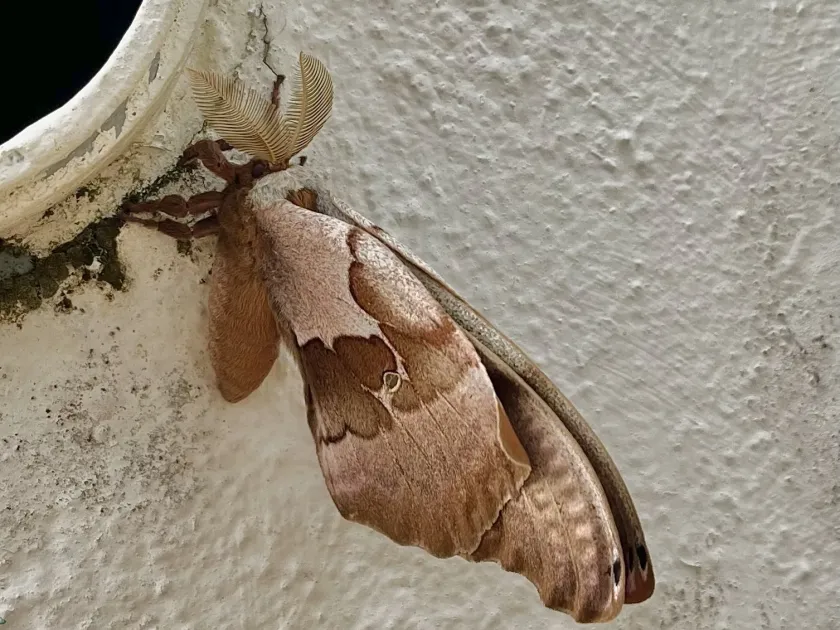
Description
How to identify
Antheraea belongs to the Saturniidae family, which are known as giant silk moths. These moths are characterized by their impressive wingspan and eye-spot patterns on their wings.
The larvae, or caterpillars, of Antheraea are large and often have specialized tubercles or spines. They are voracious feeders that consume significant amounts of plant matter.
Adult moths are nocturnal and have vestigial mouthparts, meaning they do not feed and live only for a short time to complete their reproductive cycle.
The pupal stage is protected within a strong, silk-based cocoon. These cocoons are typically attached to branches or leaves, camouflaged to match the surrounding bark.
The life cycle of these insects is highly adapted to local climates, with many species having a synchronized emergence that matches the budding of their host trees.
What it damages
Antheraea caterpillars are primary defoliators of various deciduous trees and shrubs, often affecting species common in temperate climates.
Common host plants include oak, willow, maple, birch, and sometimes fruit trees such as apple and cherry, where they cause leaf tissue loss.
Young larvae initially graze on the leaf surface, while older larvae consume entire leaves, leaving behind only the stems and major veins.
Continuous defoliation over a season weakens the host tree, making it susceptible to secondary environmental stresses like drought or disease.
In high populations, these pests can cause significant thinning of the tree canopy, which impacts the overall health and photosynthetic capacity of the plants.
When it appears
The adult moth flight usually occurs in late spring to early summer, depending on the specific species and regional temperature patterns.
Eggs are laid in batches or individually on the host plant leaves, where they hatch after an incubation period of one to two weeks.
The larval stage lasts for several weeks, during which they feed actively and go through several instars before finding a spot to pupate.
Pupation occurs in late summer or early autumn, and the insects typically overwinter in the pupal state within their durable silk cocoons.
Peak feeding activity for the caterpillars is observed throughout June and July, correlating with the period of greatest leaf development in host trees.
Signs of infestation
Small dark pellets of frass (caterpillar droppings) appearing on leaves or at the base of the tree are a primary indicator of active feeding.
Leaves showing irregular holes, notched margins, or total skeletonization are clear visual signs of the presence of Antheraea larvae.
Visible silk cocoons attached to twigs or hidden among leaves are reliable evidence of a past or current infestation in the tree canopy.
The caterpillars themselves are often the most obvious sign due to their large size, distinct coloring, and presence on the underside of branches.
Early leaf drop and reduced twig growth are long-term indicators of a tree that has been subjected to significant defoliation by these larvae.
Control measures
Physical removal of cocoons and egg masses during the dormant season is a highly effective way to reduce the population for the following year.
Biological control using microbial insecticides, such as those based on Bacillus thuringiensis, is effective against early larval stages.
For ornamental trees, chemical intervention may be required if the infestation is severe, using insecticides approved for garden use.
Promoting natural predator habitats, such as nesting sites for birds and beneficial predatory insects, helps manage pest levels naturally.
- Regular inspection of host plants during spring and summer.
- Manual collection of visible caterpillars where trees are small.
- Installation of pheromone traps to monitor adult moth population levels.
Taxonomy
- Latin name
- Antheraea
- Order
- Lepidoptera (butterflies)
- Family
- Saturniidae
- EPPO code
- ANTASP
Discussion
No discussions yet — be the first.